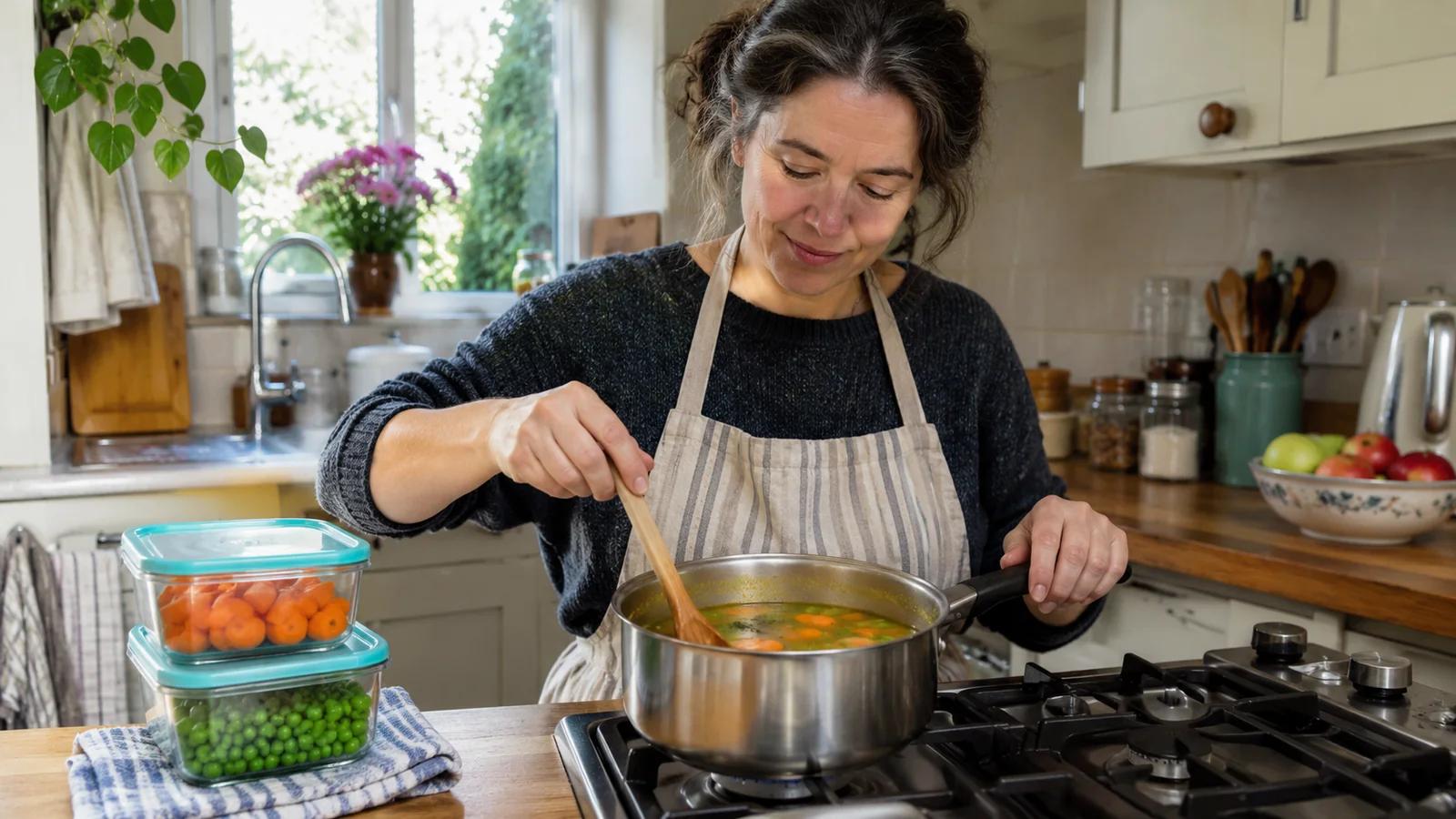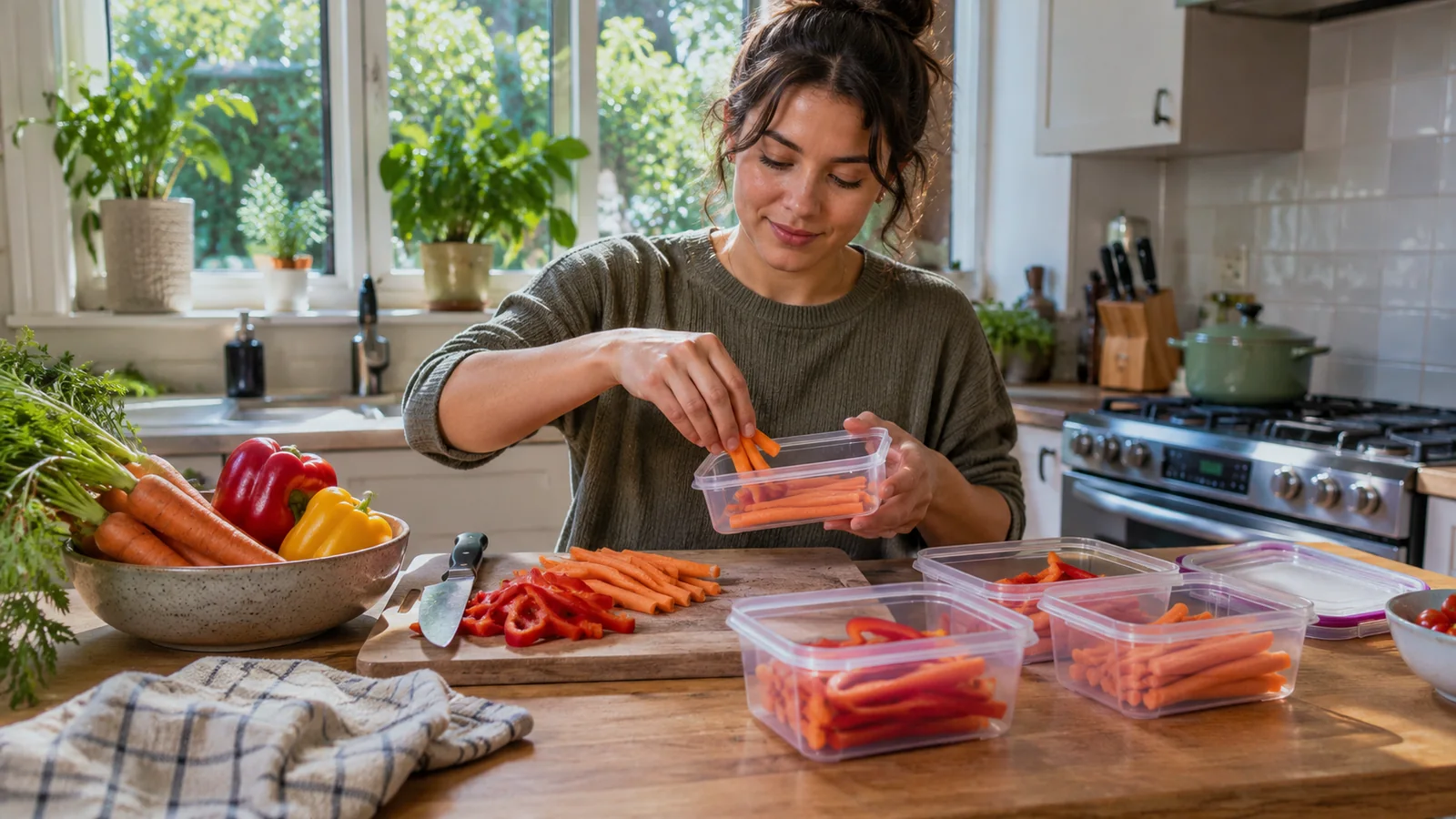
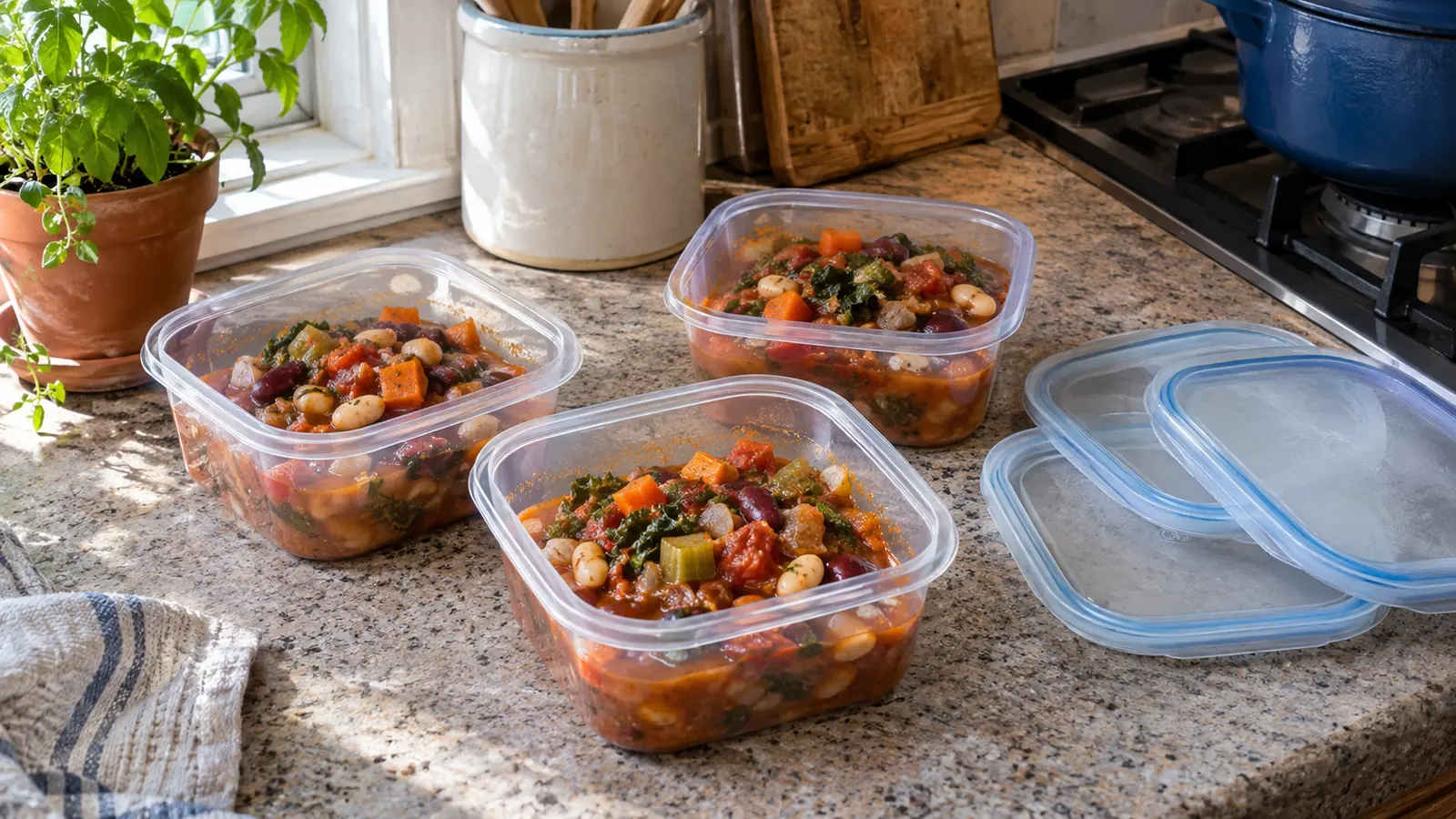
A frozen meal is most useful when you can take out the amount you actually want to eat. A large tub may hold several dinners, but it also creates an awkward decision when only one person needs lunch. Freeze meals in portions that match the next use, with packaging you can identify and a safe route back to the table.
You do not need a weekend cooking project to begin. Set aside a suitable extra portion from a meal you are already making. The aim is a small, usable reserve rather than a freezer full of containers you struggle to recognise.
Decide What One Useful Portion Means
Start with the person and the occasion. A lunch for one, a shared dinner and a sauce to accompany freshly cooked pasta need different amounts. There is no universal container size that suits them all. Use your usual serving bowl as a practical reference before choosing packaging.
Separate a complete meal from a meal component. A portion of bean stew might need bread alongside it; a small pack of tomato sauce needs a staple and other additions. Label the difference so that a tired evening does not begin with another planning task.
For a household eating at different times, single servings can be easier to retrieve than one family-sized block. If two people usually eat together, a two-person pack may make more sense. Avoid dividing everything into tiny amounts merely to produce tidy rows.
Choose a dish you already enjoy after reheating. Try a small portion first if you are unsure about its texture. Keep crisp toppings or fresh garnishes for serving, rather than assuming every part of a finished plate should be frozen together.
Choose Packaging Around the Food
Use clean, food-safe packaging intended for freezing. Check the manufacturer’s instructions for temperature limits, closure and later reheating. A container suitable for the freezer is not automatically suitable for a microwave or oven.
Shallow rectangular containers are a practical choice when you want a meal to hold its shape and stack neatly. Freezer bags can suit compatible sauces and stews if they seal securely; support them while filling and protect them from punctures. Choose the option that fits both the food and your available space.
Leave the appropriate expansion space for liquids, following the container and food-specific guidance. Filling a soup container right to the lid can create problems as it freezes. If using glass, select a product explicitly intended for freezing and follow its filling limits; do not improvise with an unsuitable jar.
Before buying a large set, test whether one container fits the shelf or drawer and holds the portion you want. A matching lid is more valuable than a collection of almost-compatible boxes. Check seals and replace damaged packaging.
Pack and Freeze in a Clear Sequence
Set aside the portion early. Use safely handled cooked food with a known storage history. Freezing cannot repair food that has already been left out unsafely. Keep raw food and its utensils away from the cooked portions.
Cool promptly in shallow containers. Divide a large amount rather than leaving a deep pot on the counter. Refrigerate promptly; do not wait for the entire pot to become cold at room temperature. Health Canada advises discarding cooked food left out for more than two hours. Follow stricter local advice where applicable, especially in hot conditions.
Finish the packaging once chilled. Use suitable freezer packaging, close it securely and keep the sealing edge clean. Minimise trapped air where appropriate while retaining the headspace the food needs. Follow specific instructions for the dish and container.
Label before the pack disappears. Record the dish, cooking and freezing dates, and number of servings. Add a short note about essential accompaniments or relevant ingredients. Retain any allergen information needed by the household.
Place the pack where it can be found. Give prepared portions a recognisable area and put older suitable packs within easy reach. Check the appliance’s loading guidance rather than forcing a large quantity of warm food into an already crowded freezer.
For the wider cooling and storage routine, see our guide to storing leftovers safely. Foods with particular handling requirements need their own guidance; a general packing method does not override it.
Make the Label Useful on a Busy Evening
“Dinner” is a weak label when several containers look alike. “Bean stew, one serving, add bread” tells you what you have and what remains to do. The dates should be the actual dates, rather than a guessed deadline written weeks later.
Keep a short inventory in whichever place you already check: a kitchen note, a phone list or the front of the freezer drawer. Record only the dish and portions remaining. Cross off a pack when you take it out. A list that needs constant detailed editing is likely to become another forgotten object.
Check temperature as part of ordinary appliance care. A freezer should maintain about −18°C/0°F; use a thermometer and follow local guidance. Our refrigerator and freezer temperature guide explains the checking routine. A dated label cannot establish safety after an unknown power interruption.
Use food-specific quality guidance rather than assigning every meal the same freezer deadline. Texture and flavour depend on the ingredients, packaging and storage conditions. Make a note after your first trial so that future portions reflect what you actually like eating.
Retrieve One Meal and Reheat It Thoroughly
Choose the portion early enough to thaw in the refrigerator, keeping it contained so leaks cannot contaminate other food. Do not leave it on the kitchen counter to thaw. Defrosting time varies with the pack and appliance, so avoid relying on a fixed timetable for every meal.
If using microwave defrosting, transfer food to suitable microwave-safe packaging where necessary and reheat immediately afterwards. Follow the appliance instructions. Stir during reheating when the dish allows it, and check several places with a clean food thermometer: reheated leftovers should reach 74°C/165°F throughout. A warm edge does not prove the centre is ready.
Bring soups and sauces to a rolling boil while stirring. Handle hot lids and steam carefully. Cold glass should not go directly into a hot oven unless its manufacturer explicitly permits that use. Our guide to using a food thermometer can help with checking dense portions.
Take out what you intend to eat, serve promptly and avoid planning repeated reheating cycles. Start with one familiar dish and a couple of clearly marked portions. When those portions are easy to find, prepare and enjoy, you have a useful freezer habit worth repeating.