
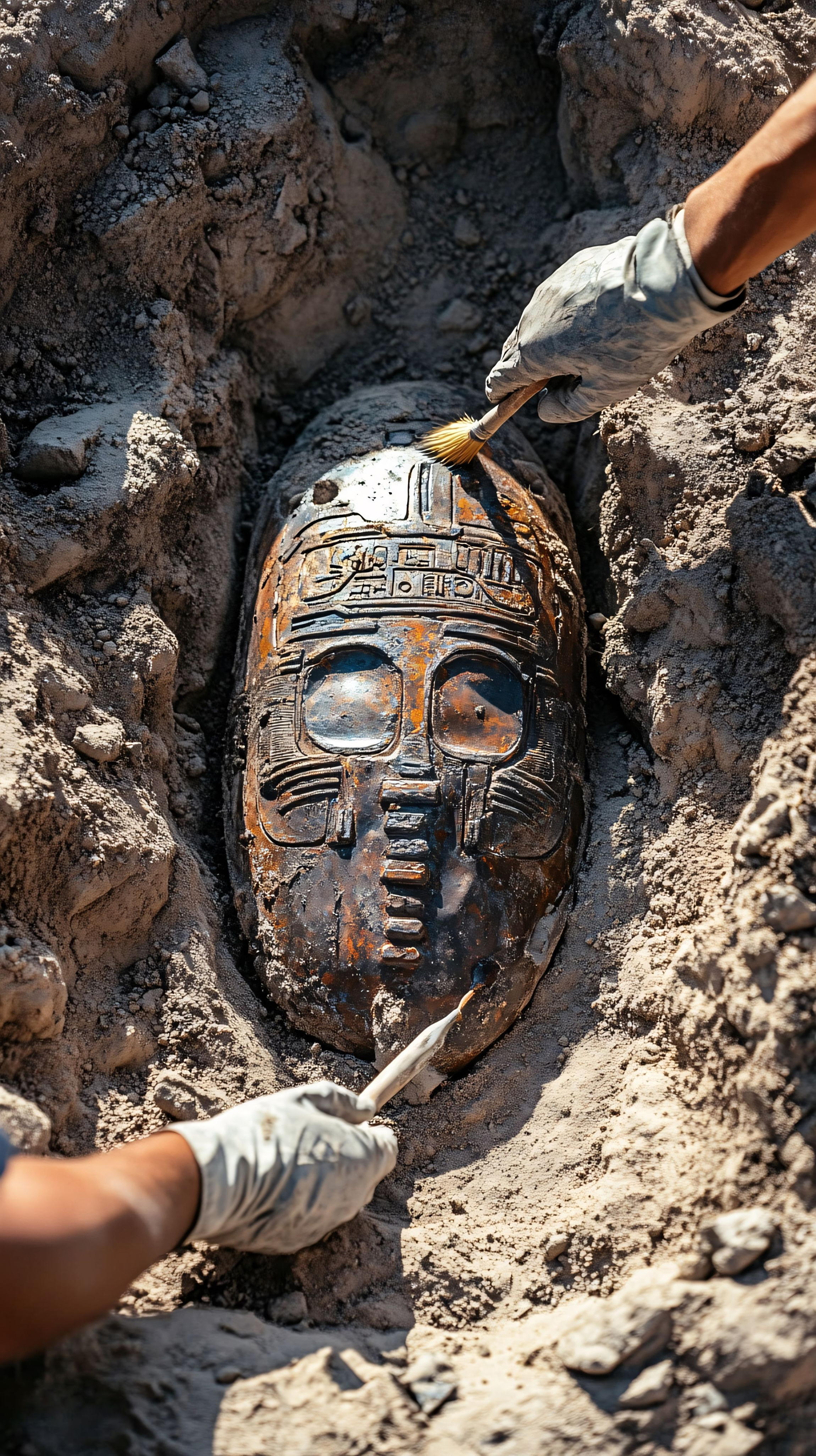
Experimental archaeology allows researchers to test theories about the past through direct experience and practical experimentation.
What Is Experimental Archaeology?
Experimental archaeology involves reproducing ancient activities using historically accurate materials and techniques. Researchers attempt to rebuild structures, manufacture tools, create artwork, and perform everyday tasks exactly as ancient societies may have done.
The goal is not merely replication but understanding. By performing these activities firsthand, archaeologists gain insights that cannot always be obtained from artifacts alone.
Historical Development
The field gained popularity during the twentieth century as scholars recognized limitations in purely theoretical interpretations of archaeological findings.
Researchers began constructing replicas of ancient boats, houses, weapons, and agricultural systems to test assumptions about their design and function.
Today, experimental archaeology is recognized as a valuable scientific methodology.
Methods and Techniques
Tool Reconstruction
Researchers recreate stone tools, bronze weapons, and iron implements using traditional methods.
Building Reconstruction
Ancient homes, temples, and fortifications are rebuilt to study construction techniques and durability.
Ancient Agriculture
Experiments explore how crops were grown, harvested, and stored using historical farming methods.
Maritime Archaeology
Ancient ships are reconstructed and sailed to evaluate navigation techniques and maritime capabilities.
Famous Experiments
Viking Ship Reconstructions
Researchers have successfully built Viking ships and sailed them across oceans, demonstrating the remarkable seafaring abilities of Norse societies.
Stonehenge Construction Studies
Experiments have shown how prehistoric communities may have transported and erected massive stones using simple tools.
Ancient Egyptian Technologies
Projects have investigated pyramid construction methods and transportation systems used by ancient Egyptians.
Importance
Experimental archaeology helps answer questions such as:
- How long did construction projects take?
- What skills were required?
- How effective were ancient technologies?
- How much labor was needed?
These insights provide a more realistic understanding of historical societies.
Educational Value
Many museums and historical sites use experimental archaeology to engage the public.
Visitors can observe:
- Blacksmithing
- Pottery making
- Ancient cooking
- Weaving
- Stone carving
These demonstrations make history more tangible and accessible.
Criticisms and Limitations
Experimental archaeology cannot perfectly recreate the past. Modern researchers possess knowledge and perspectives that differ from those of ancient peoples.
Additionally, environmental conditions and cultural contexts may have changed significantly.
Despite these limitations, experiments provide valuable evidence that complements traditional archaeological research.
Future Directions
New technologies such as 3D printing, digital modeling, and advanced materials analysis are expanding the possibilities of experimental archaeology.
Researchers increasingly combine practical experiments with computer simulations to develop more accurate interpretations of ancient life.
Experimental archaeology transforms history from static artifacts into living experiences. By recreating ancient technologies and practices, researchers gain deeper insights into human ingenuity, adaptation, and cultural development. This unique field continues to reveal how our ancestors solved challenges and shaped the civilizations that followed.