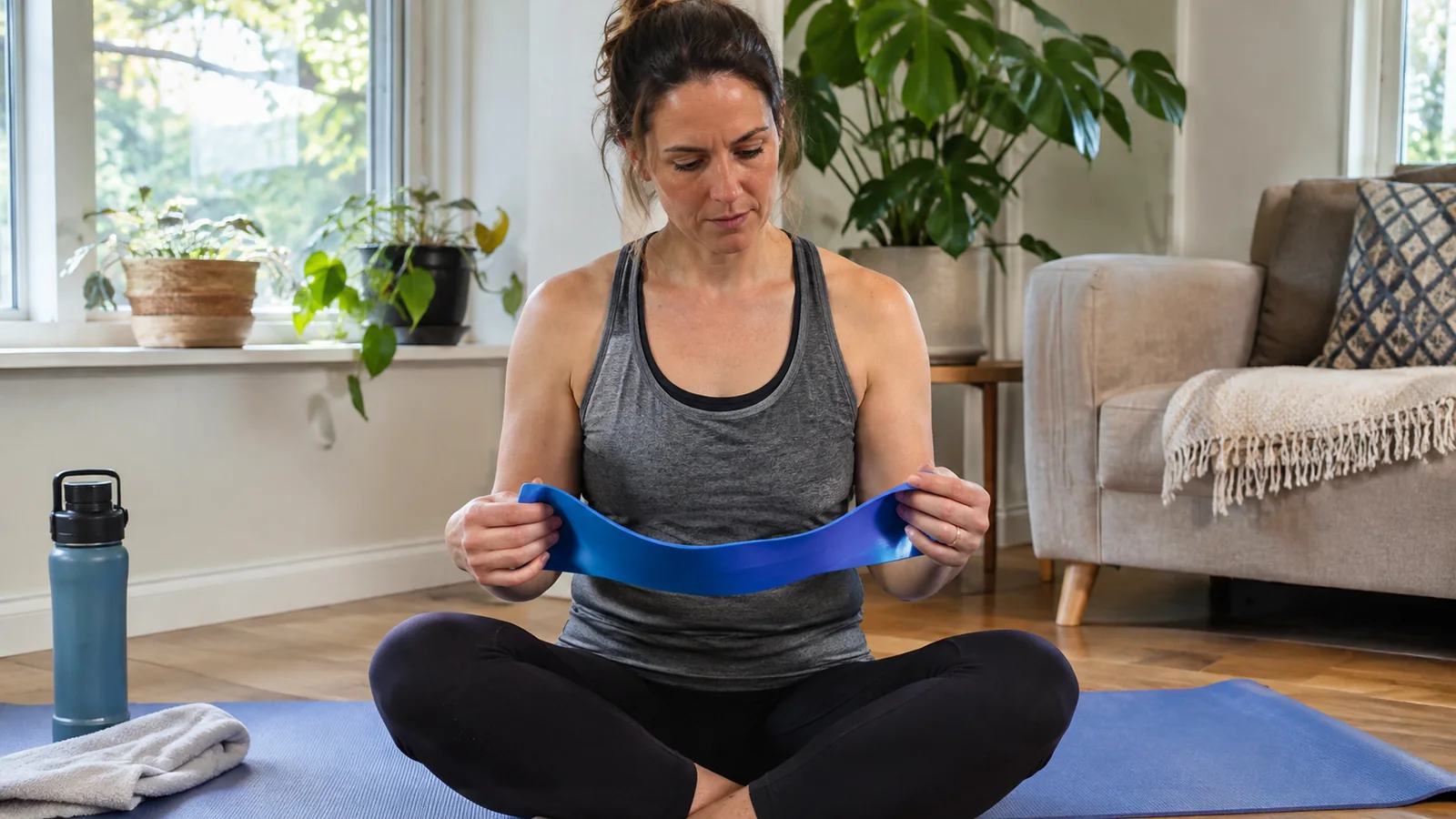
An exercise mat can look tidy when rolled up and still slide, curl or feel greasy when you use it. Before the next session, unroll it where you plan to exercise and check the whole setup. The useful questions are whether the mat stays put, whether its surface is intact and how its manufacturer says to clean it.
Good exercise mat care starts with identifying the problem. A moving mat, slipping hands and a raised corner need different responses. Cleaning may help with surface residue, but it cannot repair torn material or make unsuitable flooring stable.
Check the Mat Before You Put Your Weight on It
Start with an empty, dry floor and enough room to see every edge. Move furniture, cables and loose rugs away from the exercise area. Our guide to setting up a home workout space covers the wider room check; here, concentrate on the surface directly beneath you.
Lay the mat out fully. Check that you have the correct side facing up, using the product instructions if the surfaces look similar. Look along the edges for corners that remain lifted or sections that bunch together.
Inspect both sides. Turn the mat over and look for tears, peeling layers, loose fragments and areas that have become noticeably thin or uneven. Check the underside as carefully as the part you normally see.
Check the floor contact. Remove grit or debris beneath the mat and make sure the floor is dry. Lay the mat down again without overlapping a rug or another mat. Avoid creating a layered setup that can move independently.
Try a gentle, supported check. From a comfortable position with stable support nearby, apply light pressure with a hand before starting your routine. Do not jump, lunge or deliberately push yourself off balance to test grip. If the mat shifts or bunches, stop and resolve it first.
Decide whether it is usable today. A mat that will not lie flat, has separating layers or keeps moving is a reason to change the setup. Choose another suitable surface or a different activity rather than trying to exercise around the defect.
This is an everyday equipment check, not a certification that a mat is safe for every movement. A surface that seems steady for seated stretching may behave differently during faster exercise. Use equipment suited to the activity and follow any limits in its instructions.
Work Out What Is Slipping
Notice what moves relative to what. If the whole mat travels across the floor, focus on its underside and the flooring. If the mat stays still but your hands slide, the top surface, moisture or residue may be involved. If an edge folds under a foot, the immediate problem is the shape and placement.
Write a brief description before trying a fix: “The left corner lifts after unrolling” is more useful than “the mat is bad.” It helps you check whether the problem changes after cleaning and drying, and gives customer support something specific to assess.
Avoid treating a non slip exercise mat label as a guarantee on every floor. Do not add oil, powder or an improvised spray to change the feel. Equally, a household towel placed loosely underneath is another surface that can shift. If you cannot get a stable setup, leave that mat out of the session.
Find the Instructions for Your Actual Mat
Look for the model name on its label, packaging, receipt or order history, then find the manufacturer’s current care page. Save the page with your exercise notes so you do not have to search again each time.
Mat construction matters. Natural rubber, closed-cell surfaces and absorbent top layers can have different cleaning requirements. Do not assume that advice for one yoga mat also applies to a thick foam exercise mat, a cork surface or another model from the same brand.
Before using a cleaner, establish:
- Which products or ingredients are permitted.
- Whether the instructions call for wiping, rinsing or another method.
- Whether soaking, machine washing, heat or direct sun are prohibited.
- How the mat should dry and be rolled or stored.
If you cannot identify the material or model, ask the manufacturer before attempting a deep clean. A generic internet recipe is a poor substitute for knowing whether the surface tolerates it.
Clean Without Guessing at the Mixture
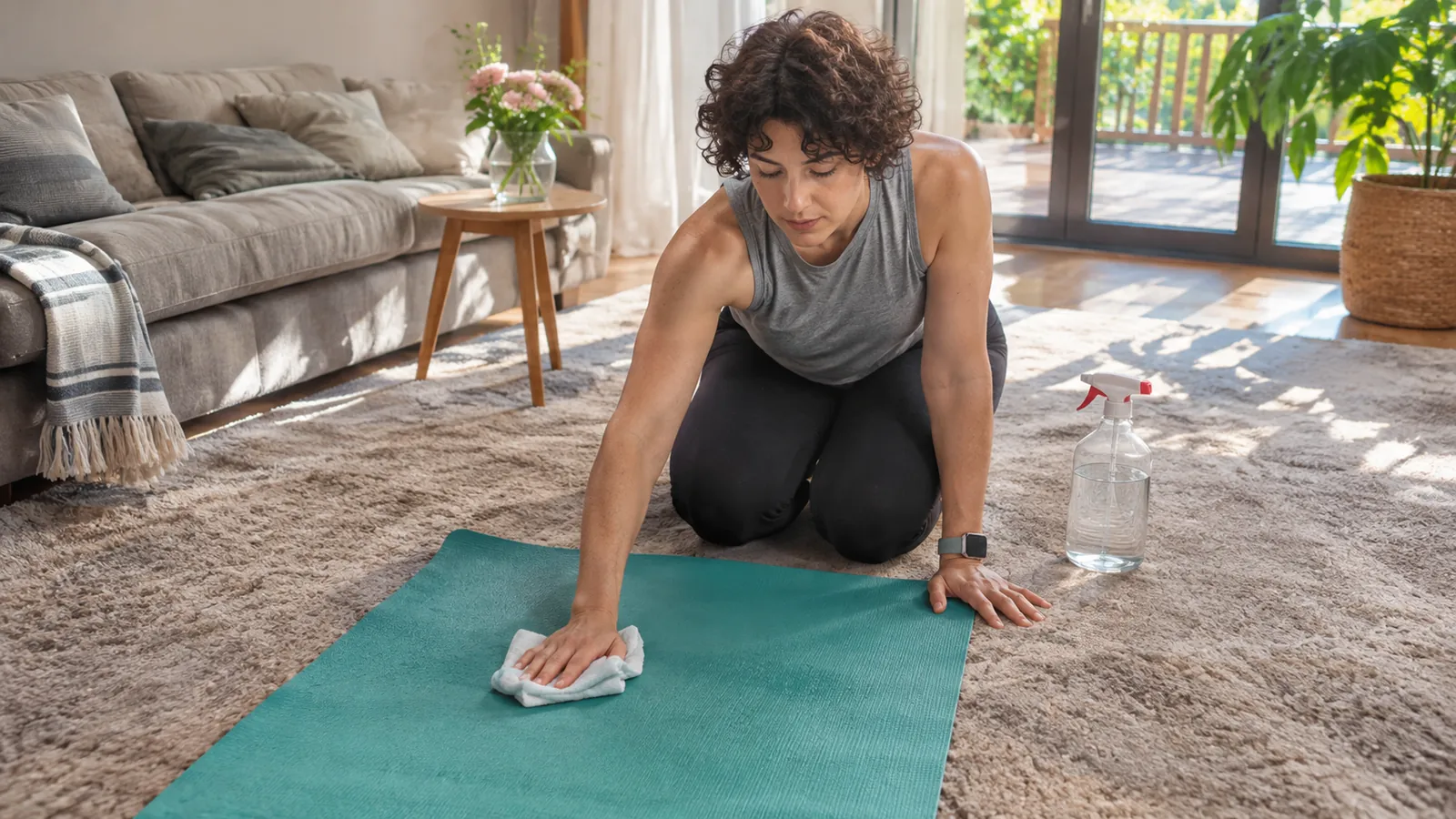
For ordinary upkeep, follow the specified method with a clean, soft cloth and the permitted product. Measure any dilution as directed. More concentrated cleaner is not automatically more effective, and it may leave a different surface feel.
Work methodically across the mat so that you do not repeatedly wipe one patch and miss another. Follow the instructions for removing excess product. If the underside needs attention, clean it in a way that avoids transferring floor dirt back onto the exercise surface. Keep your cloths clean, too.
Do not borrow a disinfecting wipe simply because it is nearby. Some mat materials are incompatible with it. Cleaning removes dirt and residue; it does not automatically disinfect. Where disinfection is needed, confirm both material compatibility and the disinfectant’s labelled use, including contact time. For shared studio equipment, ask staff about their cleaning procedure rather than mixing products yourself.
Allow Drying Time Before Storage
Plan care for a time when the mat can remain out of use. Follow its drying instructions and wait until it is fully dry before storing it. Liforme, for example, instructs owners to dry its mats flat; your model may have its own requirements. Keep drying equipment out of walkways.
Use the recommended rolling direction and storage position. Avoid forcing a thick mat into a narrow bag or folding a model intended to be rolled. Do not speed things up with a heater or strong sunlight unless the manufacturer explicitly allows that method.
Recheck Instead of Assuming Cleaning Fixed It
Once dry, return the mat to the intended floor and repeat the visual and gentle pressure checks. If it still slips, curls or sheds material, stop using it for that activity and contact the maker about repair or replacement. There is no useful universal replacement timetable: condition and performance matter more than an arbitrary anniversary.
Keep the routine small enough to repeat: inspect before use, follow the correct care method afterward and leave time to dry. If the mat is unavailable, choose suitable equipment-free options from your indoor movement plan that fit your space and ability. The next session should start with a workable surface, rather than a problem you hope will disappear once you begin.