An emergency folder is not only for people who live in places known for hurricanes, floods, earthquakes, wildfires, or political disruption. It is a practical household tool for any situation where you may need to leave quickly, prove who you are, file an insurance claim, replace lost records, access medical care, or help a family member manage urgent paperwork.
The folder does not need to be complicated. Its job is simple: put the records you would struggle to replace in one organized system, with copies available even if your phone battery dies, your internet is down, or your original documents are somewhere you cannot reach.
Quick Answer
Keep copies of identity documents, household contacts, insurance policies, medical information, property records, financial account references, emergency plans, pet records, and key recovery instructions in an emergency folder. Store originals securely, keep portable copies in a waterproof grab-and-go pouch where appropriate, and maintain encrypted digital backups that trusted people can access if needed.
Start With People, Not Paper
Before collecting documents, list everyone the folder needs to support. Include adults, children, older relatives, people with disabilities, caregivers, pets, and anyone who depends on the household for housing, medication, transport, school records, or financial support.
For each person, include:
- Full legal name and commonly used name.
- Date of birth.
- Phone numbers and email addresses.
- Emergency contacts outside the household.
- Medical conditions, allergies, prescriptions, and doctors where relevant.
- School, workplace, caregiver, or support-service contacts.
- Copies of identity documents, where safe and legal to store.
This people-first approach keeps the folder useful. A beautifully labeled file is less valuable than a simple page that helps someone reach your child’s school, refill a medication, contact an insurer, or tell a hospital what you are allergic to.
Identity And Civil Records
Emergency-management agencies commonly recommend keeping copies of important personal documents with your emergency supplies. The exact list depends on your country, family structure, and legal status, but the core idea is the same: keep enough information to prove identity, relationships, residency, and eligibility for services.
Useful copies may include:
- Passports or national identity cards.
- Driver’s licenses or other local IDs.
- Birth, adoption, marriage, divorce, custody, or guardianship documents.
- Residence permits, visas, work permits, or immigration records.
- Military, pension, benefits, or social-service records.
- Recent passport-style photos if replacement documents are hard to obtain.
Do not carry originals unless you must. Original identity documents are often safer in a locked, fire-resistant, water-resistant place, a bank safe-deposit box where accessible, or another secure location. The emergency folder should usually contain copies, document numbers, issuing offices, and replacement instructions.
If your household includes people with different citizenship, residency, or custody arrangements, keep this section especially clear. In a crisis, the person helping you may not know which documents matter most.
Insurance, Home, And Property Records
Insurance paperwork is easy to ignore until you need it. After a fire, flood, theft, storm, or evacuation, policy numbers and claim contacts can save hours.
Include copies or summaries of:
- Home, renters, vehicle, travel, health, life, and business-insurance policies.
- Policy numbers, claim phone numbers, insurer apps, broker details, and renewal dates.
- Property deeds, leases, mortgage records, vehicle titles, or registration papers.
- Recent photos or videos of your home, rooms, valuables, tools, appliances, and serial numbers.
- Receipts or appraisals for major items where available.
- Landlord, building manager, utility, and local emergency-management contacts.
GDU’s guide to creating a home inventory for insurance claims goes deeper on photographing belongings and storing evidence. Your emergency folder does not need every receipt, but it should tell you where the full inventory lives and how to access it.
Medical And Care Information
Medical paperwork can matter when normal care is interrupted. The U.S. Centers for Disease Control and Prevention advises households to include copies of medical records, insurance cards, prescriptions, allergies, vaccination records, and other health information as part of emergency paperwork.
Your folder can include:
- Health-insurance or national health-service details.
- Prescription names, doses, prescribing clinicians, and pharmacy contacts.
- Allergies, major diagnoses, implanted devices, blood type if documented, and accessibility needs.
- Immunization records where useful.
- Copies of advance directives, health proxies, or medical consent documents.
- Care plans for children, older adults, disabled household members, or pets.
Keep this section updated. A medicine list from three years ago may be worse than no list because it can mislead someone trying to help. Review it after major appointments, new diagnoses, medication changes, births, moves, and caregiving changes.
Money And Account Access
An emergency folder should help you keep life moving if cards, phones, mail, or normal banking access are disrupted. It should not expose your household to identity theft.
Include enough information to identify accounts and contact institutions, such as:
- Bank, credit union, pension, investment, loan, and credit-card institution names.
- Customer-service numbers and branch or adviser contacts.
- Direct-deposit, benefits, salary, rent, mortgage, and utility-payment notes.
- Tax identification references where appropriate, stored carefully.
- A small amount of local cash if that is recommended for your area and safe for your household.
Avoid writing full passwords in a paper folder. Use a reputable password manager, emergency-access feature, sealed recovery instructions, or another secure method that fits your risk level. If you use cloud services, GDU’s guide to downloading a copy of account data can help you think through which account records are worth exporting before you need them.
Emergency Plan And Daily-Life Instructions
Documents are more useful when they sit beside a short plan. International Red Cross and government preparedness guidance often points households toward emergency kits, important document copies, contact lists, medications, and practical recovery information.
Add a few pages that answer:
- Where will household members meet if separated?
- Who is the out-of-area contact everyone can message?
- Which neighbors, relatives, friends, or caregivers may need help?
- Where are spare keys, shutoff valves, chargers, backup glasses, pet carriers, and essential medicines?
- Which documents are originals, which are copies, and where are the originals stored?
- Which accounts, benefits, subscriptions, or bills must be handled quickly if you are displaced?
For families, include school pickup rules, authorized caregivers, child medical consent forms where relevant, and copies of custody or guardianship records if those documents could be needed during travel, sheltering, or medical care.
For pets, include microchip numbers, vaccination records, medication instructions, photos, food needs, vet contacts, and proof of ownership.
Paper Copies, Digital Backups, Or Both?
Use both when possible.
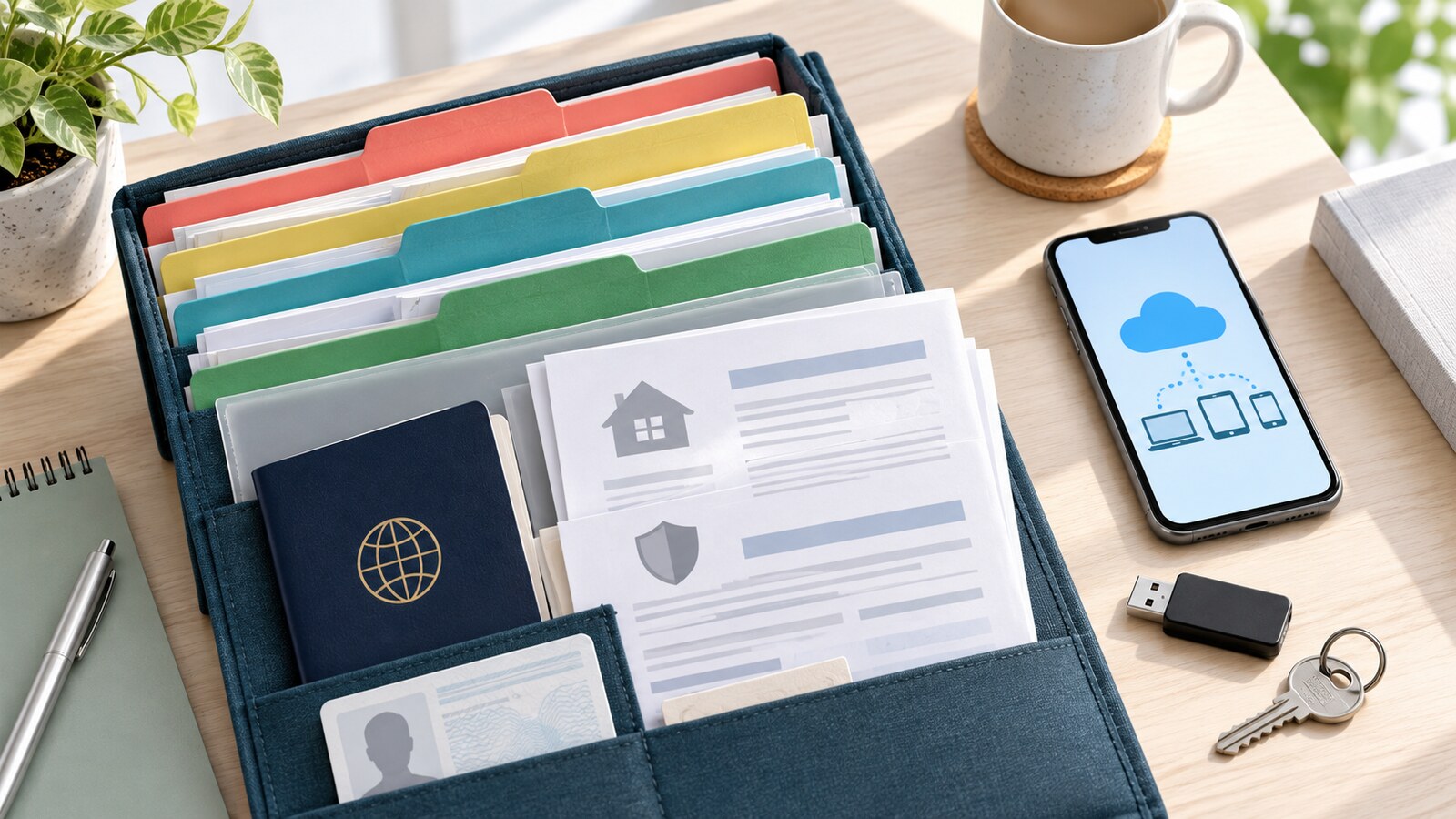
Paper copies are helpful when power, internet, phones, or accounts are unavailable. Store them in a waterproof pouch, folder, or portable container. Label sections clearly. Avoid carrying more sensitive information than needed, especially full account numbers, tax identifiers, or documents that could be misused if stolen.
Digital backups are helpful when paper is destroyed, you are far from home, or a trusted person needs to send a document quickly. Store scans in an encrypted cloud folder, encrypted external drive, or secure document vault. Protect the account with strong authentication and keep recovery methods current.
Make sure at least one trusted person knows the system exists. They do not necessarily need full access today, but they should know who to contact or where sealed instructions are kept if you are injured, unreachable, or out of the country.
Keep Originals Separate And Protected
An emergency folder is not the same as a document archive. Some records belong in the folder as copies, while originals belong in a safer location.
Consider keeping originals such as birth certificates, passports, deeds, wills, insurance contracts, immigration papers, and major certificates in a locked fire-resistant and water-resistant box, a secure off-site location, or another storage method appropriate for your country and household.
The folder can then carry:
- Copies of the original.
- A note saying where the original is stored.
- Replacement steps and official contact details.
- Expiry dates for passports, IDs, licenses, permits, and policies.
This balance matters. A grab-and-go folder is meant to help you recover. It should not become a single point of failure that creates a bigger problem if lost.
Review It Twice A Year
Set a calendar reminder every six months. Review the folder after moves, births, deaths, marriages, separations, new pets, school changes, job changes, new insurance policies, major purchases, medical changes, passport renewals, and account changes.
During the review:
- Remove outdated documents.
- Replace expired IDs and old insurance pages.
- Update contact numbers and medication lists.
- Confirm that digital backups still open.
- Check that trusted contacts still know their role.
- Refresh home-inventory photos after major purchases or renovations.
This is a short household maintenance task, not a full life audit. The goal is to keep the folder current enough that it would help on a difficult day.
Bottom Line
An emergency folder gives your household a practical head start when normal systems are disrupted. It should answer three questions quickly: who are the people involved, what records prove their needs and rights, and how can recovery begin?
Start small. Create one contact page, add copies of the most important IDs and insurance details, scan the folder securely, and schedule a review. A simple folder you can find is better than a perfect system you never finish.