An easy make ahead breakfast starts with something you already enjoy eating. Choose the next morning’s meal, prepare the parts that hold their texture, and refrigerate perishable ingredients promptly. Leave a small finishing task, such as adding crunchy cereal or toasting bread, for when you are ready to eat.
You do not need a week’s supply of matching jars. One container for tomorrow can be a useful first attempt, especially if your appetite, departure time or access to a fridge changes from day to day.
Match Breakfast to the Morning Ahead
Before opening ingredients, decide where you will eat. Breakfast at the kitchen table needs a different setup from food carried to work. If you will be travelling, consider how you can keep chilled food cold and whether a refrigerator will be available on arrival.
Choose a portion that suits your usual appetite. The aim is to remove preparation from a busy moment, rather than prescribe a particular diet or a fixed number of calories. Someone who dislikes cold oats may prefer bread with a prepared filling; someone who eats later may need a container that travels securely.
Check your cupboards and fridge before shopping. Pick ingredients that also have another use, so a missed breakfast does not leave you with an elaborate set of unwanted toppings. A short grocery list can connect the plan to quantities you will actually use.
Choose a Combination You Can Repeat
These are starting options. Adapt them to allergies, preferences, availability and package instructions. You can vary the ingredients once the basic routine works.
Overnight oats for a ready-to-stir bowl
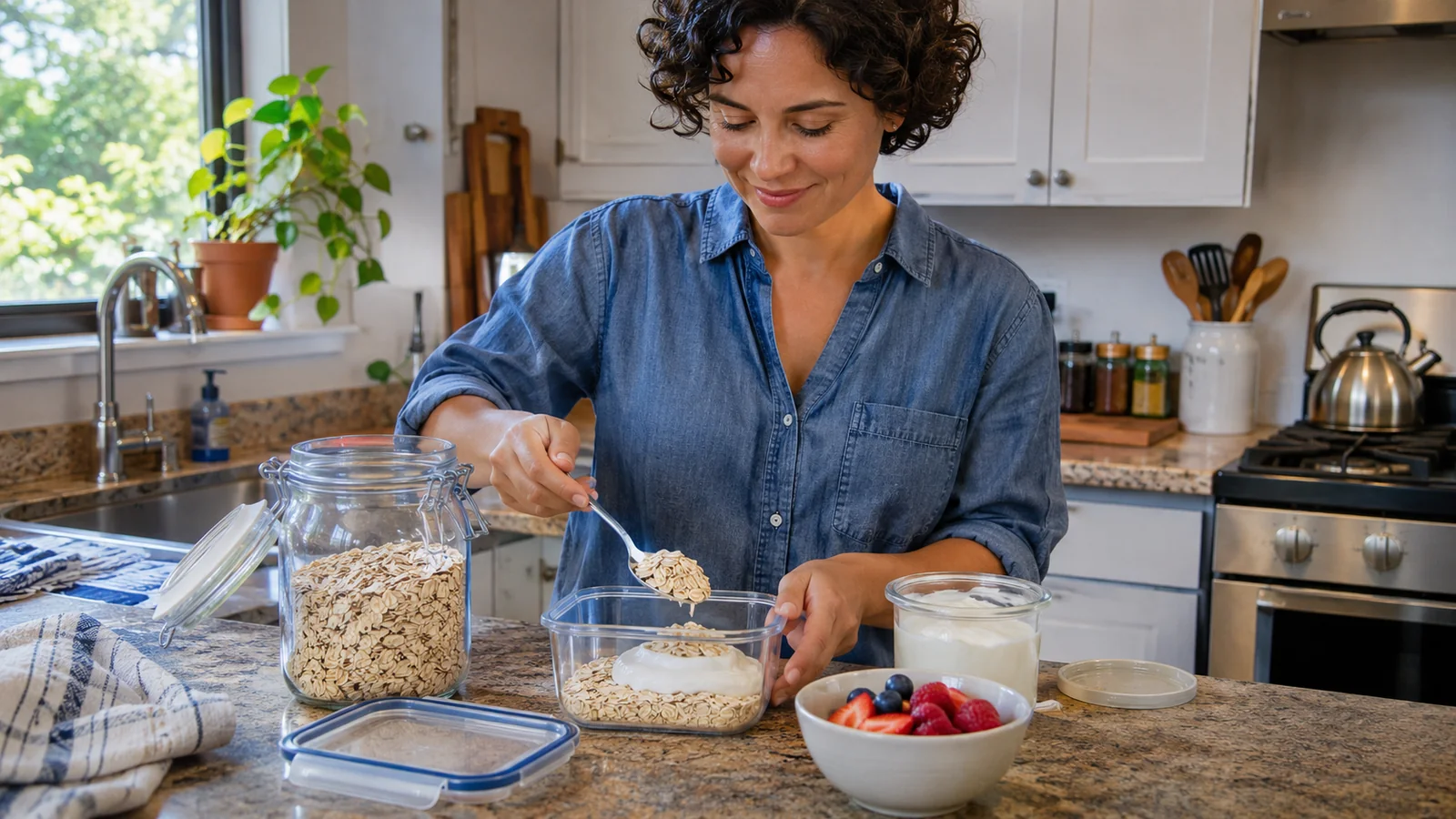
Rolled oats, plain yogurt and milk make a simple refrigerated base. As a small trial, mix equal volumes of the three ingredients in a clean container: about one-third of a cup of each is one starting combination. Cover and refrigerate overnight. Stir before eating and add a little more liquid if you prefer a softer consistency.
Use a recipe intended for the type of oats you have; steel-cut oats are not a direct replacement for rolled oats in every preparation. Follow ingredient labels, including any instructions to cook before eating.
Fruit can be added before serving. Keeping it separate is useful when you want to judge the oat texture first. This is a refrigerated preparation: leaving the mixture on the kitchen counter overnight is unsuitable.
Yogurt with separate fruit and crunch
Portion yogurt into a lidded container and keep it chilled. Prepare suitable fruit using clean hands, utensils and work surfaces, following any preparation instructions on the pack. Keep cut fruit refrigerated, and follow cooking instructions for frozen fruit where provided.
Pack cereal, nuts or seeds separately if you want them to stay crisp. Add them when eating. Choose toppings that are safe for the people sharing the meal, and avoid assuming that a plant-based product has the same ingredients or nutritional profile as dairy yogurt.
This option suits someone who wants little assembly in the evening. It also makes substitutions straightforward: change the fruit or crunchy component without replacing the whole breakfast.
Bread with the filling ready
Set out the plate or lunch container and choose the bread. Prepare an appropriate ready-to-eat filling, such as cheese or hummus, and refrigerate it according to its label. In the morning, toast or assemble the bread and add the filling.
Keeping wet ingredients separate can prevent sogginess. Bread does not have to sit beside the filling overnight for breakfast to count as prepared. A banana or another suitable whole fruit can be selected in advance without cutting it.
This is particularly useful when texture matters more to you than having a completely finished meal. Leave the toaster unplugged or switched off until you are ready to use it, following the appliance instructions.
Finish the Evening Preparation in Order
Treat the first attempt as a small household task, with packing and washing up included.
- Choose tomorrow’s combination. Check the ingredients, their dates and any instructions after opening. Decide what will remain separate.
- Find a clean, suitable container. Use a secure lid if you will carry the food. Include a separate small container for dry toppings when needed.
- Assemble the chilled portion. Keep preparation brief and return perishable ingredients to the fridge promptly.
- Make the morning task visible. Place a spoon beside your bag or leave a note to add the chilled container before departure. Keep the food itself refrigerated.
- Reset the work area. Wash utensils, close packages and put ingredients away. Preparation has not saved much work if the morning begins with yesterday’s dishes.
If another person shares the fridge, label the portion with its owner and preparation date. Avoid an arrangement that depends on everyone remembering which unmarked jar is reserved.
Keep Refrigeration Part of the Routine
Use a fridge thermometer rather than judging coldness by touch. UK food-safety guidance recommends a fridge temperature between 0°C and 5°C; follow your local authority’s guidance and any stricter product requirements. Our refrigerator temperature check explains how to check the actual temperature.
Respect use-by dates and instructions about storage after opening. Mixing ingredients does not extend their safe life. A next-morning plan should still use ingredients suitable for that period; see our guide to food date labels if the terminology is unclear.
Keep covered, ready-to-eat breakfasts away from raw meat and potential drips. If reliable refrigeration is unavailable, choose a breakfast built around products that can safely remain at room temperature under their labels, opening or preparing them when needed.
For travel, arrange a way to maintain the required chilled conditions, such as an appropriate insulated bag with at least two frozen cold sources, and refrigerate on arrival. If that is impractical, change the breakfast rather than relying on a long commute to keep yogurt cold.
Adjust After One Morning
Notice the actual inconvenience. Was the portion too large? Did the toppings soften? Did the container leak, or did you forget the spoon? Change that specific part before adding more recipes.
Keep one familiar combination available and prepare only what you expect to eat. A successful routine can be modest: a chilled bowl ready to stir, a filling ready for toast, and a clear place to sit or pack your meal. Repeat what makes the next morning easier.