An easy egg dinner starts with three things: eggs, a vegetable and something to serve alongside them. Bread, cooked potatoes or canned beans can turn a small pan of eggs into a meal without a long shopping list. Choose the combination that fits what you already have, then prepare the vegetables before the eggs go into the pan.
The aim is a manageable dinner, including the washing up. You do not need a different spice blend for every version or a precise number of minutes that ignores your stove, pan and ingredients.
Choose a Combination Before You Start
Open the fridge and cupboard, then pick one direction. Trying to use every remaining ingredient can produce an overcrowded pan and more work than expected.
For one adaptable starting portion, set out two eggs, roughly a mugful of chopped vegetables, a little cooking oil and bread or another staple. This is a cooking example, not a prescribed serving size: adjust quantities to appetite and the other foods you are serving. Scale up in batches if your pan is small.
Good vegetable choices include spinach, tomatoes, peppers, mushrooms and onions. Frozen vegetables can also work; follow their packet instructions, including any requirement to cook them before eating. Choose ingredients that are safe to use, rather than treating this meal as a way to rescue spoiled food.
Keep seasonings simple. Black pepper and a little dried herb, paprika or cumin may be enough. Taste the cooked vegetables before adding extra salt, especially if the meal includes cheese, seasoned beans or a salty sauce. Check labels when cooking for allergies; bread, dairy and sauces introduce ingredients beyond eggs.
A short grocery list built around repeat meals can make this kind of dinner easier to keep available.
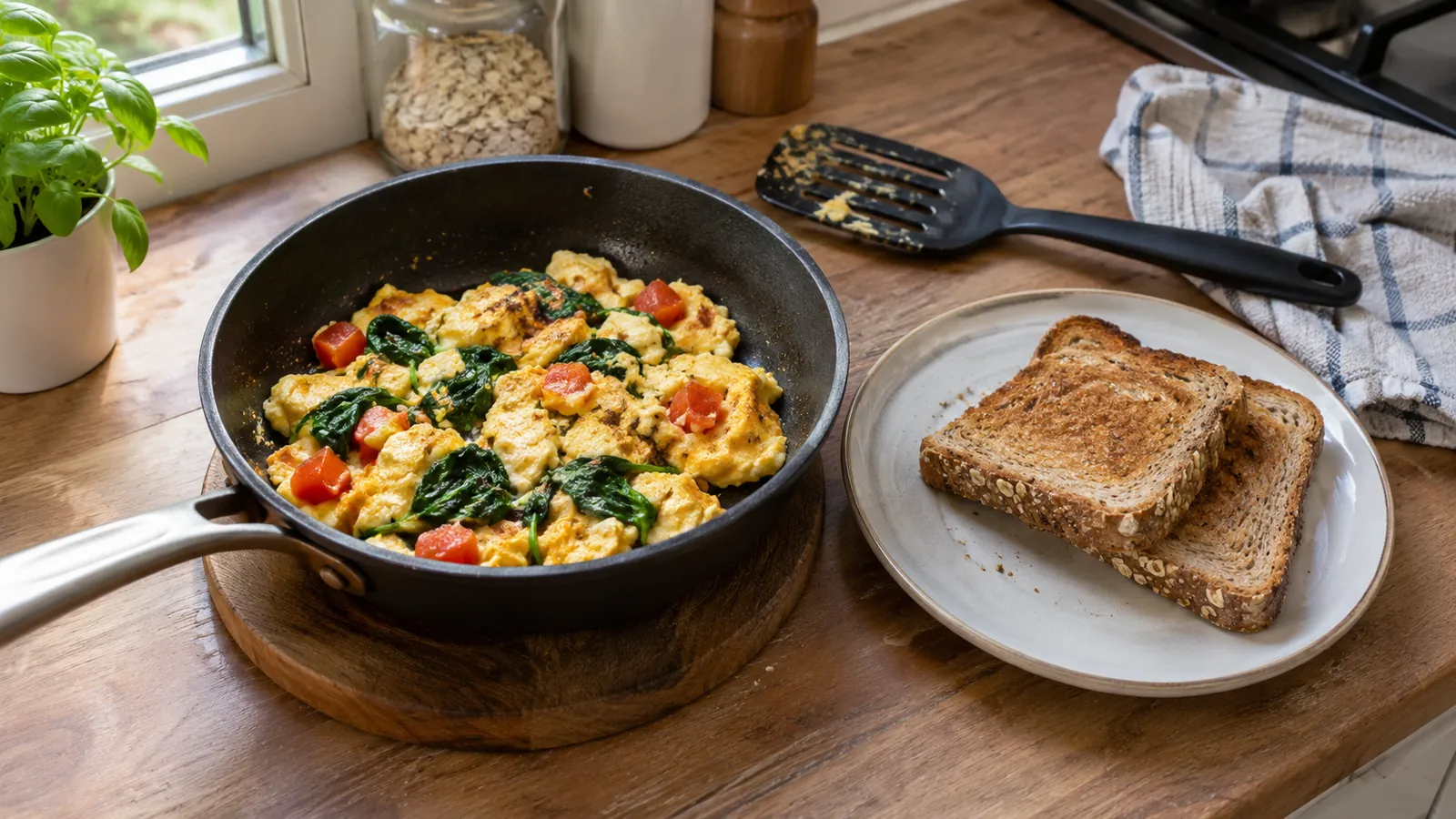
A Vegetable Scramble With Toast
This version is useful when you have fresh vegetables and want a single pan. The quantities above are flexible; the sequence matters more than an exact recipe.
- Prepare everything first. Wash and chop the vegetables, set out a clean plate and beat the eggs in a bowl with a fork. Wash your hands after handling raw eggs and clean anything they touch.
- Cook the firm vegetables. Warm a little oil in a non-stick or well-seasoned frying pan over medium heat. Add chopped onion, pepper or mushrooms, if using, and stir until tender. Reduce the heat if they begin to scorch.
- Add the quicker vegetables. Stir in chopped tomatoes or spinach. Let excess moisture evaporate so the finished eggs are not sitting in watery liquid. Cook frozen additions according to their instructions.
- Lower the heat and add the eggs. Pour them over the vegetables. Use a heatproof spatula to move the mixture gently from the edges towards the centre, turning it so uncooked egg reaches the pan.
- Finish cooking and serve. Cook until the eggs are set throughout, with no runny portions. Serve immediately with toast or warmed flatbread and any other accompaniments you want.
If the eggs stick, check the pan surface, heat and amount of oil next time. A hotter burner is rarely the answer: the underside can brown before the rest has cooked. For a larger household, use a larger suitable pan or make separate batches rather than piling everything into one small pan.
Change the Meal With What You Have
The following combinations use the same basic ingredients differently. They are options for separate dinners, rather than extra dishes to prepare together.
Eggs and Beans on Toast
Heat canned ready-to-eat beans according to the label. Plain drained beans can be warmed with a little canned tomato and seasoning; beans already in sauce may need nothing added. Cook the eggs separately as a scramble or fry them until both whites and yolks are firm, then serve alongside the beans on toast.
This is a convenient cupboard-based choice. Do not substitute dry beans directly: they need their own safe preparation and cooking process. Transfer unused canned beans to a suitable covered container and follow the label’s refrigeration and use instructions.
A Potato and Vegetable Egg Pan
Use freshly cooked potatoes, or refrigerated cooked potatoes that are still within their safe storage period. Cut them into small pieces and warm them thoroughly in a little oil with cooked vegetables. Add beaten eggs, lower the heat and turn the mixture gently until the egg is fully set and everything is hot throughout.
Starting with raw potatoes changes the workload. Cook them until tender before the eggs are added; otherwise, the eggs may finish while the potato remains hard. If using leftovers, check the combined food reaches 74°C (165°F), rather than judging only the egg’s appearance.
An Egg and Vegetable Wrap
Make the vegetable scramble, then spoon it into a warmed flatbread or tortilla. Use a filling that is fairly dry and avoid overfilling. Add washed salad leaves after cooking if desired, and serve straight away.
A wrap is especially useful when there is only a small amount of each vegetable. If the bread splits or the filling falls out, serve it open on a plate. Dinner does not depend on producing a tidy restaurant-style roll.
Keep Egg Safety Simple
For these meal ideas, cook eggs fully: individual whites and yolks should be firm, and scrambled eggs should have no runny portions. A mixed egg dish such as a frittata should reach 71°C (160°F), checked with a food thermometer. These are different from reheating leftovers, which should reach 74°C (165°F).
Keep eggs according to the carton and local food-safety advice. Once refrigerated, keep them chilled; a fridge thermometer helps you check the temperature. Clean hands, utensils and surfaces after raw-egg contact, and use a clean plate for cooked food.
Cook only what you expect to eat when possible. Refrigerate any leftovers promptly in shallow containers. Do not leave cooked egg dishes out for more than two hours, or one hour above 32°C (90°F). Follow shorter local or ingredient-specific storage limits; US guidance gives refrigerated cooked egg dishes a three-to-four-day limit. Our guide to storing leftovers safely explains the broader handling routine.
If you choose rice as an accompaniment, use freshly cooked rice or follow a specific rice-storage plan. UK guidance advises cooling leftover rice ideally within an hour, refrigerating it, using it within 24 hours and reheating it only once until steaming hot throughout. Do not apply the egg-dish storage window to rice.
Keep One Version in Your Regular Rotation
Choose the combination you are most likely to repeat, then keep its simplest ingredients available. Eggs, frozen vegetables and bread may suit one kitchen; canned beans and tomatoes may suit another. More extensive weekend meal preparation is optional.
Start tonight by choosing the accompaniment, cooking the vegetables and adding the eggs last. Once that sequence feels familiar, changing the vegetables or bread is enough to give the same basic dinner a different shape.