A can of beans can become dinner without a special shopping trip. Start with beans, add a vegetable or sauce, and choose something to serve alongside them. Easy canned bean meals work best when you keep the combination small enough to make with the ingredients and equipment already available.
A tomato-and-bean pan is a useful starting point. Once you know how thick you like it and which seasonings suit you, the same ingredients can become a toast topping or a simple soup. The examples below are flexible cooking ideas rather than promises about cost, nutrition or preparation time.
Start With the Can You Have
Read the label before planning the meal. Plain beans in water behave differently from beans already packed in tomato sauce, chilli sauce or a seasoned dressing. Check the ingredients for anything you avoid and follow the product’s preparation instructions.
For plain beans, drain them into a sieve. Rinse if you want to remove the packing liquid, then let excess water run off. For beans in a sauce you intend to use, keep the sauce and adjust the rest of the dish around it. Adding another full portion of tomato sauce may make the result wetter than you want.
These ideas use commercially canned beans. Dried beans need their own preparation and cooking process; they cannot replace canned beans directly in these methods.
Choose the style that suits dinner:
- White beans work well in a tomato pan or a roughly mashed toast topping.
- Kidney or mixed beans suit a paprika-seasoned pan with peppers.
- Chickpeas can join a vegetable soup or a tomato sauce if that is the can available.
The choice can be practical rather than exact. Keep the sauce familiar while changing the bean variety, then decide whether you prefer the result.
Make a Tomato-and-Bean Pan
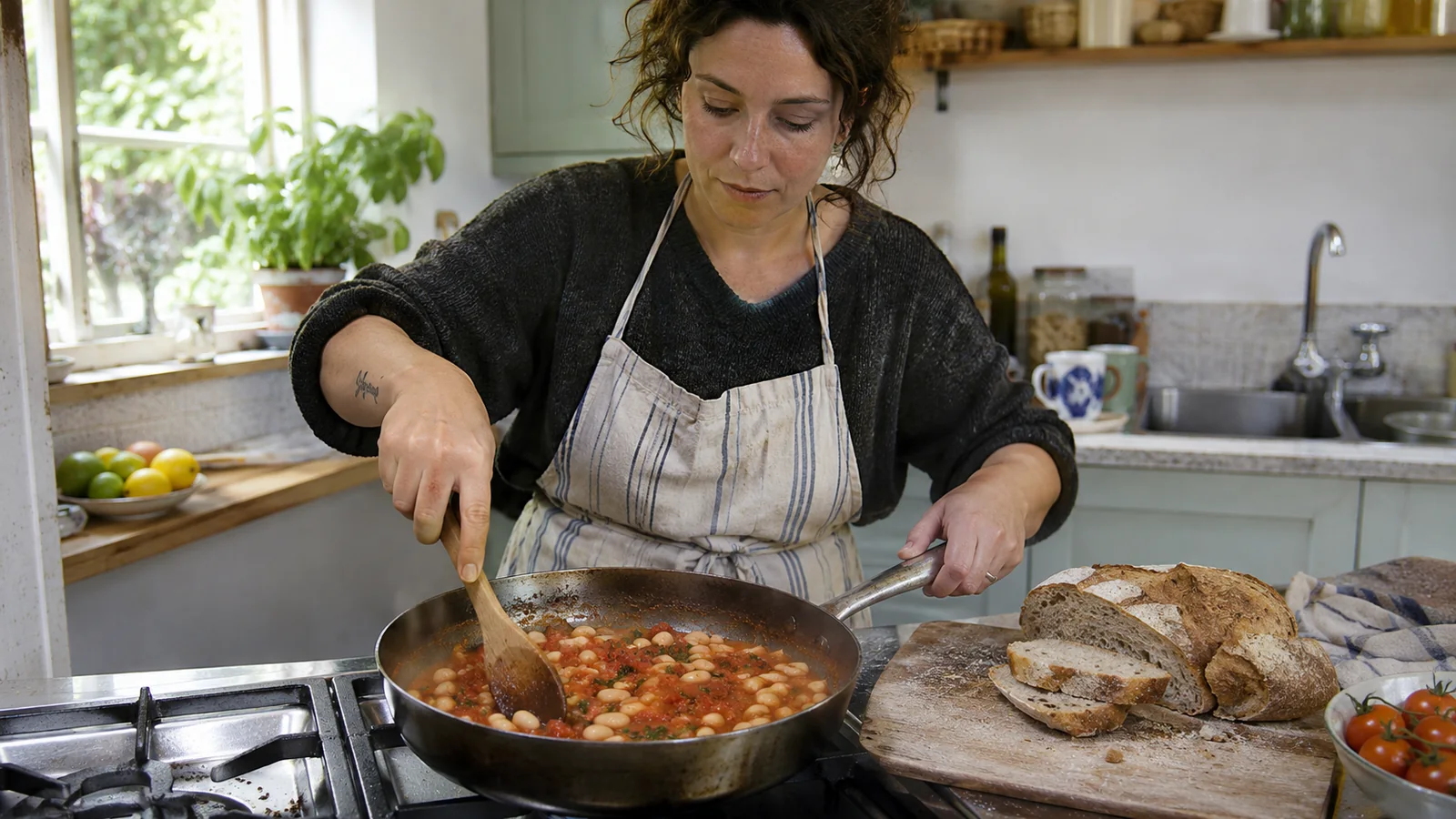
For a small pan, gather one can of plain beans, a can of chopped tomatoes, a small onion and a little cooking oil. Add garlic, dried herbs or paprika if you have them. Bread is a straightforward accompaniment; cooked potatoes or another freshly prepared staple also work.
Can sizes differ, so compare the drained quantity rather than assuming every can provides the same amount. Start with less tomato if you want a thick topping. Add more for a bowl with plenty of sauce. Adjust the amount to the number of people eating and their appetites.
- Chop the onion into small pieces. Prepare garlic or any extra vegetables before switching on the heat.
- Warm a little oil in a suitable pan over moderate heat. Add the onion and stir until softened. Reduce the heat if it begins to catch.
- Add chopped garlic or a small amount of dry seasoning, if using. Stir briefly without letting it burn.
- Add the tomatoes and stir, scraping up the softened onion. Simmer until the sauce begins to thicken, stirring as needed.
- Fold in the drained beans. Heat gently, following the can’s instructions, until the dish is hot throughout. Stir carefully to keep some beans whole.
- Taste with a clean spoon and adjust seasoning. Serve with bread and a vegetable you enjoy.
If the sauce catches, lower the heat and add a small splash of water. If it is too loose, simmer uncovered while stirring. Mash a spoonful of beans against the side of the pan to give the sauce more body without adding another ingredient.
Avoid adding a large amount of seasoning at the start. Tomatoes, sauces and canned products vary, so taste the assembled dish before deciding it needs more salt or spice.
Change the Format Without Starting Again
A Thick Topping for Toast
Use less tomato and roughly mash part of the beans. Spoon the hot mixture over toast just before eating so the bread retains some texture. A small amount of grated cheese or chopped herbs can finish it, but neither is essential.
Serve the topping beside the toast if you prefer crisp bread. This also makes it easier to adjust the balance between bread and beans at the table.
A Simple Vegetable-and-Bean Soup
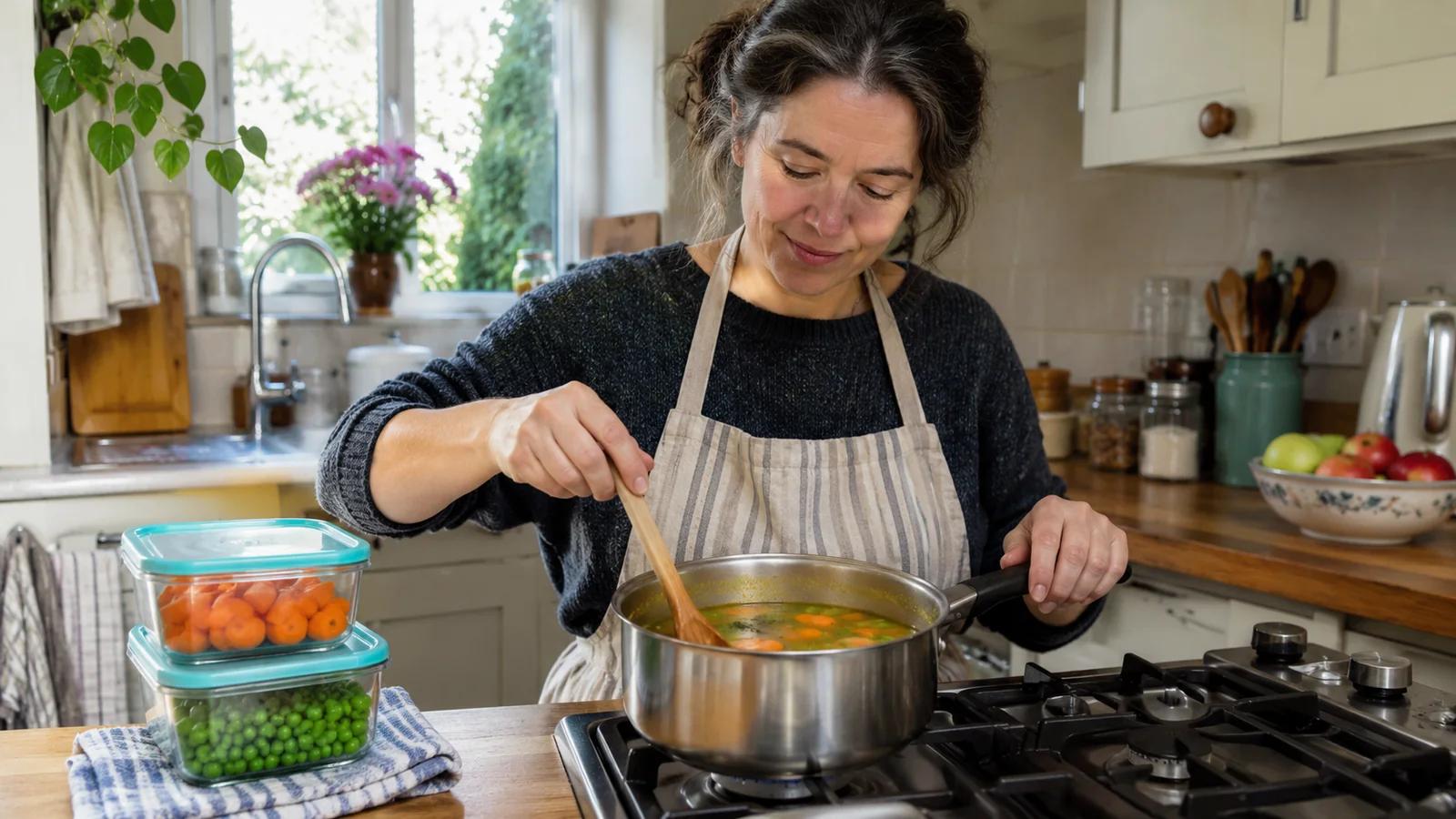
Start with softened onion and suitable chopped vegetables. Add tomatoes and enough water or prepared stock to make a soup, then cook until the vegetables are tender. Add canned beans and heat according to their label.
Choose vegetables that cook at a similar pace, or add firmer pieces earlier. Frozen vegetables can be convenient; follow their package cooking instructions. Keep the beans intact for a broth-style bowl or mash some for a thicker texture.
A Pepper-and-Bean Pan
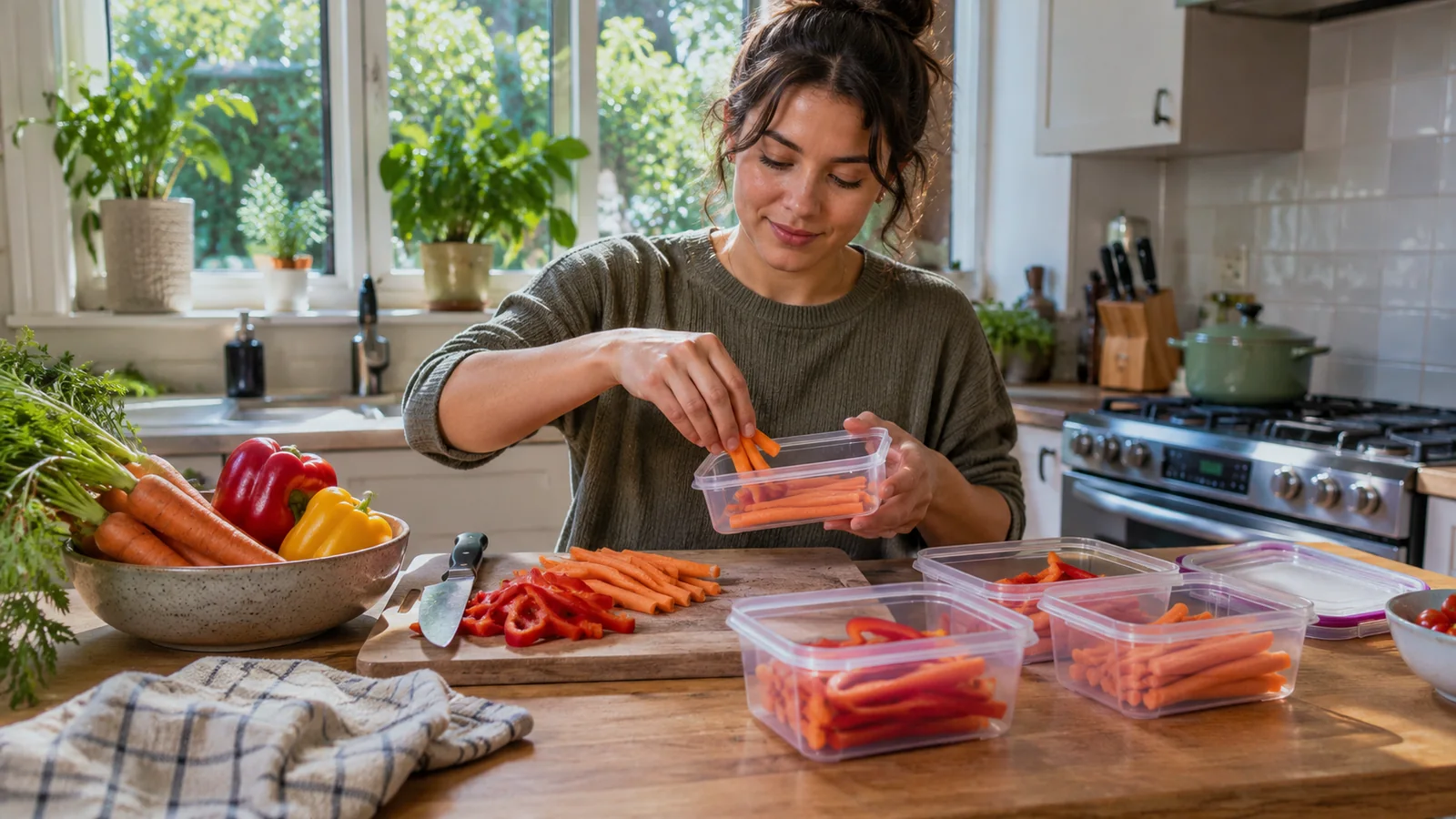
Soften sliced pepper with the onion, then use paprika and tomatoes as the base. Add the beans and heat through. Serve with bread or freshly cooked potatoes. Start with a small amount of chilli if different people at the table have different preferences.
If eggs are your usual cupboard dinner, our easy egg dinner guide offers a separate set of combinations. There is no need to add every available ingredient to the same pan.
Keep the Meal Manageable
Choose one version before opening cans. Opening several varieties to make dinner feel more interesting can leave more unused food than you intended. Check whether you will use the rest of a can before doubling the sauce.
Keep toppings optional and use what is already open. A spoonful of yoghurt, herbs or a little cheese can change the finish, but buying several extras changes the simplicity of the meal. Follow storage instructions for those ingredients too.
Write down the combination you liked: the bean variety, approximate sauce amount and seasoning. That gives you a repeatable dinner without needing to reproduce an exact recipe every time.
Handle Unused Beans and Leftovers Deliberately
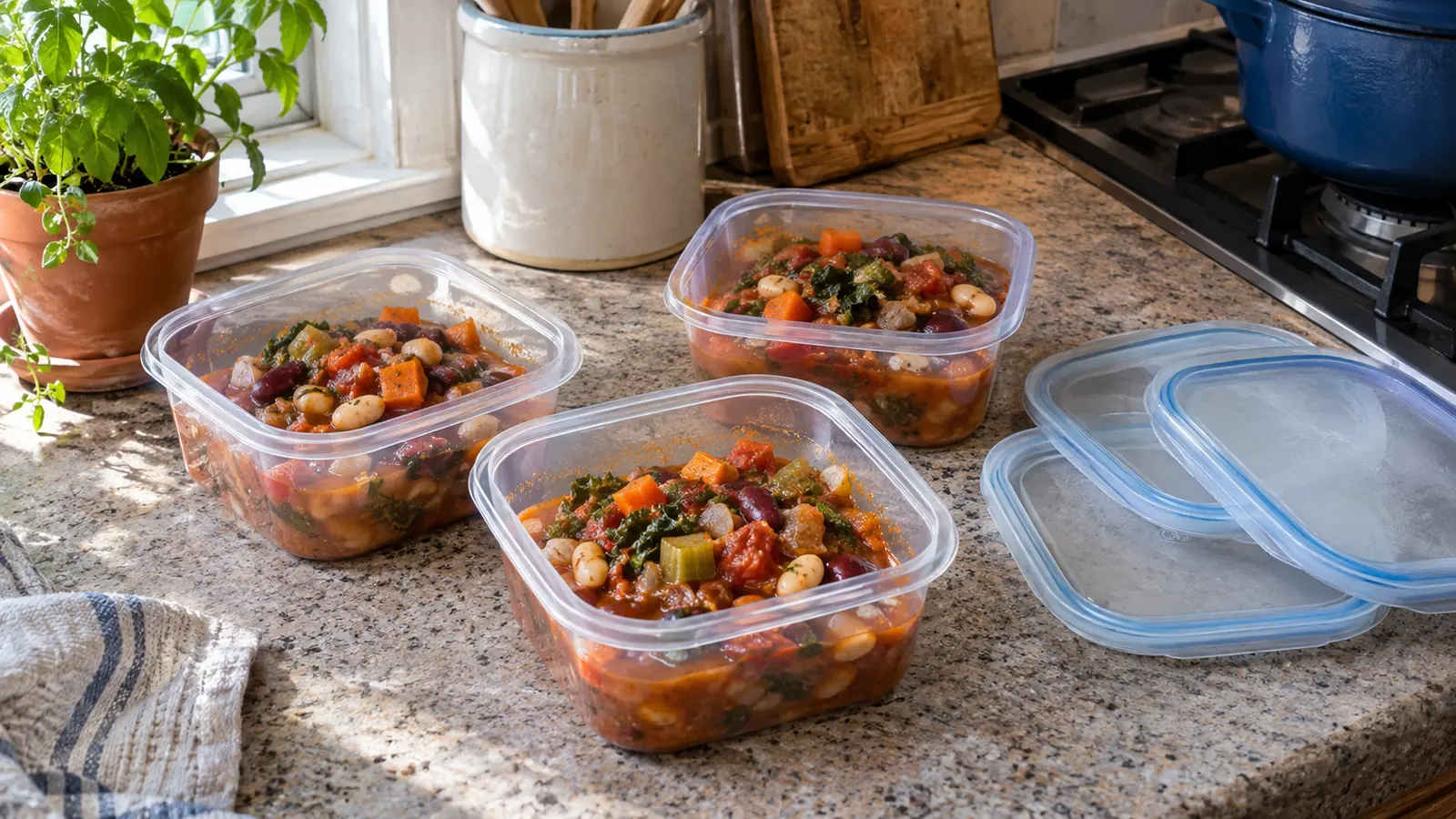
Reject bulging, leaking or deeply damaged cans. Transfer unused contents to a covered food container, refrigerate and follow the label’s instructions for use after opening. Do not rely on smell to establish safety.
For cooked leftovers, UK Food Standards Agency guidance advises cooling and refrigerating within one to two hours, using within 48 hours or freezing, and reheating only once until steaming throughout. Follow stricter product instructions where given. Portioning helps; our guide to freezing meals explains that process.
For the next dinner, choose one can, one sauce and one accompaniment. Make the version you can comfortably prepare, check what needs storing, and keep the successful combination for another evening.