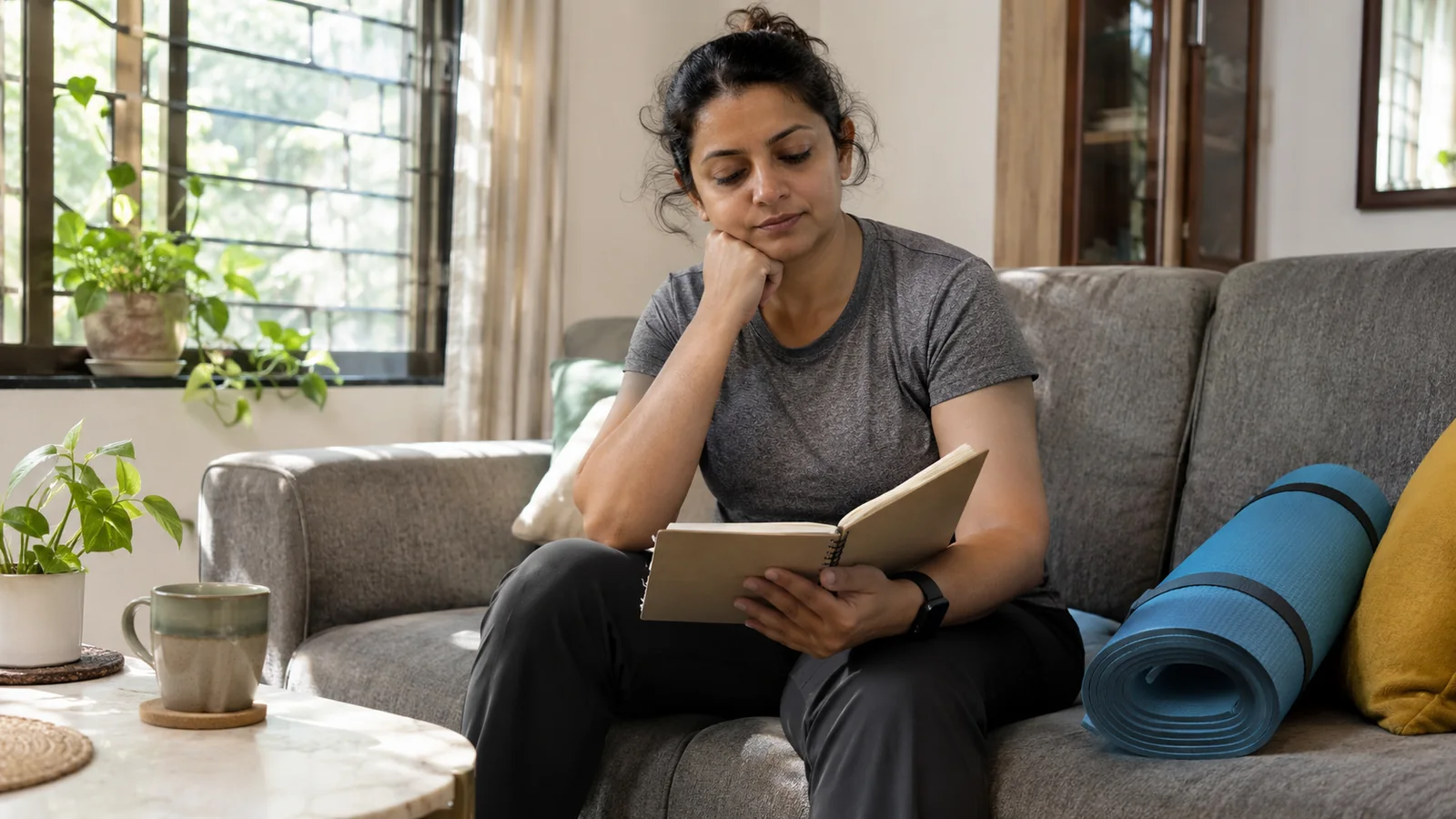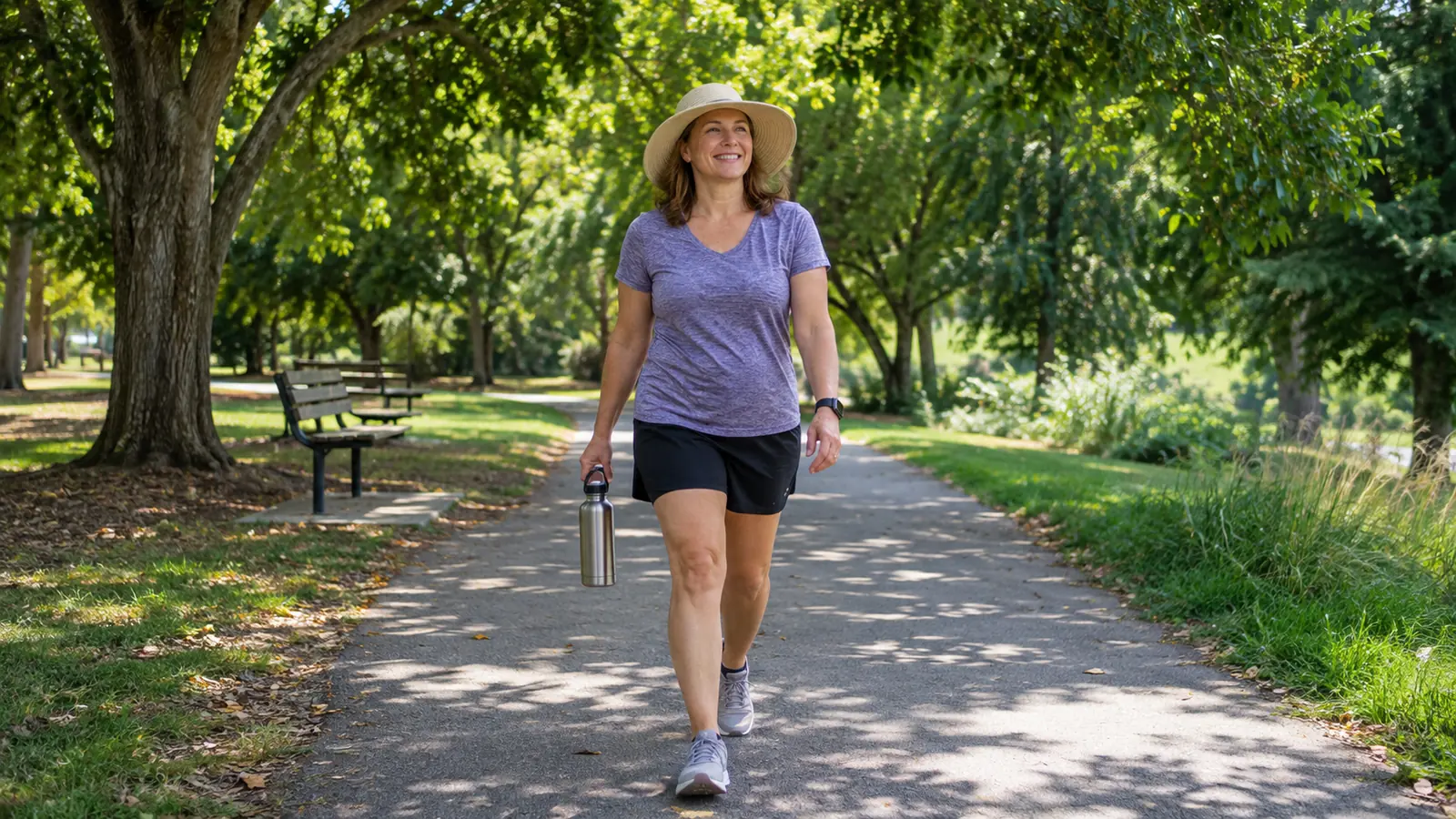
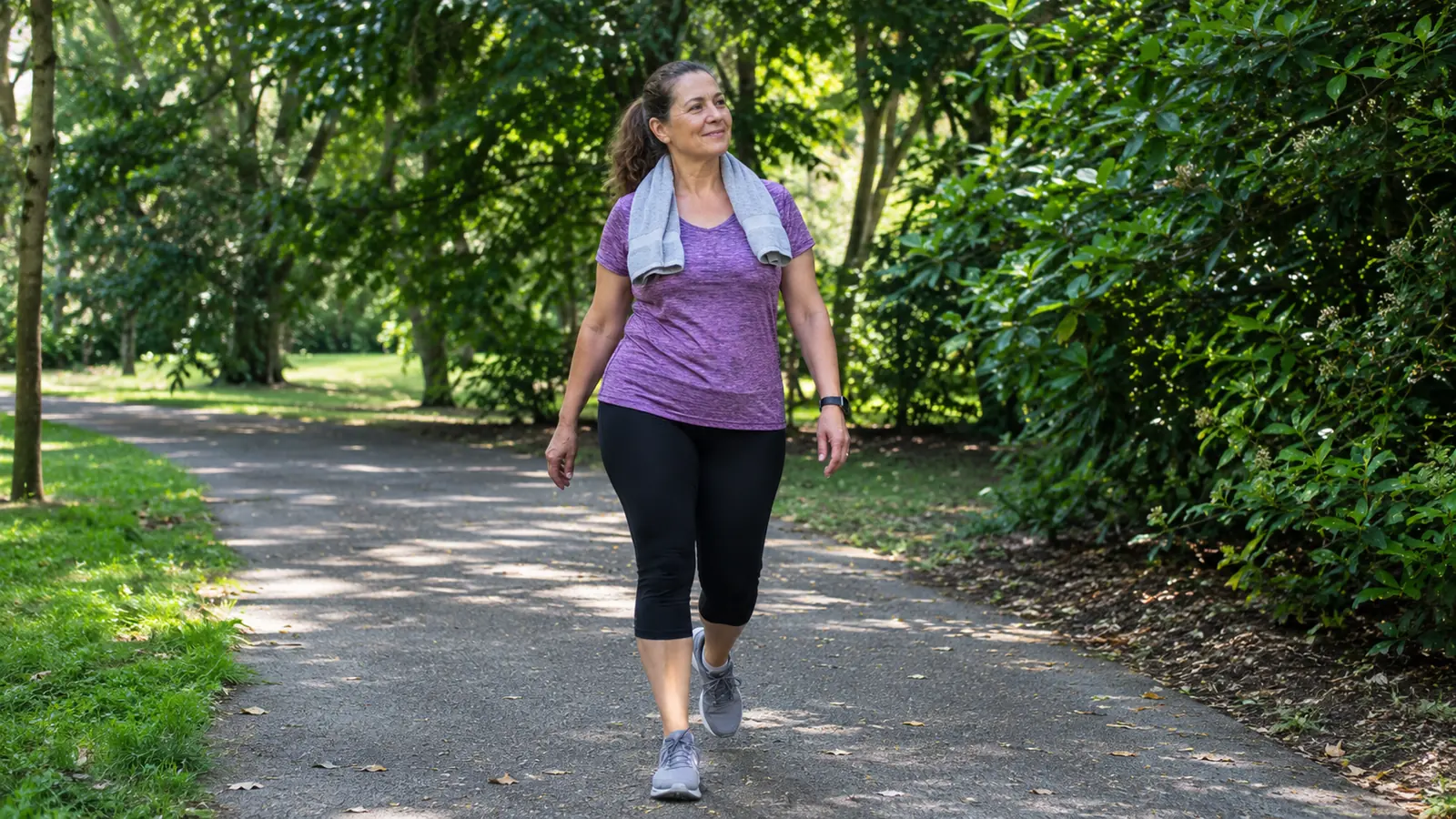
The last hard repetition or the end of a brisk route does not have to be the instant your workout stops. To cool down after exercise, make the activity progressively easier, then finish with any gentle stretching that suits you. The aim is a manageable transition, rather than another demanding block of training.
A useful routine should fit the exercise you actually do. Someone returning from a brisk walk needs a different ending from someone putting away weights in a small room. You can keep the principle consistent while changing the movements and setting.
Decide Where Your Workout Will End
Plan the finish before you begin. If your available time ends at 18:30, treat that as the end of the whole session, including the transition and putting equipment away. Ending the hard part at 18:29 leaves little room to slow down without feeling rushed.
For an outdoor walk, choose a final stretch of route where you can move easily without crossing a busy junction or hurrying up stairs. At home, leave a clear space beside your equipment. In a gym, know where you can walk without blocking other people.
This is also a practical reason to avoid scheduling your hardest effort immediately before a train departure, work call or school pickup. You do not need an elaborate ritual; you need an ending that your timetable allows.
If you are returning to exercise after a break, plan the whole session conservatively. A carefully arranged finish cannot compensate for a workout that was too demanding in the first place.
Make the Final Movement Progressively Easier
An active cool-down means continuing at a much easier effort. General heart-health guidance commonly suggests about five to ten minutes of slower activity after aerobic exercise. Treat that as a planning guide, while following any individual advice you have received.
The transition should feel like the session is winding down. It is not the moment to add a final hill, chase a distance target or squeeze in another interval. There is no requirement to earn a particular calorie total before you finish.
Adapt the ending to the setting:
- After a brisk walk, ease your pace before reaching your destination.
- After a run, move into an easy walk where it is safe to do so.
- On a stationary bike, lower the workload and pedal gently before stopping, following the equipment’s instructions.
- After a home strength session, leave the loaded exercises behind and choose comfortable, unweighted movement in the clear space you prepared.
These are examples, rather than a personalised exercise prescription. Use movements you already manage comfortably. If a clinician, physiotherapist or rehabilitation team has given you a specific finish, use that plan.
Avoid turning the clock into a test. Finishing the allotted minutes is not proof that every symptom is harmless, and you should not keep moving through concerning symptoms simply to complete a routine.
Use a Short Sequence You Can Remember
A complicated checklist is easy to abandon when you are tired or distracted. Choose a few cues that make sense in your usual workout location.
- Lower the effort. Change from the main workout to an easier version or a familiar gentle movement. Make that decision deliberately instead of allowing the last hard effort to continue into the walk home.
- Keep the finish easy. Leave performance targets behind. You are no longer trying to improve your pace, resistance or repetition count in this session.
- Choose whether to stretch. Once the active part is over, use a comfortable stretch you know if it suits your needs. You do not have to work through every muscle group each time.
- Close the session. Put equipment somewhere safe and note anything you want to adjust next time. A brief observation is enough; a cool-down does not need a detailed tracking system.
For example, someone who exercises in a shared living room might clear the weights from the walking area, move gently in the remaining space, then finish before returning furniture. Our guide to setting up a home workout space can help with those practical boundaries.
Keep Stretching Comfortable and Optional
Stretching can be a separate part of the finish, but it does not replace easing down from a demanding aerobic effort. Choose a position you can enter and leave steadily. Keep breathing, avoid bouncing and stop short of pain.
A supported calf stretch is one possible choice after walking: place one foot behind you, keep its heel towards the floor and use a wall or sturdy chair for support if needed. Change sides gently. A short, comfortable hold is enough to begin; do not force a larger range because another person can reach further.
You can also leave a particular stretch out. A floor-based position may be inconvenient outside, and balancing on one leg may not suit you at the end of a session. Use an appropriate familiar alternative or ask a qualified professional for guidance.
Pregnancy, injury and medical conditions can change which stretches are suitable. Adapt the routine with professional advice rather than copying a standard sequence regardless of your circumstances.
Set Realistic Expectations About Recovery
A cool-down offers a structured way to finish, but it is not a guarantee against soreness or injury. Research does not consistently show that active cool-downs reduce delayed-onset muscle soreness. Feeling sore tomorrow does not automatically mean you performed today’s finish incorrectly.
That distinction matters when deciding what to change. Adding more and more stretches is not necessarily the answer to an overly ambitious workout. Look at the session as a whole and avoid using a cool-down as permission to exceed your current capacity.
Likewise, do not judge success by how exhausted you feel at the end. An intentionally easy finish may feel unremarkable. Its place in your routine is different from the main exercise effort.
If you often struggle to fit it in, shorten the main session rather than making the finish harder or more complicated. On lower-energy days, consider the overall workload first; our guide to exercise on tired days explores that planning decision.
Finish Safely, Then Make the Next Session Easier to Organise
A planned cool-down applies to ordinary exercise, not to pushing through illness or alarming symptoms. Stop exercising and seek urgent medical help for chest pain, fainting or severe or unusual breathlessness. Recurrent dizziness or other unexpected symptoms deserve medical advice rather than a longer self-designed routine.
For an everyday session that goes comfortably, keep the final review simple: did you leave enough time, did the location work, and was your chosen movement easy to manage? Change one practical detail next time if needed.
The most useful finish is one you can repeat without rushing. Reserve the time, gradually reduce the effort and choose comfortable movements that fit your situation.