
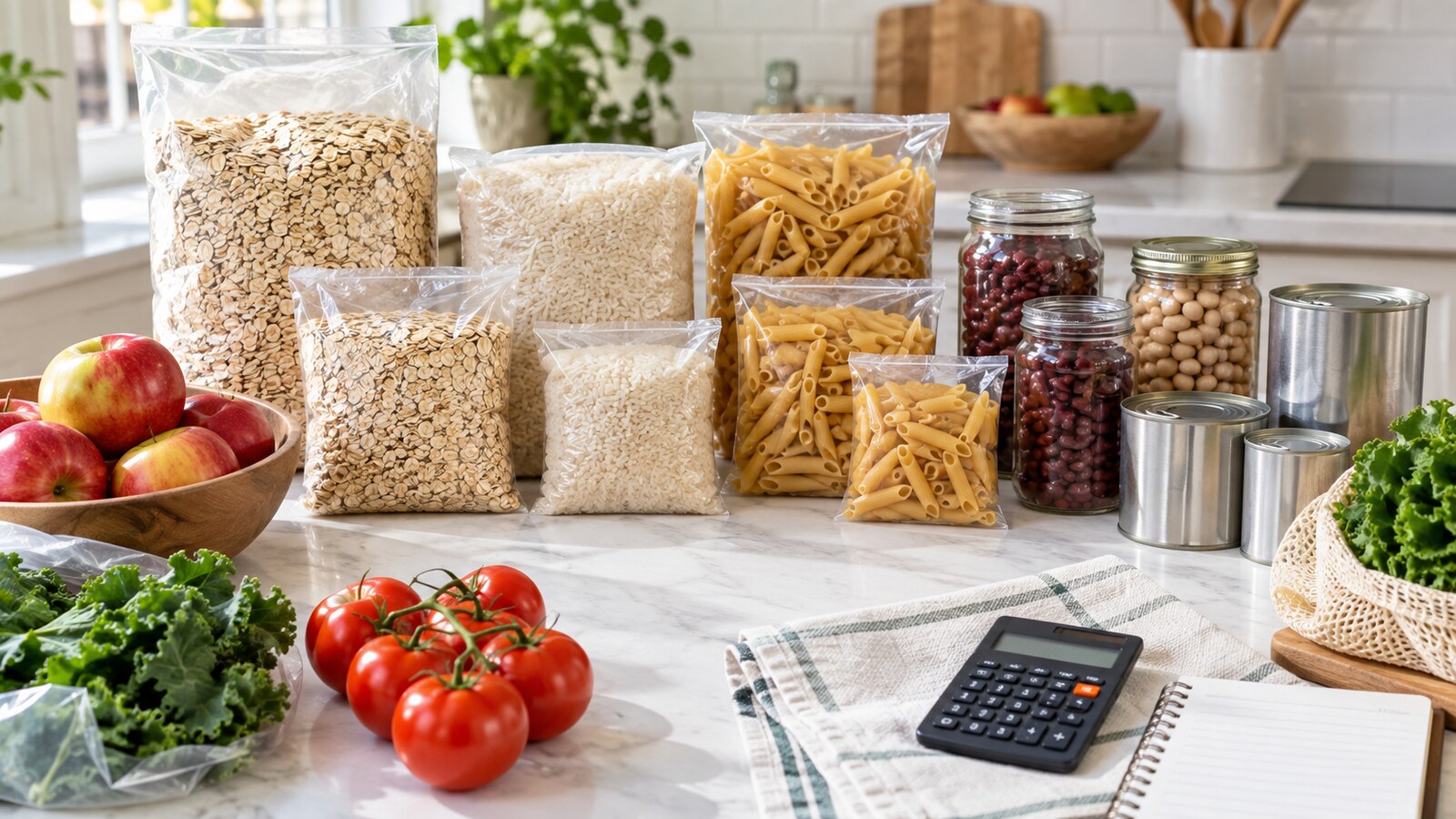
The bigger grocery pack looks like the sensible choice until the shelf label tells a different story. A family-size cereal box may cost less per gram. A bulk bottle of detergent may not. A sale sticker may beat both of them for one week. A smaller package may be the better buy if the larger one will expire, spill, go stale, or sit in a cupboard until you move house.
That is why unit pricing is useful. It turns a shelf full of different package sizes into a fairer comparison by showing the price for the same amount: per kilogram, per 100 grams, per litre, per millilitre, per item, or another standard measure.
This guide is for shoppers who want a calmer way to compare grocery value in store or online without turning every trip into a spreadsheet.
Quick Answer
Compare grocery unit prices by looking beyond the total shelf price and checking the price per standard unit, such as per kilogram, per 100 grams, per litre, or per item. Compare only similar products using the same unit, include sale or loyalty prices only if you can actually use them, and choose the lower unit price only when the package size, storage space, freshness, quality, and cash flow still make sense.
What A Unit Price Actually Tells You
A unit price shows how much a product costs for a standard amount. If one bag of rice is priced per kilogram and another is also priced per kilogram, you can compare them more easily than by looking at the total package price alone.
Consumer-protection agencies describe unit pricing as a way to help shoppers compare value, especially when products are sold in different sizes, brands, or packaging formats. In practice, it is a small piece of consumer math placed near the selling price.
You may see it as:
- Price per kilogram or pound for rice, flour, fruit, meat, or vegetables.
- Price per 100 grams or ounce for cereal, snacks, cheese, coffee, or spices.
- Price per litre, quart, or fluid ounce for milk, oil, juice, detergent, or shampoo.
- Price per item, sheet, capsule, tablet, tea bag, egg, diaper, or wash.
The exact unit depends on the country, retailer, and product category. The important habit is to compare like with like. If one label says price per 100 grams and another says price per kilogram, convert one before deciding.
Why The Shelf Price Can Mislead You
The shelf price answers one question: what will this package cost today?
The unit price answers a different question: how much product am I getting for the money?
Both matter. A small package may have the lowest total price but the highest price per unit. A large package may have the lowest unit price but still be too expensive for this week’s budget. A sale item may look attractive because the sticker is bright, while the unit price is still higher than a plain alternative beside it.
Unit pricing is especially useful when brands use different package sizes. Two products may look nearly identical on the shelf, but one may contain less. NIST’s Office of Weights and Measures describes unit pricing as a tool shoppers can use for value comparisons, including when package contents change over time.
That does not mean every smaller package is bad value or every larger package is good value. It means the package shape should not make the decision for you.
The Simple Three-Step Check
Use this routine for products you buy often.
First, find the unit price. Look near the shelf price, product card, online listing, or price filter. If there is no unit price, divide the total price by the amount in the package.
Second, compare the same unit. If one pasta label shows price per kilogram and another shows price per 100 grams, multiply the 100-gram price by 10 before comparing it with the kilogram price.
Third, ask whether you will use the quantity. The lowest unit price is only a saving if the product will be stored safely, used before quality drops, and not push out money needed for other essentials.
That final step is where ordinary shopping beats pure arithmetic. A 5-kilogram bag of rice may be excellent value for a household that cooks rice daily and has dry storage. It may be wasteful for someone trying a new grain for the first time.
When Bigger Packs Are Worth It
Larger packs often make sense for stable items you already use regularly.
Good candidates include:
- Rice, oats, pasta, flour, lentils, beans, and other dry staples.
- Cooking oil, vinegar, salt, sugar, tea, coffee, or spices you use often.
- Toilet paper, laundry detergent, dish soap, and cleaning products.
- Frozen food that fits your freezer and will be used within a realistic time.
- Multipacks for lunch boxes, shared homes, or large households.
Before choosing the bigger pack, check three things.
Do you have space? A bargain that crowds out other food can make the kitchen harder to manage.
Will it keep? Dry goods need sealed storage. Oils can go rancid. Spices lose strength. Snacks go stale. Frozen goods need reliable freezer space.
Will you use it without waste? GDU’s guide to storing leftovers safely focuses on cooked food, but the same practical idea applies here: buying more helps only when you have a plan for using and storing it.
When The Smaller Pack Is Smarter
A higher unit price can still be the better decision.
Choose the smaller pack when:
- You are trying an unfamiliar product.
- The item spoils quickly after opening.
- You live alone or cook irregularly.
- Storage is damp, hot, crowded, or shared.
- You are managing cash tightly this week.
- A larger pack would encourage unwanted overuse.
- The big pack does not fit your fridge, freezer, pantry, or routine.
This is common with fresh herbs, salad greens, specialty sauces, baby food, yogurt, bread, cosmetics, medicine-adjacent personal care items, and anything with a short use-by date after opening.
Unit pricing should support judgment, not replace it. Paying a little more per unit can be rational if it prevents waste, keeps your cash available, or helps you buy only what you need.
Watch Sale Signs And Loyalty Prices
Promotions can make unit-price comparison harder.
When an item is on sale, compare the sale unit price with the regular unit price of similar alternatives. A discount does not automatically make the product cheaper than the store brand, a different size, or a competitor’s regular price.
Be careful with:
- “Two for” offers when you only need one.
- Loyalty-card prices that require membership.
- App-only discounts that may not apply at checkout.
- Mix-and-match promotions across products you do not equally need.
- Multibuys on fresh food that may spoil.
- End-of-aisle displays that separate the item from cheaper alternatives.
If a promotion requires buying more than planned, treat the extra units as part of the cost. Four yogurts for a lower unit price are not a saving if two expire unopened.
Compare Quality And Nutrition Separately
Unit price tells you value by quantity. It does not tell you whether two products are nutritionally similar, whether one has more added sugar, whether the quality is acceptable, or whether a cheaper product suits your household.
For packaged food, compare the nutrition label and ingredients separately from the price. GDU’s guide to reading nutrition facts labels explains how serving size, nutrients, and ingredients can change the real choice. A cheaper unit price is less useful if the product does not meet the reason you are buying it.
The same applies to non-food groceries. A cheaper detergent per litre may still be poor value if you need more per wash. A lower-cost paper product may not last as long. A cheaper battery multipack may not suit the device. Unit price is a starting point, not the entire review.
Use Unit Pricing Online Too
Online grocery shopping can make comparison easier because many stores let you sort or scan listings quickly. It can also make comparison harder when sponsored results, substitutions, bundles, delivery fees, and membership discounts sit beside the product price.
When shopping online:
- Use filters or sorting options for unit price when available.
- Check whether the unit changes between products.
- Compare fresh products by weight, count, or pack size carefully.
- Watch for substitutions that change the unit price.
- Recheck the cart before checkout if prices update.
- Include delivery fees only when comparing whole orders, not individual items.
For repeat orders, do not assume last month’s best value is still best. Package sizes, promotions, and availability change. A quick unit-price scan of your regular staples can catch quiet changes without rebuilding the entire order.
Build A Small Price Memory
You do not need to memorize every price in the store. Start with the ten to twenty items you buy most often.
For example:
- Rice, pasta, oats, bread, milk, eggs, cooking oil, beans, coffee, tea, yogurt, vegetables, fruit, toilet paper, detergent, dish soap, and pet food.
Write down the normal unit price for your usual product and the price you consider a strong deal. This can live in a notes app, spreadsheet, paper grocery list, or budgeting app.
That small memory helps you ignore fake urgency. If you know your usual oats cost about a certain amount per kilogram, a sale sign becomes easier to judge. This also works well beside a bill calendar because groceries often have to flex around rent, utilities, school costs, and other fixed payments.
A Practical Unit-Price Checklist
Before choosing the “best value” package, ask:
- Are both products measured by the same unit?
- Is the sale or loyalty price actually available to me?
- Will I use the larger quantity before it loses quality?
- Do I have proper storage?
- Is the cheaper option similar enough in quality, nutrition, or performance?
- Does buying more create cash pressure this week?
- Is the unit price still lower after any required multibuy?
- Am I comparing the products I actually came to buy?
If the answer is unclear, choose the size that fits your real life. The goal is not to win every shelf-label calculation. The goal is to make fewer automatic choices based on package size, bright signs, or habits.
Bottom Line
Unit pricing is one of the simplest tools for smarter grocery shopping. It helps you see past the package, compare similar products fairly, and notice when a bigger pack, smaller pack, sale sticker, or changed size is affecting value.
Use it most on the items you buy again and again. Compare the same units, check whether the quantity fits your storage and routine, and remember that the cheapest unit price is only a good deal when the product will actually be used.