
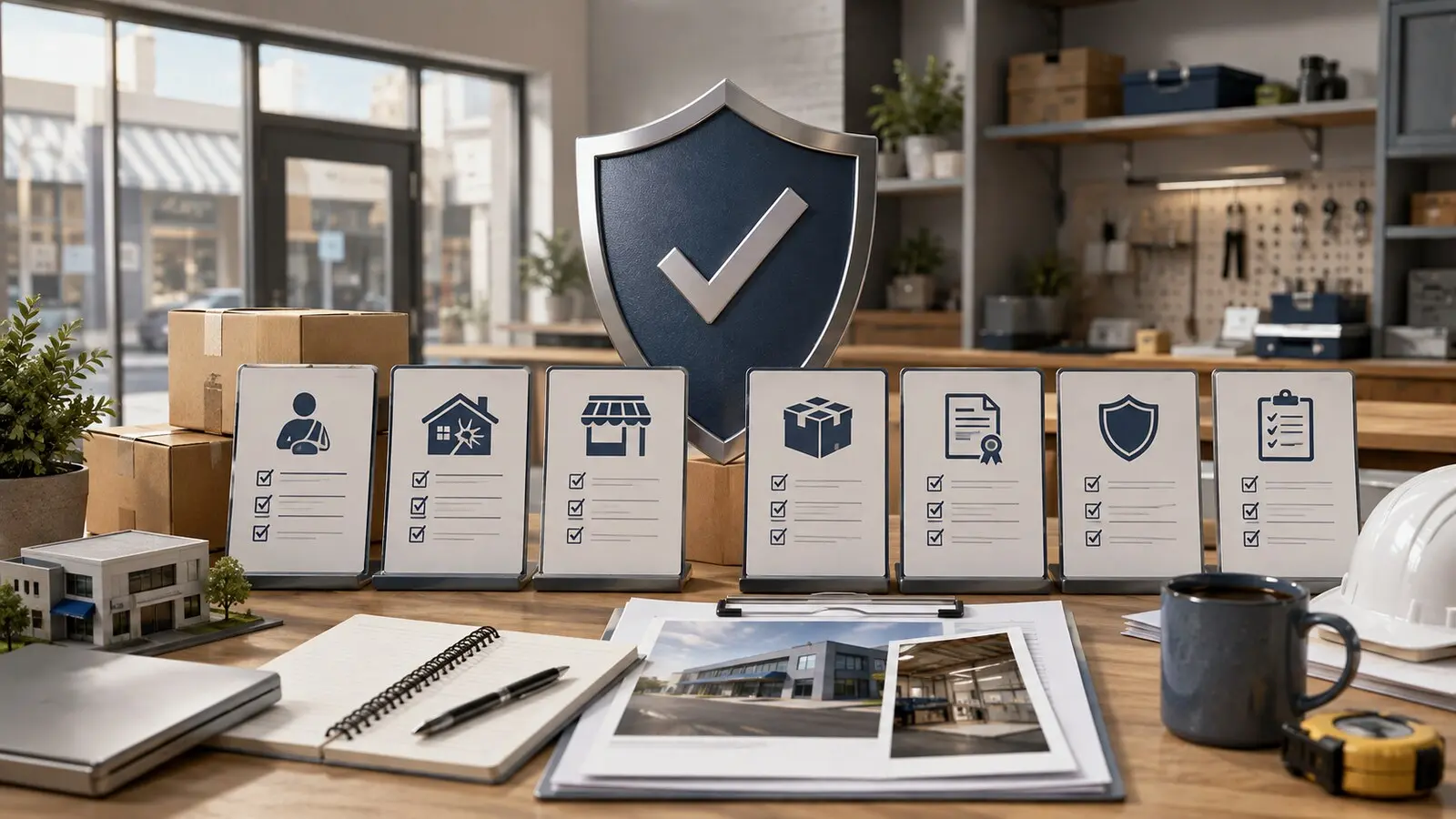
Small business general liability insurance is often the first policy a shop, contractor, consultant, studio, event vendor, manufacturer, or service company is asked to show. A landlord may require it before signing a lease. A client may ask for a certificate before work begins. A marketplace, lender, venue, or supplier may also make liability cover part of doing business.
The cheapest quote is not always the safest choice. A useful policy should match the people who visit your premises, the places where your team works, the products you sell, the property you handle, the contracts you sign, and the claims you could not afford to defend alone.
Quick Answer
Compare small business general liability insurance by checking what third-party claims are covered, who is insured, where coverage applies, whether products and completed operations are included, the per-occurrence limit, aggregate limit, deductible or retention, defense-cost treatment, exclusions, certificate rules, additional insured endorsements, contract requirements, insurer strength, claims support, and the total annual cost.
Also compare a standalone general liability policy with a business owner’s policy, often called a BOP. A BOP may bundle general liability with commercial property and business interruption coverage, while a standalone liability policy may leave your own building, equipment, stock, and income interruption uncovered.
Start With The Actual Liability Risk
General liability is designed for third-party risks. The U.S. Small Business Administration lists general liability insurance as coverage for financial loss from bodily injury, property damage, medical expenses, libel, slander, lawsuit defense, settlements, and judgments. In practical terms, it is the policy a business looks to when a customer slips in a shop, a contractor damages client property, a product causes injury, or an advertising claim triggers a legal dispute.
Before comparing prices, map the situations that could create a claim. Ask whether customers visit your premises, whether staff visit client sites, whether you rent a booth or venue, whether you sell physical products, whether you install or repair items, whether you store customer property, and whether your marketing could create copyright, trademark, libel, or advertising-injury exposure.
A home-based business should do the same exercise. SBA guidance notes that home-based business coverage may be added to homeowner’s insurance for a small amount of business equipment and third-party liability, but that is not the same as assuming a personal home policy covers all business activity.
Compare Covered Claims
The first page of a quote usually shows the premium and limit. Do not stop there. Review the insuring agreement and coverage parts to see which claims are actually covered.
Common general liability areas include bodily injury, property damage, personal injury, advertising injury, medical payments, damage to premises rented to you, products, and completed operations. Product and completed-operations coverage matters for businesses that make, sell, distribute, install, repair, prepare, or deliver goods. Australia business.gov.au guidance makes the same practical distinction: product liability may be needed when a business makes, sells, or supplies goods, while public liability covers injury, death, property damage, emotional distress, or consequential loss caused by negligence.
If your business gives advice, designs systems, writes code, prepares accounts, provides regulated services, or makes professional recommendations, general liability may not be enough. GDU’s guide to comparing professional liability insurance explains why errors-and-omissions cover is usually reviewed separately from bodily injury and property-damage cover.
Check Who And Where Is Covered
A policy should match the legal names, trade names, locations, owners, subsidiaries, employees, temporary workers, contractors, and volunteers involved in the work. A certificate that lists the wrong entity can create problems when a lease, client contract, or tender requires proof of insurance.
Review the territory clause as well. A local retailer may need only domestic coverage. An ecommerce seller, consultant, software company, design studio, or exporter may need to know whether claims involving foreign customers, foreign venues, cross-border sales, or overseas work are handled differently.
If subcontractors are involved, ask whether their actions are covered, whether they need their own insurance, and whether your business must collect certificates from them. A contractor or event vendor may lose a client contract if subcontractor insurance is missing or if the certificate does not include required wording.
Compare Limits And Aggregates
General liability quotes often show a per-occurrence limit and an aggregate limit. The per-occurrence limit is the maximum available for one covered claim. The aggregate is the total available across the policy period, usually one year. A policy can look strong on one large number while still being weak if several claims would quickly use up the aggregate.
Many small businesses encounter $1 million per occurrence and $2 million aggregate requirements in leases, venue agreements, franchise agreements, supplier contracts, and customer procurement forms. That does not mean those limits are automatically right for every business. A low-risk freelancer, a food vendor, a construction subcontractor, a children’s product seller, and an event operator can have very different exposure.
Look at the contract first. Then compare the likely severity of a claim, the number of locations, customer foot traffic, product volume, hazardous work, rented premises, past claims, and whether an umbrella or excess liability policy is needed above the base limit.
Understand Deductibles, Defense Costs, And Sublimits
The headline limit is not the only financial term. Review the deductible or self-insured retention, how defense costs are treated, whether defense costs reduce the policy limit, and whether special sublimits apply to rented premises, medical payments, products, or particular endorsements.
If the policy has a high deductible, the business needs enough cash to pay it during a claim. That connects insurance decisions to basic operating finance. GDU’s guide to comparing a small business bank account explains why account access, reserves, payment settlement, and documentation matter for small-business resilience.
Ask how claims are reported, whether there is 24-hour support, whether the insurer appoints defense counsel, how quickly certificates are issued, and whether claims can be managed online. A low premium is poor value if the insurer is hard to reach when a landlord, venue, or injured customer needs documentation quickly.
Read The Exclusions Carefully
Exclusions often decide whether a claim is covered. Common gaps can include professional services, employment disputes, workers’ compensation, intentional acts, contractual liability beyond ordinary negligence, pollution, auto use, aircraft or drones, liquor liability, cyber incidents, product recall, faulty workmanship, damage to your own property, property in your care, and known prior incidents.
Some gaps need separate policies. Cyber incidents should be compared under a dedicated cyber policy; GDU’s guide to small business cyber insurance covers breach response, ransomware, business interruption, social engineering, and third-party cyber liability. Employee injuries may require workers’ compensation or employers’ liability depending on country and local law. The UK government, for example, says most employers must carry employers’ liability insurance from an authorised insurer and meet a minimum cover amount.
The key is not to memorize every policy type. It is to ask one practical question: what loss do we expect this policy to pay, and what separate policy would respond if it does not?
Certificates And Contract Requirements
Many businesses buy general liability because another party requires evidence of insurance. Review certificate turnaround time, additional insured endorsements, waiver of subrogation wording, primary and noncontributory language, cancellation-notice wording, and whether the insurer or broker charges for certificate changes.
Do not assume a certificate changes the policy by itself. If a client or landlord asks to be added as an additional insured, confirm that the endorsement has actually been issued and that it applies to the relevant work, location, or contract.
This also matters for payment and onboarding workflows. Before sending deposits, signing supplier forms, or changing payment instructions, compare insurance documentation with operational controls. GDU’s guide to verifying invoice payment details is useful when insurance certificates, vendor onboarding, and payment approvals move through the same inbox.
Standalone Policy Or Business Owner’s Policy
A standalone general liability policy can work for a low-property business that mainly needs third-party liability cover. A business owner’s policy may be better when the company also needs property and income-interruption protection.
The SBA describes a business owner’s policy as a bundle of typical coverage options that can simplify buying insurance. A District of Columbia insurance department overview similarly describes a BOP as a package that typically includes property insurance, business interruption or continuation insurance, and liability insurance, while noting that it does not cover every risk.
Compare both paths. A retailer with stock, fixtures, signs, and customer foot traffic may find a BOP more complete. A mobile consultant with no premises and limited equipment may prefer a narrower liability policy plus professional liability. A contractor may need general liability, tools coverage, commercial auto, workers’ compensation, and umbrella cover rather than a basic package.
Pricing And Quote Comparison
General liability insurance cost depends on industry, revenue, payroll, location, premises, customer traffic, product risk, subcontractor use, claims history, limits, deductibles, endorsements, and insurer appetite. Quotes can vary widely because carriers classify risks differently.
Compare at least three quotes where practical, but compare the same assumptions each time. Use the same business description, revenue estimate, payroll, locations, limits, deductibles, additional insured needs, and products or completed operations information. If one quote is much cheaper, look for missing endorsements, narrower operations wording, lower sublimits, or exclusions.
Tell the truth about the work you do. If a business describes itself as a low-risk consultant but also installs equipment, caters events, stores client goods, or performs construction tasks, a later claim can become a coverage dispute.
Common Mistakes
The first mistake is confusing general liability with professional liability. A customer injury and a client financial-loss claim from advice are usually different insurance problems.
The second mistake is assuming general liability protects your own property. Damage to your building, equipment, inventory, tools, or business income usually requires property, inland marine, tools, or business interruption coverage.
The third mistake is buying limits below a contract requirement. A certificate with the wrong limit may delay a lease, event, tender, or client onboarding process.
The fourth mistake is ignoring product and completed-operations exposure. A business can face claims after goods are sold, food is served, equipment is installed, or repair work is finished.
The fifth mistake is letting the policy drift as the business changes. Review coverage when revenue grows, locations change, employees are hired, new products are sold, subcontractors are added, or larger clients require different insurance wording.
FAQ
Is general liability insurance the same as public liability insurance?
The terms are often similar but not identical across countries. In the United States, general liability usually refers to commercial coverage for third-party bodily injury, property damage, and personal or advertising injury. In markets such as Australia and the UK, public liability is commonly used for third-party injury or property-damage claims involving members of the public.
Does every small business need general liability insurance?
Many businesses should consider it, especially if customers visit, employees visit client sites, products are sold, leases require it, or client contracts demand a certificate. Legal requirements vary by location and industry, so check local rules and contract terms.
Does general liability cover employees?
General liability is mainly for third-party claims. Employee injuries are usually handled through workers’ compensation, employers’ liability, or local employment-related insurance requirements.
Does general liability cover cyber claims?
Usually not in a complete way. Cyber claims involving data breaches, ransomware, network interruption, privacy liability, or fraudulent transfers should be reviewed under cyber insurance and security controls.
What limit should a small business choose?
Start with contract requirements, then assess premises risk, products, customer traffic, work locations, claim severity, and available reserves. Many small businesses see $1 million per occurrence and $2 million aggregate requirements, but the right limit depends on the business and jurisdiction.
Summary
Compare small business general liability insurance by matching the policy to real third-party injury, property-damage, product, premises, and advertising risks. Review covered claims, insured entities, territory, limits, deductibles, exclusions, certificates, contract wording, claims support, and whether a BOP or separate policies would give better protection.