A reusable grocery bag needs attention after the food is put away. Crumbs, soil and leaking packages can leave the inside dirty, while folding a damp bag makes it harder to check whether it has dried properly. The next shopping trip is easier to prepare for when cleaning and storage are part of unpacking.
To clean reusable grocery bags, first check the material and care label. Wash suitable fabric bags according to their instructions, clean other washable bags by the method their maker allows, and dry them before putting them away. Keep bags used for raw foods separate from those carrying food you will eat without cooking.
Check the Bags While You Unpack
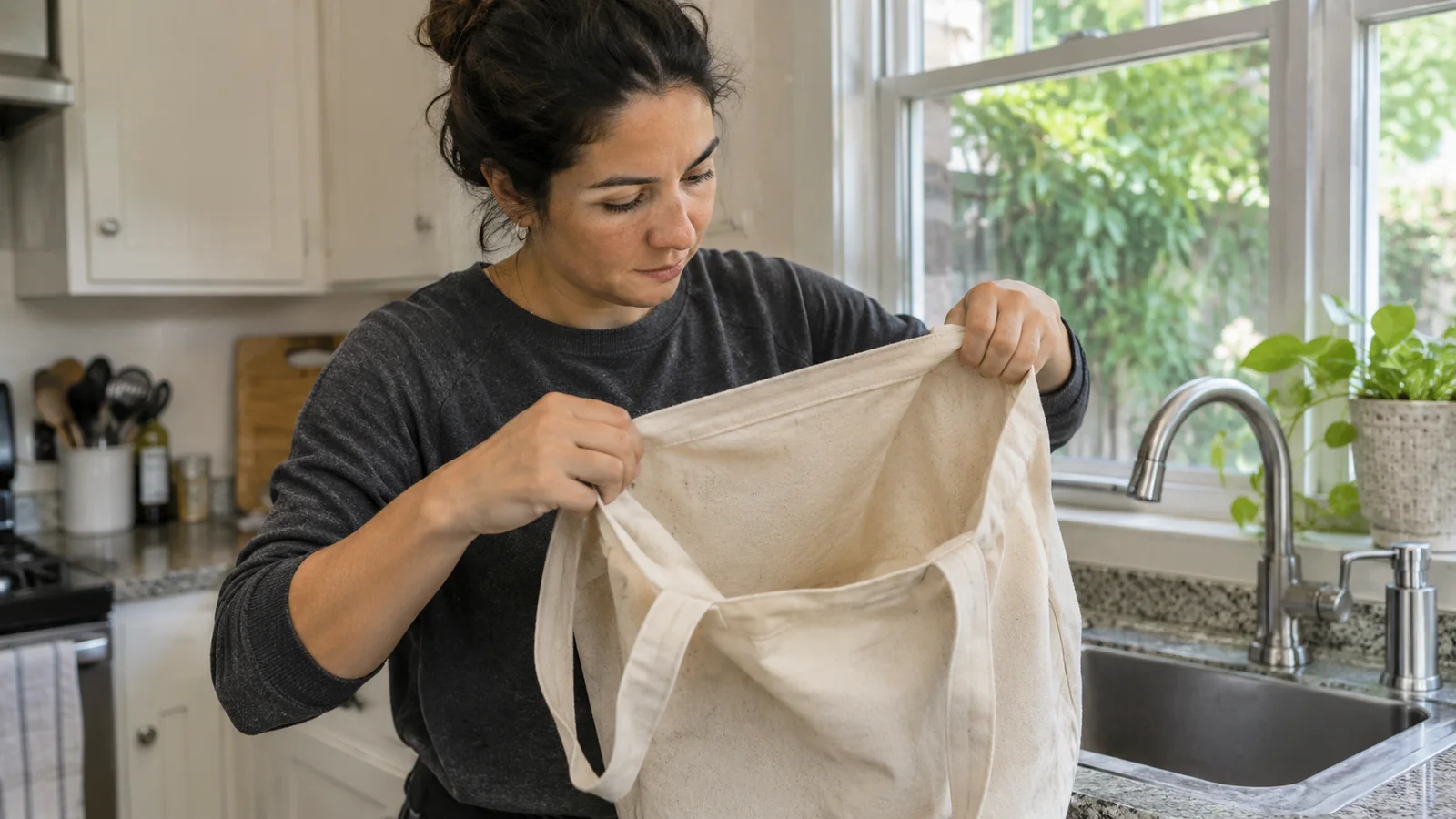
Look inside each bag after every use, including the corners and any removable base. A quick glance at the outside can miss a spill underneath a carton or loose vegetable. Take out receipts and packaging so that you can see the whole interior.
Food-safety guidance recommends frequent washing of reusable grocery bags, with particular attention after carrying raw meat, poultry, fish or seafood. If food juices have leaked, clean the affected bag thoroughly before it returns to grocery use. A bag that looks clean may still have been exposed to raw-food contamination.
Make the decision before folding the bags together. Set aside anything needing cleaning, rather than putting it back into the same stack as the bags ready for shopping. This is also a convenient moment to check handles and seams for damage.
Match the Method to the Bag
The term reusable covers several constructions. A plain cotton tote, a coated woven bag and an insulated bag may need different treatment. Follow the label or the manufacturer’s instructions rather than assuming everything can go into the same wash.
| Bag construction | What to check before cleaning |
|---|---|
| Washable fabric | Permitted wash temperature, detergent and drying method |
| Coated or mixed material | Whether hand-washing is allowed and which surfaces can be cleaned |
| Insulated bag | Lining, seams, removable inserts and the maker’s drying instructions |
| Damaged or heavily soiled plastic-based bag | Whether it should be discarded rather than reused for food |
Food Standards Scotland advises disposing of plastic-based reusable carrier bags when there has been spillage, soiling or damage. Its guidance distinguishes these from cotton fabric bags that can be hot-washed with detergent. Avoid treating a thin carrier bag as though it were a durable washable container.
If instructions are missing, look up the particular product before using a washing machine, tumble dryer or strong cleaning chemical. An uncertain bag does not have to accompany the next food shop; use another clean, suitable bag while you resolve how to care for it.
Clean, Rinse and Dry in Order
For a bag whose care instructions permit washing, work through the process rather than stopping at a quick wipe of the most visible patch.
- Empty it completely. Remove loose debris and take out any removable parts that the instructions say can be separated.
- Use the permitted wash method. Machine-wash suitable fabric bags with detergent as directed. For hand-washable bags, use a clean cloth or sponge and hot, soapy water where the material permits it.
- Reach the interior. Pay attention to the base, folds and corners. Turn the bag inside out if its construction and instructions allow this, rather than forcing a stiff lining or seam.
- Remove cleaning residue. Follow the product and bag instructions for rinsing. Do not add stronger chemicals simply because the bag carried groceries.
- Dry before storing. Open the bag out so the interior can dry. Check folds and the underside of removable pieces before folding everything together again.
Québec’s food-safety advice recommends drying bags inside out or drying the inside with a clean cloth. It also directs readers to fabric-bag care labels. Leave enough time for the drying method your bag requires; washing immediately before leaving can leave you choosing between a damp bag and a delayed trip.
Do not mix cleaning products. This routine does not require a homemade disinfectant recipe, a fragrance spray or a claim that an ordinary wash makes a bag sterile.
Give Different Groceries Separate Bags
Cleaning works alongside careful packing. Reserve clearly identifiable bags for raw foods and keep them away from ready-to-eat groceries. Do not assume that a bag previously used for raw meat becomes a suitable bread bag because no stain remains.
A simple colour or label system can make the distinction easier to remember. Choose a method everyone who shops for the household can understand. You might keep the raw-food bag apart from the general grocery stack, with the marking visible when it is folded.
At the checkout, group items according to the bags you intend to use. Keep cleaning products and other household goods separate from food. Pack raw meat, poultry and seafood to prevent juices leaking onto other purchases; separate packaging does not remove the need to check the shopping bag afterwards.
If a grocery bag has carried non-food items, wash it thoroughly before returning it to grocery use. Better still, keep a separate bag for shoes, sports equipment or household errands so the food bags have a clear purpose.
Build a Small Routine You Can Repeat
Try putting the clean, dry bags in one designated place and keeping bags awaiting washing elsewhere. This is an organisational suggestion, not a required storage system. It works only if the difference is obvious to the people who use it.
Before your next trip, add a bag check to your grocery-list planning. Count the clean bags you need, select the appropriate separate bags and leave any questionable ones behind. After returning, put food away promptly and follow appropriate safe food-storage habits.
The practical goal is straightforward: inspect after use, clean by a suitable method, dry fully and pack with separation in mind. A small collection of bags you can care for consistently is more useful than a large stack whose condition you cannot easily judge.