The wrong bag can make a good trip harder before you even leave home. A suitcase that looked perfect online may be too tall for the airline sizer, too heavy when packed, awkward on stairs, fragile at the wheels, or too small for the items you actually need.
The best luggage is not the most expensive bag or the biggest one you can find. It is the bag that fits your route, airline rules, body, transport plans, and packing style without creating extra fees or daily frustration.
Quick Answer
Choose luggage by starting with the trip, not the bag. Check the airline’s carry-on, personal-item, checked-bag, weight, and smart-bag rules before buying. For short city trips, a small carry-on and personal item may be enough. For longer trips, family travel, formal events, or gear-heavy plans, a checked suitcase may make sense. Measure the full bag including wheels and handles, consider whether you can lift it into an overhead bin, choose wheels or backpack straps based on the surfaces you will use, and avoid smart-luggage features unless the battery rules are clear.
Start With the Airline Rules
Luggage decisions should begin with the most restrictive flight on your itinerary.
Airlines set their own baggage allowances, and those allowances can vary by route, cabin class, aircraft type, fare type, and operating carrier. IATA notes that carry-on allowances may vary by airline, cabin class, and aircraft type, and that checked-bag allowances vary by airline and route. That means a bag that works on one trip may be inconvenient or expensive on another.
Before buying or packing, check:
- The carry-on size limit.
- Whether the limit includes wheels and handles.
- The personal-item size limit.
- Carry-on weight limits, if any.
- Checked-bag weight and linear-dimension limits.
- Baggage fees for your fare.
- Whether a partner airline operates any flight segment.
- Rules for smart bags, trackers, lithium batteries, tools, liquids, and restricted items.
Do not rely only on a store label that says “cabin size” or “international carry-on.” Those phrases are convenient marketing shortcuts, not universal rules.
Measure the Outside, Not the Packing Space
A suitcase can be sold by its body size while the airline measures the whole object. Wheels, handles, side grips, bulging pockets, and overstuffed expansion zippers can all matter.
Use a tape measure at home:
- Height from wheel base to top handle.
- Width at the widest side point.
- Depth from front to back, including pockets.
- Total linear dimensions for checked luggage where required.
The Federal Aviation Administration says the maximum carry-on size for many airlines is 45 linear inches, calculated from height plus width plus depth, but it also tells travelers to check the airline’s own carry-on guidelines because airline rules can be stricter. IATA gives 56 x 45 x 25 cm, or 22 x 18 x 10 inches, as a general reference used by many airlines, including wheels and handles, while still emphasizing that airline conditions apply.
The practical buying rule is simple: leave a margin. A bag that barely fits on paper can fail when the front pocket is full.
Decide What Must Stay With You
Carry-on luggage is not only about avoiding a checked-bag fee. It is about control.
Keep travel documents, payment cards, keys, medicines, valuables, fragile electronics, chargers, a change of essential clothing, and irreplaceable items in the bag that stays with you. Travel.gc.ca advises packing valuables or necessities in carry-on baggage rather than checked bags, and IATA says valuable or irreplaceable items should not be placed in checked baggage.
If you are checking a suitcase, your personal item becomes more important. It should fit under the seat, open easily, and hold the things you would need if the overhead bin filled or the checked bag arrived late.
GDU’s guide to preparing for a checked-luggage delay is a useful companion if you are deciding what belongs in the carry-on layer.
Match the Bag to the Trip
Different trips punish different bags.
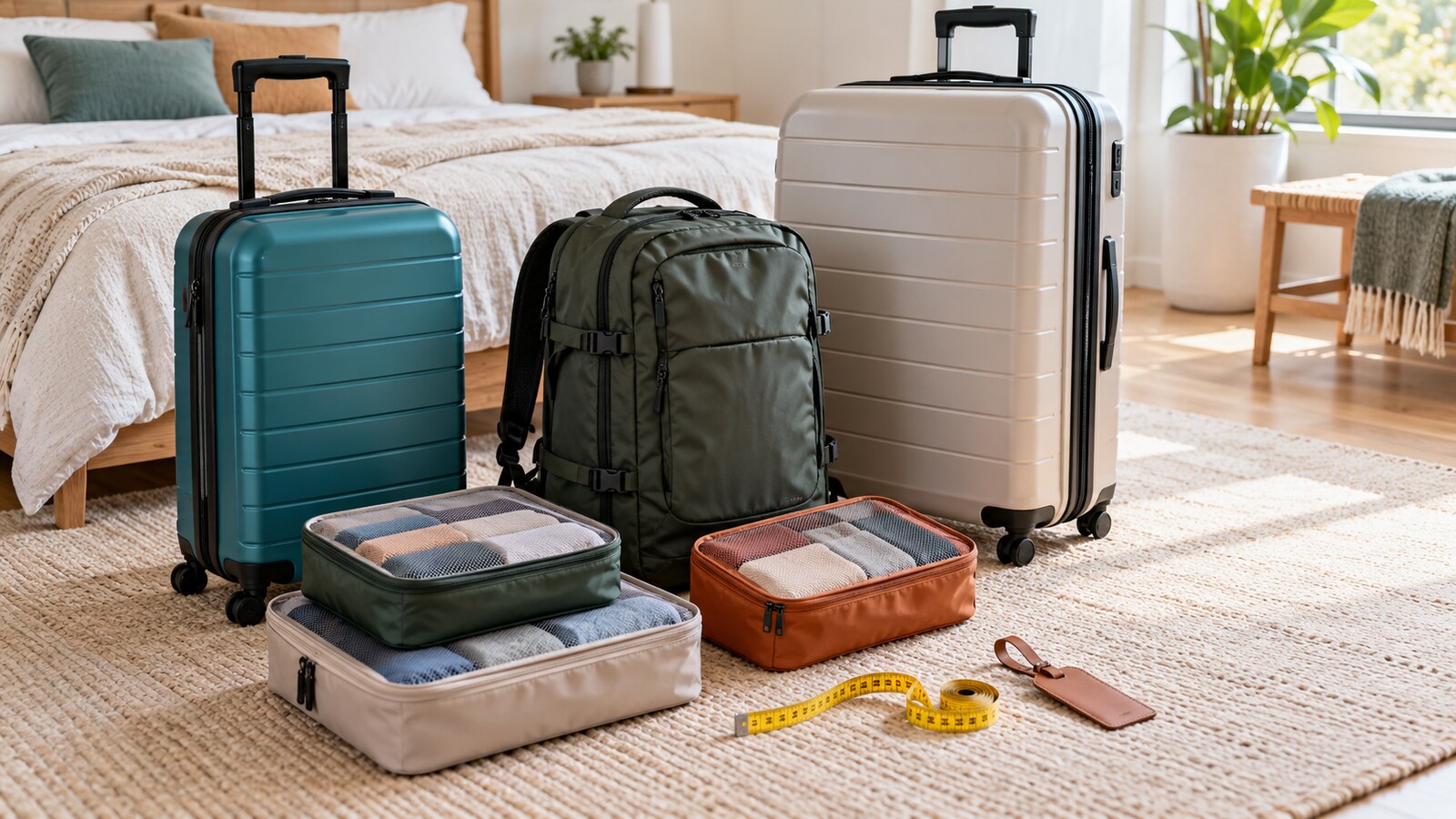
A small wheeled carry-on works well for airport-to-hotel trips, conferences, city breaks, and travel with smooth pavements, lifts, taxis, and train stations with ramps. It keeps clothing flatter and is easier to organize.
A travel backpack works better when you expect stairs, cobblestones, buses, hostels, ferries, uneven sidewalks, rural transfers, or frequent accommodation changes. The tradeoff is that backpacks can strain shoulders if overloaded, wrinkle clothing more easily, and become awkward if they lack structure.
A larger checked suitcase makes sense when you need formal clothing, cold-weather layers, children’s items, sports equipment, gifts, or a long stay. The risk is weight. A large suitcase invites overpacking, and a bag that is easy to roll at home may be difficult to lift onto a luggage rack or into a car.
For many travelers, the most flexible setup is not one huge bag. It is a modest checked bag or carry-on paired with a well-planned personal item.
Think About Wheels, Terrain, and Lifting
Spinner wheels are easy in airports because the bag rolls upright beside you. They are less pleasant on rough pavement, gaps, gravel, rain, curbs, or thick carpets. They also add exterior height and can be more exposed to damage.
Two-wheel roller bags usually pull better over uneven ground and often give slightly more protected wheel placement. The tradeoff is that you pull the weight behind you, which can be tiring in long terminals.
Backpacks avoid wheels entirely, but comfort depends on fit. Look for padded shoulder straps, an adjustable sternum strap, a hip belt for heavier loads, a back panel that does not collapse, and handles that let you lift the bag without grabbing weak fabric.
Whatever style you choose, test the lifting problem. If you cannot safely lift a packed carry-on above shoulder height, it may not belong in the overhead bin. The FAA cautions that heavy items should go under the seat rather than overhead, because falling carry-on items can injure passengers.
Choose Capacity You Will Actually Use
More capacity is tempting. It also creates problems.
A larger bag can be harder to control, easier to overpack, more expensive to check, and more likely to exceed weight limits. A smaller bag forces decisions, but it can also make the trip calmer because every item earns its place.
Think in trip types:
- One to three nights: personal item only or small carry-on if clothing is simple.
- Four to seven nights: carry-on plus personal item for many city, work, and warm-weather trips.
- Longer trips: carry-on plus laundry plan, or checked bag if climate, clothing, or equipment requires it.
- Family travel: fewer larger shared bags may be easier than many small bags, but each adult should still keep essentials accessible.
- Multi-climate trips: one checked bag may beat forcing bulky layers into a cabin suitcase.
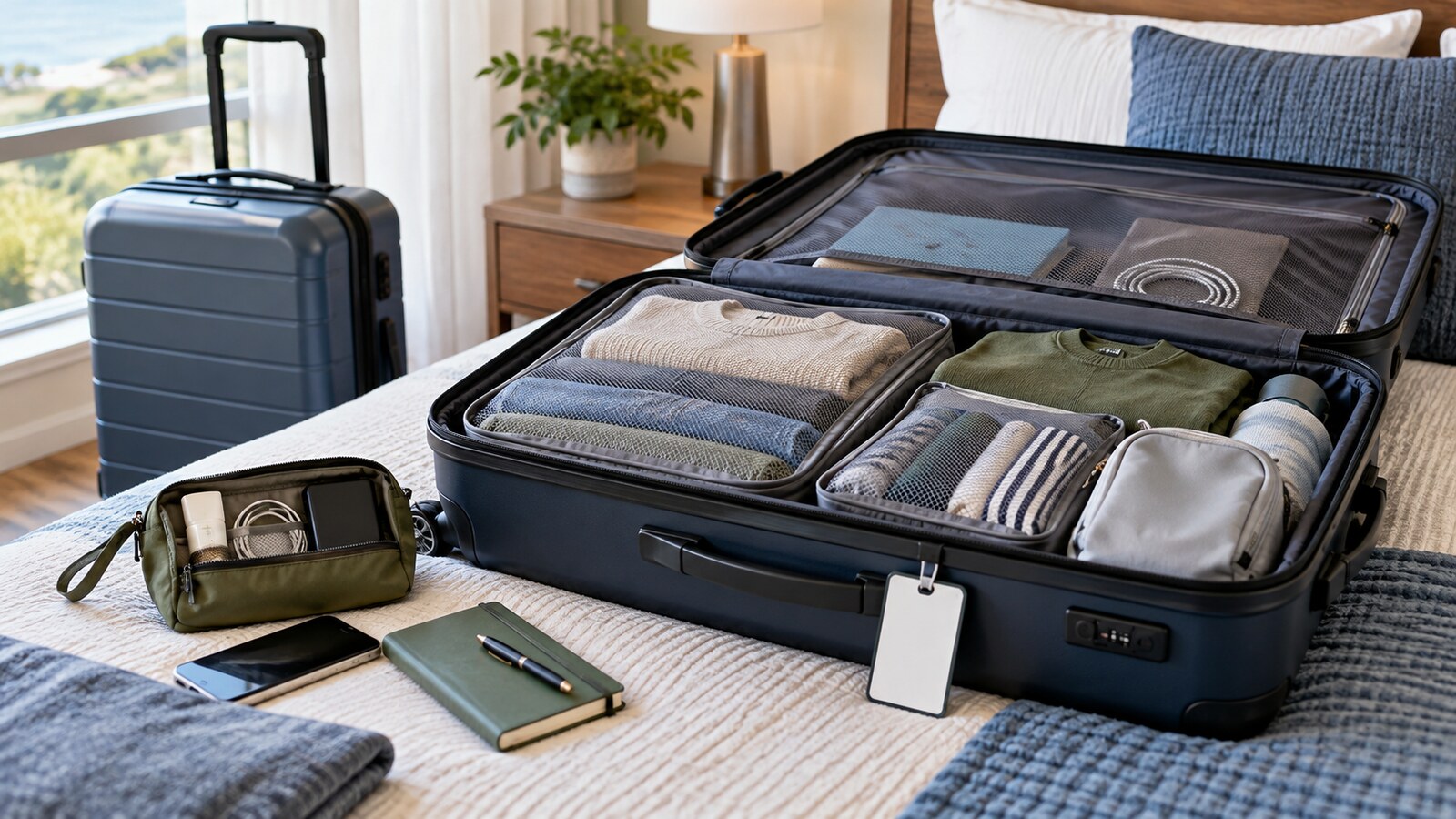
Packing cubes can help organize space, but they do not change airline dimensions or weight. Compression cubes can make a bag denser, which is useful until the suitcase becomes too heavy.
Check Materials and Repair Points
Durability is usually about weak points, not just shell material.
For hard-shell suitcases, check whether the shell flexes without cracking, whether the corners are protected, and whether the zipper or latch feels sturdy. Hard shells can protect contents from light knocks and weather, but they can scratch and may not expand gracefully.
For soft-sided luggage, look at fabric thickness, stitching, corners, water resistance, handles, and zipper paths. Soft bags can be easier to squeeze into tight spaces and often have exterior pockets, but those pockets can make the bag too deep if overfilled.
Pay special attention to:
- Wheels that spin smoothly and feel replaceable or well attached.
- Handles that lock without wobbling excessively.
- Zippers that do not catch around corners.
- Seams at stress points.
- Interior straps and dividers that hold items without wasting space.
- A light-colored lining that makes small items easier to find.
If a bag is cheap because every stress point looks fragile, the discount may disappear the first time a wheel breaks.
Be Careful With Smart Luggage
Smart luggage can include USB ports, built-in power banks, electronic locks, location trackers, digital scales, or motorized features. Some of those features are useful, but batteries bring aviation rules into the decision.
The FAA says baggage equipped with lithium batteries must be carried as carry-on baggage unless the batteries are removed. It also says checked baggage with lithium batteries is only allowed under very small battery limits, and electronic devices in checked baggage must be completely switched off and protected from activation or damage. IATA similarly states that spare batteries, power banks, and electronic cigarettes or vapes must be carried in carry-on baggage.
Before buying smart luggage, ask:
- Is the battery removable without tools?
- Can the bag be checked if the battery is removed?
- Does the airline accept this type of bag?
- Is the feature worth the extra weight and complexity?
- What happens if the battery, cable, lock, or app stops working?
For many travelers, a simple bag plus a separate compliant power bank is easier to manage.
Make the Personal Item Work Hard
A personal item is not just a second bag. It is your control center.
It should fit under the seat, open without spilling, and hold the items you may need during boarding, delays, transfers, or an unexpected gate check. CATSA notes that acceptable carry-on bag size is set by the airline and that carry-on bags can include small suitcases, overnight bags, backpacks, briefcases, laptop bags, and camera cases, depending on the rules. Your airline may have additional restrictions on number and size.
A good personal item has:
- A secure pocket for passport or ID.
- A padded laptop or tablet section if needed.
- Space for medicine and essential toiletries.
- A charger and cable pocket.
- A small document sleeve.
- A water-bottle pocket if allowed and practical.
- A way to slide over a suitcase handle.
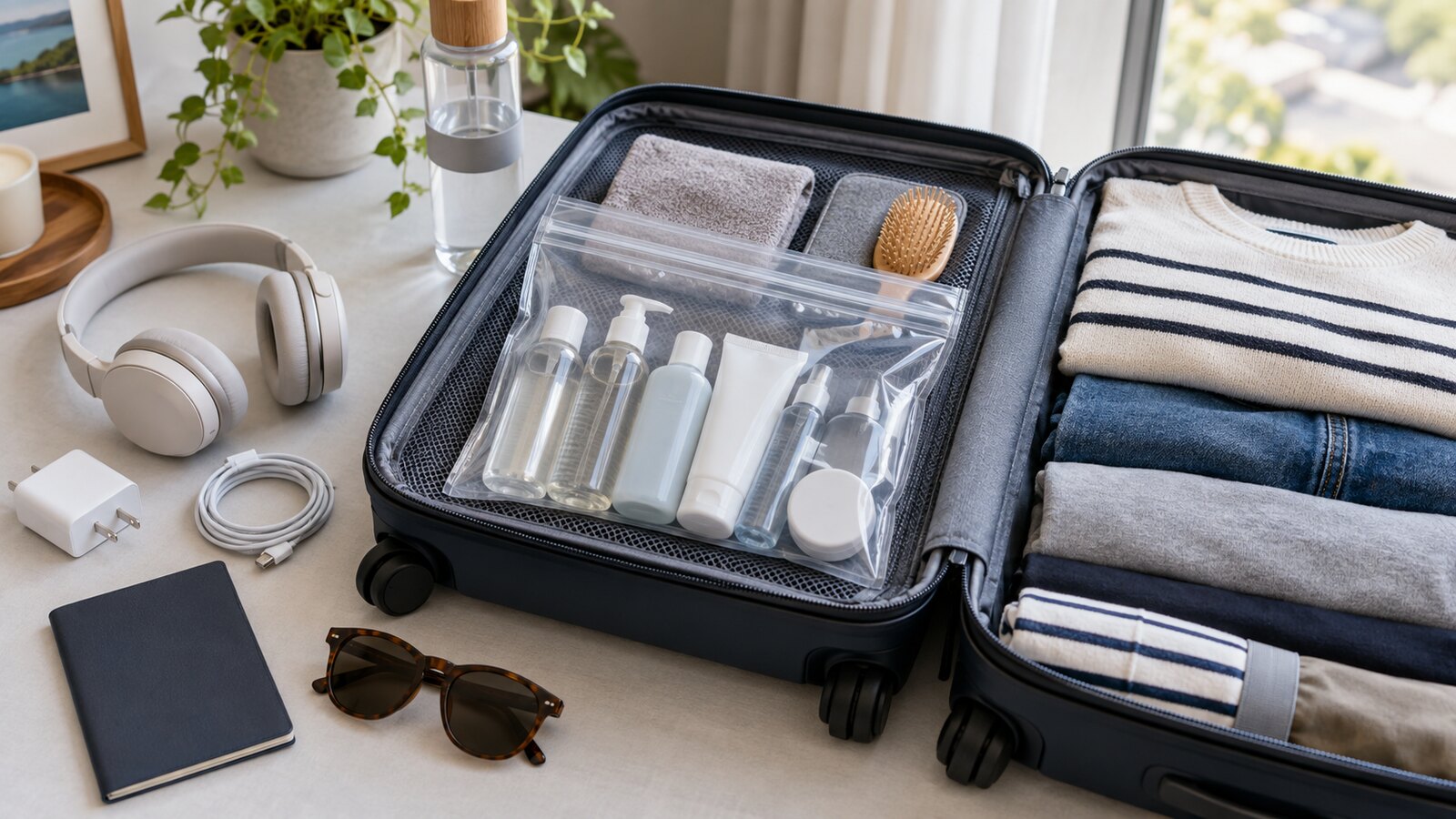
Before international travel, pair luggage planning with admin planning: check passport validity before booking travel, download offline maps before travel, and understand carry-on liquids rules before the night before departure.
A Simple Buying Checklist
Before buying luggage, ask:
- Does it fit the strictest airline on my likely routes?
- Are wheels and handles included in the dimensions?
- Can I lift it when packed?
- Does it work on the surfaces I will cross?
- Does it protect the items I actually carry?
- Is it easy to identify without showing private information?
- Are the handles, wheels, zippers, and seams strong enough?
- Will it still close if I avoid using the expansion zipper?
- Does it have a realistic warranty or repair option?
- Does it avoid smart-bag complications I do not need?
Add an external tag with basic contact details, but avoid displaying a full home address, job title, or other unnecessary private information. Put more detailed contact information inside the bag.
The Bottom Line
Good luggage is quiet support. It fits the rules, carries what matters, moves across the surfaces on your route, and does not make you fight it at every airport, station, hotel lobby, or staircase.
Start with the trip. Check the airline. Measure the full bag. Keep essentials with you. Choose wheels or straps for the ground you will actually cover. Then buy the simplest durable bag that solves the real journey, not the one that only looks good in the product photo.