A home fire extinguisher is one of those safety items people often buy once, tuck away, and forget. That is better than having none at all, but it is not enough. The extinguisher has to match likely household fires, sit where someone can reach it while moving toward an exit, and remain charged and undamaged.
It also has limits. An extinguisher is not a reason to stay in a dangerous room, fight smoke, protect property, or delay calling emergency services. Its best role is narrow: help a trained adult respond to a small, contained fire when escape is clear.
That makes the buying decision simpler. You are not shopping for confidence. You are setting up one extra layer in a broader home safety plan.
Quick Answer
For most homes, choose a certified multipurpose fire extinguisher rated for Class A, B, and C fires, large enough to be useful but light enough for the people who may use it. Place it near an exit, not behind the most likely fire source. Check the pressure gauge, hose, pin, damage, dust, and instructions regularly. Use it only if the fire is small, everyone has been alerted, emergency help has been called, smoke is not blocking you, and you have a clear escape route.
Understand What the Ratings Mean
Fire extinguishers are made for different kinds of fires. The U.S. Fire Administration groups common extinguisher classes by the materials involved:
- Class A: ordinary materials such as wood, paper, and cloth.
- Class B: flammable or combustible liquids such as grease, gasoline, oil, and oil-based paint.
- Class C: energized electrical equipment such as appliances, tools, and plugged-in devices.
- Class D: flammable metals, usually an industrial concern.
- Class K: cooking oils and fats in commercial kitchen equipment.
Most households are usually served by a multipurpose extinguisher marked A-B-C or ABC. That does not mean it solves every fire. It means the extinguisher is designed for several common home fire types, including ordinary combustibles, flammable liquids, and energized electrical equipment.
Kitchen shoppers often focus only on grease fires, but a home can also have fires involving curtains, bins, appliances, chargers, extension cords, furniture, or a workshop area. A certified ABC extinguisher gives broader coverage than a narrow single-use choice.
Choose a Size People Can Actually Use
The biggest extinguisher is not automatically the best home extinguisher. A larger unit can discharge more agent, but it is only useful if the intended user can lift, carry, aim, and control it under stress.
The U.S. Fire Administration recommends choosing the largest extinguisher a user can safely and comfortably operate. That is a practical test, not a macho one. A smaller adult, older family member, or tenant in a compact apartment may be better served by a manageable extinguisher they can use correctly than by a heavy unit that stays on the floor.
When comparing products, look for:
- A clear certification mark, such as
UL ListedorULC Listed. - A multipurpose
A-B-Crating for general home coverage. - A readable pressure gauge.
- A hose or nozzle that is easy to aim.
- Instructions that are visible and simple.
- A weight and handle shape that the likely user can manage.
If you run a workshop, use fuel-burning equipment, store flammable liquids, or live in a building with specific safety rules, check local fire guidance rather than relying only on a general household recommendation.
Put It Near the Exit, Not Deep in the Risk Zone
Placement matters as much as the purchase.
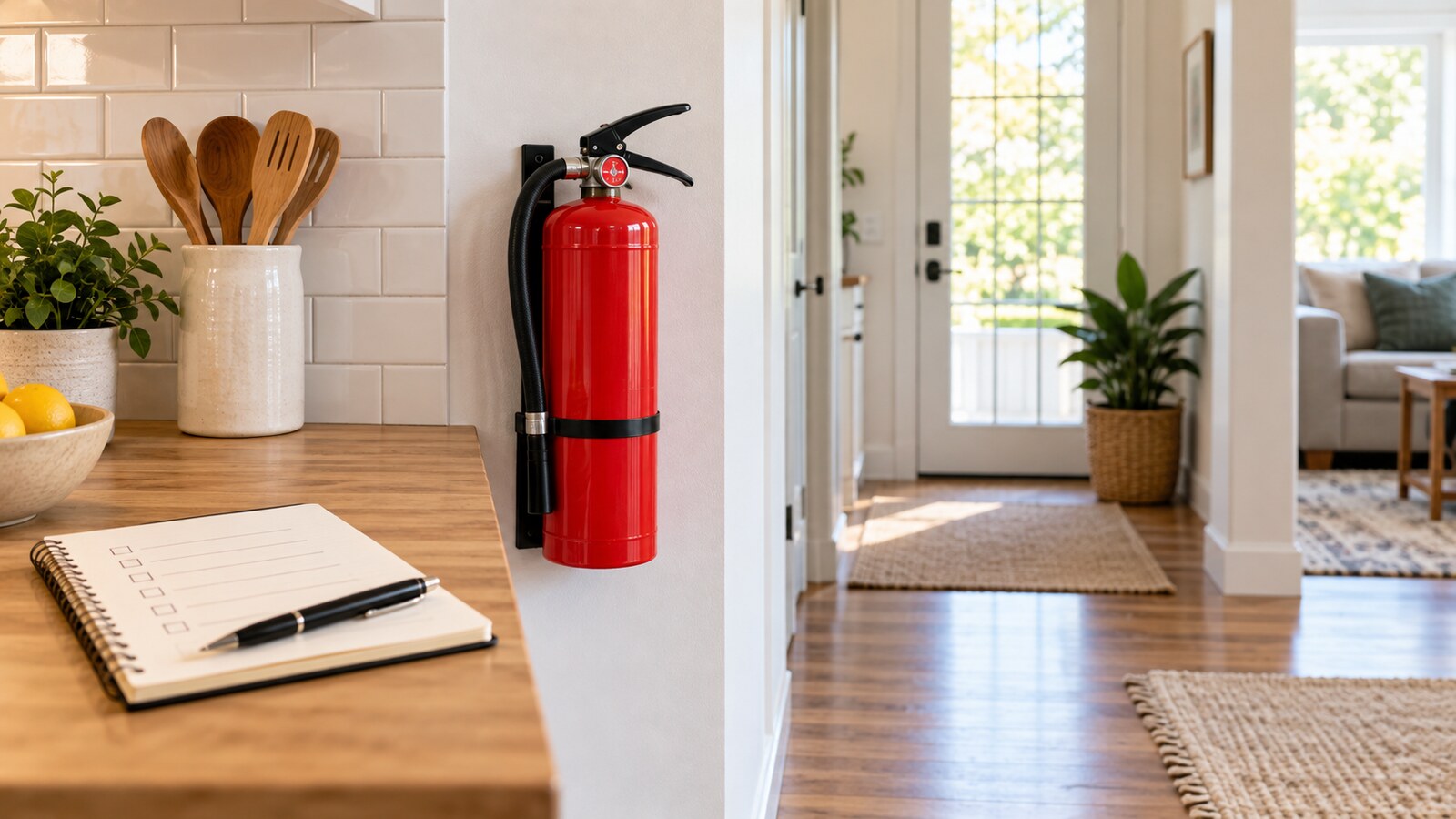
A fire extinguisher should be easy to reach, visible enough that a guest or housemate can find it, and close to a route out of the room. If you place it directly beside the stove, behind stored boxes, under a sink full of cleaning supplies, or inside a locked cabinet, you may have to move toward the fire to get it.
Better locations often include:
- Near the kitchen exit, not over the stove.
- In a hallway close to bedrooms or living areas.
- Near a garage, utility room, or workshop exit.
- On each level of a larger home where local guidance supports it.
- In a short-term rental or shared home where the location is obvious.
The goal is not to decorate the wall with safety equipment. The goal is to let a capable adult take one step toward safety, grab the extinguisher, and still have a way out if the fire grows.
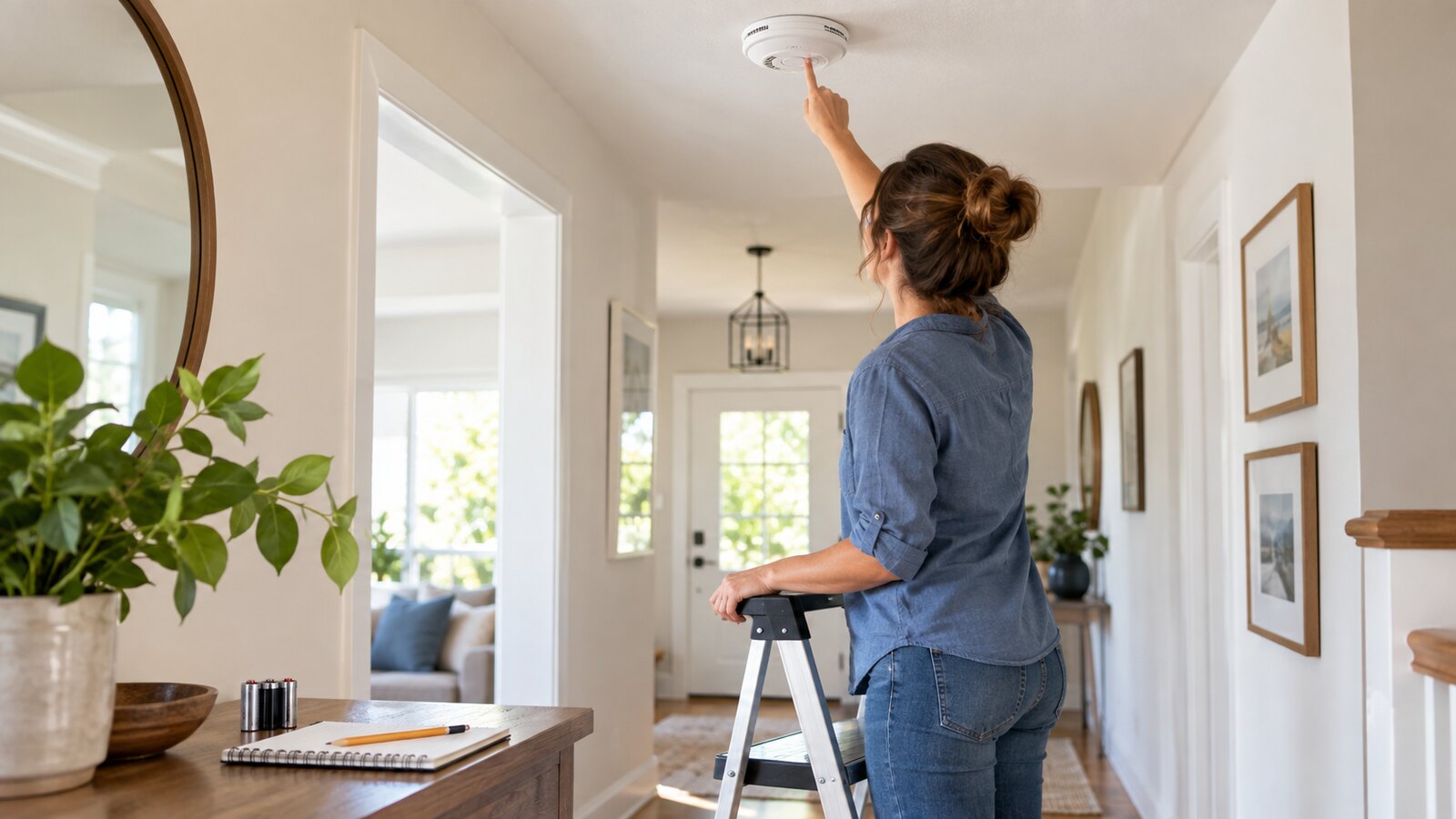
If you already test smoke alarms monthly, add extinguisher checks to the same routine. GDU’s guide to testing smoke alarms at home can help connect alarms, escape planning, and basic household maintenance into one habit.
Know When Not to Use It
This is the most important part of extinguisher safety.
Do not use a fire extinguisher if the fire is spreading, smoke is building, you do not know what is burning, the extinguisher does not match the fire, someone has not alerted emergency services, you are not physically able to use it, or your exit could be blocked.
The U.S. Fire Administration suggests using an extinguisher only when key safety questions are answered yes: people have been alerted, the fire department has been called, the user can operate the extinguisher, the fire is small and contained, smoke is not making the space unsafe, and a clear escape route remains open.
That standard is useful because it removes hesitation. If the situation is uncertain, leave. Close doors behind you if safe, get everyone out, call emergency services from outside, and stay out.
Young children should not be expected to use fire extinguishers. Older adults or anyone with mobility, breathing, vision, strength, or balance limitations may also be safer focusing on escape and alerting others. Household safety plans should match the people who actually live there.
Learn PASS Before There Is Smoke
Many extinguisher instructions use the PASS method:
- Pull the pin.
- Aim low at the base of the fire.
- Squeeze the handle slowly and evenly.
- Sweep from side to side.
Read the instructions on your actual extinguisher before you need it. Different handles, pins, nozzles, gauges, and discharge times can feel less obvious during stress.
If your local fire department, workplace, landlord, school, or community group offers extinguisher training, take it. A short hands-on demonstration can make the equipment less mysterious and can also make the limits clearer. The goal is not to become a firefighter. The goal is to know what the device can and cannot do.
Check the Extinguisher Before It Becomes Furniture
A forgotten extinguisher can look reassuring while being blocked, discharged, damaged, under pressure, or beyond its service life.
Build a simple check into your monthly safety routine:
- Make sure nothing blocks access.
- Check that the pressure gauge is in the recommended zone.
- Confirm the pin and tamper seal are in place.
- Look for dents, rust, leaks, broken parts, or a damaged hose.
- Wipe off dust, oil, or grease.
- Read the label for any model-specific instructions.
- Check whether the unit should be shaken, serviced, recharged, or replaced.
- Search for recalls if the model is old, secondhand, or unfamiliar.
Some extinguishers are rechargeable. Others are disposable and must be replaced after use or when pressure drops. Follow the manufacturer’s instructions, local rules, and the advice of qualified service providers where required.
If you inherited an extinguisher with a home, found one in storage, or bought a used unit, do not assume it is safe. Check the label, age, pressure, condition, and recall status. The U.S. Consumer Product Safety Commission maintains recall information for fire extinguishers and other household products.
Match the Extinguisher to the Room
One ABC extinguisher near the kitchen may be a sensible starting point, but think about the whole home.
A garage may have tools, chargers, fuel, paint, or stored materials. A home office may have power strips, computers, batteries, and paper. A laundry area may have lint, heat, and appliances. A workshop may involve dust, solvents, adhesives, or equipment that deserves more specific guidance.
For most ordinary homes, the main decision is whether one extinguisher is enough or whether each floor or higher-risk area needs its own reachable unit. If a home is large, multi-level, rented to guests, shared by roommates, or used partly for business, the answer may change.
Also consider language and visibility. In a shared household, make sure everyone knows where the extinguisher is, what kind it is, and when to leave instead. If instructions are not in a language everyone reads well, training and a simple household plan matter even more.
Connect It to the Rest of Your Safety Plan
A fire extinguisher is not the first layer of home fire safety. Working smoke alarms, safe cooking habits, electrical caution, clear exits, and a practiced escape plan matter more.
Keep the extinguisher in that supporting role. Pair it with:
- Smoke alarms and, where relevant, carbon monoxide alarms.
- A two-way-out escape plan where possible.
- A meeting place outside.
- Clear paths from bedrooms to exits.
- Safe storage for matches, lighters, fuel, and chemicals.
- Regular cleaning around cooking equipment, heaters, and lint traps.
- A basic emergency folder for insurance and identity records.
If a fire damages the home, clear documentation can help later. GDU’s guides to creating a home inventory for insurance claims and building an emergency document folder can help with that recovery side. Those records do not replace prevention, but they can reduce confusion after a difficult event.
Buying Checklist
Before buying or replacing a home fire extinguisher, ask:
- Is it certified by a recognized testing laboratory?
- Is it rated
A-B-Cfor general household use? - Can the likely users lift and operate it?
- Is the pressure gauge easy to read?
- Will it be placed near an exit and away from blockage?
- Are the instructions visible?
- Does the home need more than one unit?
- Is there a monthly check routine?
- Does everyone know that escape comes first?
If any answer is weak, fix that before treating the purchase as complete.
The Point Is a Faster, Safer Decision
A fire extinguisher should make a small fire decision clearer, not more complicated.
Choose a certified unit that matches common home risks. Put it where escape remains possible. Check it before dust and age turn it into decoration. Learn PASS before there is pressure. Most importantly, decide in advance that leaving is always acceptable.
The right extinguisher is useful. A clear escape route is better.