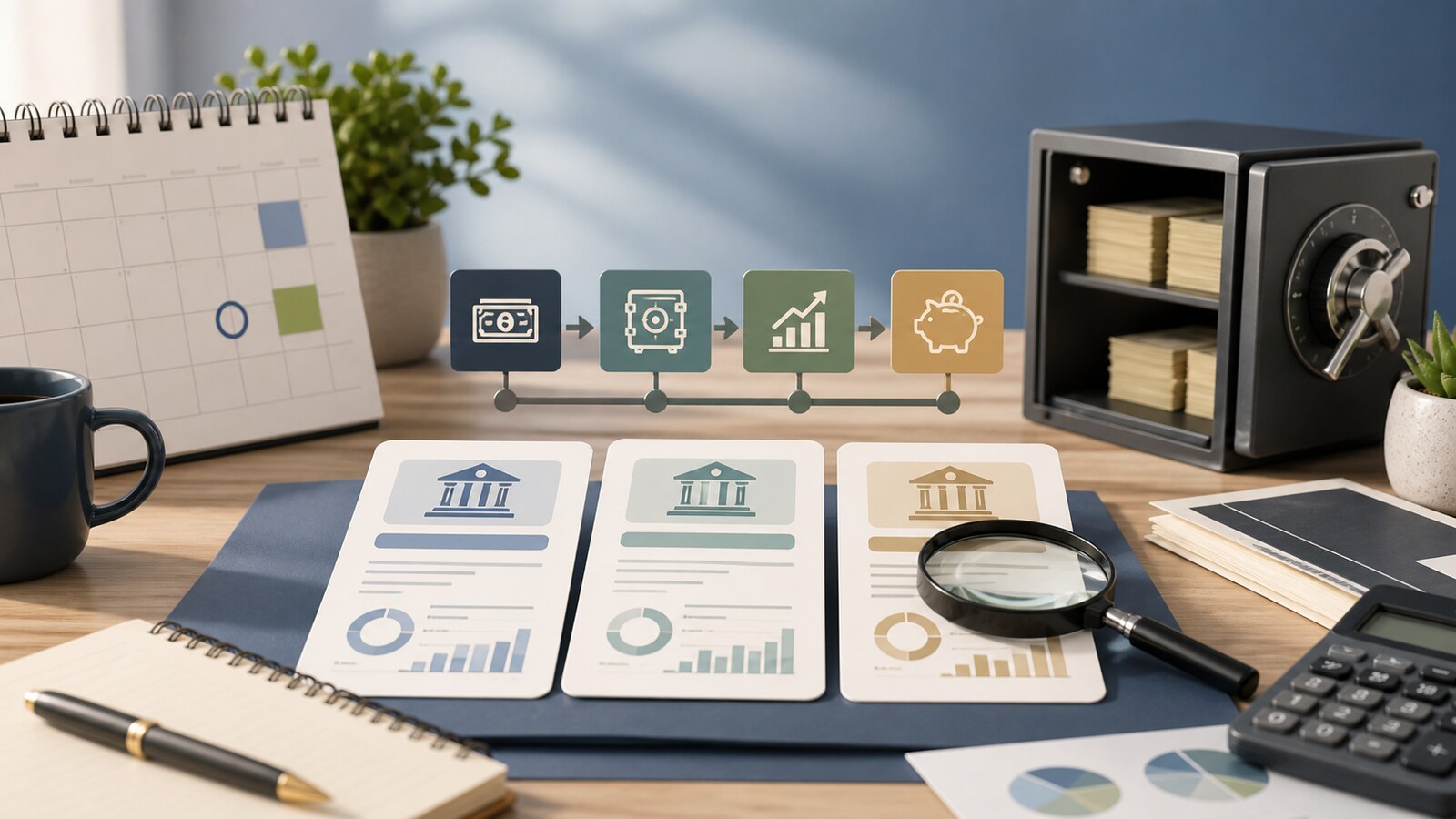
An emergency fund has one job: to be there when ordinary plans break. A car repair, medical bill, broken appliance, job interruption, family trip, delayed client payment, or urgent home repair can become much more expensive if the only backup is a credit card, payday loan, overdraft, or rushed sale of investments.
That is why the best account for an emergency fund is not simply the account with the highest advertised rate. It is the account that keeps cash safe, separate, accessible, inexpensive, and easy to rebuild after it is used.
Quick Answer
For most households, a dedicated insured savings account is the simplest place to keep an emergency fund. A high-yield savings account or insured money market deposit account can work well if it has no monthly fee, no difficult minimum balance rule, reliable transfers, clear withdrawal options, and deposit insurance.
Keep the fund separate from everyday spending, but not so hard to reach that a real emergency forces you into expensive debt. Avoid putting your core emergency fund into volatile investments, locked deposits, crypto assets, or accounts with unclear protection.
Start With the Purpose of the Money
Emergency savings are different from long-term investments. Investment money can accept market risk because the owner may have years to wait. Emergency money may be needed this week. The Consumer Financial Protection Bureau describes an emergency fund as a cash reserve for unplanned expenses such as car repairs, home repairs, medical bills, or income loss.
That cash-reserve idea should drive the account choice. The first priority is safety. The second is access. The third is cost. Interest matters, especially when rates are meaningful, but it should not override the fund’s main purpose.
The Federal Reserve’s 2026 report on household economic well-being underlines why liquidity matters. In its 2025 survey, 63 percent of U.S. adults said they could cover a $400 emergency expense using cash or its equivalent. That leaves a large minority who would need to borrow, sell something, ask for help, or use another method. Even a small dedicated buffer can reduce that pressure.
Decide How Much Access You Need
The right account depends on how quickly you may need the money. A good structure is to separate emergency cash into layers.
The first layer is immediate money: enough for a small urgent cost, transport, medicine, a locksmith, a night of lodging, or a temporary payment outage. This can be a small amount in checking, a linked savings account, or safe cash where that is appropriate.
The second layer is the main emergency fund. This is usually best kept in a savings account or money market deposit account at an insured bank or credit union. It should be reachable within a practical time frame, while still being separate enough that you do not spend it casually.
If your emergency involves insurance paperwork, inventory records, or property damage, preparation matters before the account is needed. GDU’s guide to creating a home inventory for insurance claims explains the records that can make a claim easier to support.
Compare Savings and Money Market Deposit Accounts
A dedicated savings account is often the cleanest option. It separates emergency money from daily spending, usually supports transfers to checking, and can be compared on fees, minimums, interest, app access, and support.
A high-yield savings account can be useful when it keeps money insured and accessible while paying more than a standard savings account. The trade-off is that many high-yield accounts are online, so cash deposits, same-day branch withdrawals, or cashier’s checks may be less convenient. That is not a problem for everyone, but it matters if your emergencies often require cash or in-person service.
A money market deposit account can also work. These accounts may offer check-writing or debit-card access, depending on the institution. Do not confuse a bank or credit union money market deposit account with a money market mutual fund. The names sound similar, but the protections can differ.
The Securities and Exchange Commission warns investors that money market funds are investment products. They are designed for liquidity and stability, but they are not the same as insured deposit accounts. For a core emergency fund, confirm exactly what type of account you are using before moving money.
Check Deposit Insurance Before Rate Shopping
Emergency money should sit somewhere boring and protected. In the United States, FDIC insurance applies to deposits at insured banks, while NCUA share insurance protects qualifying accounts at federally insured credit unions. The NCUA’s share insurance estimator lists checking, savings, money market accounts, certificates, and certain retirement accounts among the account types it can evaluate for federally insured credit unions.
The important habit is not memorizing every coverage rule. It is verifying the institution and account type before transferring money. Check the bank or credit union through official tools, confirm the ownership category, and be careful with app balances, brokerage sweep features, prepaid products, crypto yield products, and payment wallets that may not carry the same protection.
Watch Fees, Minimums, and Transfer Delays
An emergency fund account should not quietly punish you for keeping money safe. Compare monthly maintenance fees, minimum opening deposits, minimum balances to earn interest, minimum balances to avoid fees, outbound transfer limits, wire fees, ATM fees, paper statement fees, dormant-account fees, and account-closing fees.
Also check transfer timing. If an online savings account takes several business days to move money into your checking account, decide whether that is acceptable. Some people solve this by keeping a small buffer at the same bank as their checking account and the larger fund in a separate high-yield account.
The recent GDU guide to choosing a checking account and avoiding fees covers the daily-account side of that decision. The emergency fund should complement checking, not become a second spending account.
Avoid Accounts That Fight the Emergency Use Case
Certificates of deposit can be useful for planned cash, but early withdrawal penalties may make them awkward for emergency money. Brokerage investments can lose value at the wrong time. Credit cards can help with payment timing, but they are not savings. Buy now, pay later plans can split a purchase into smaller pieces, but GDU’s guide to BNPL budget risk explains why stacking future payments can create cash-flow pressure.
Payment apps and instant-transfer balances deserve extra care. They may be convenient, but speed does not automatically mean deposit protection, strong dispute rights, or predictable account recovery. GDU’s guide to instant payments and scam risk explains why consumers should separate convenience from safekeeping.
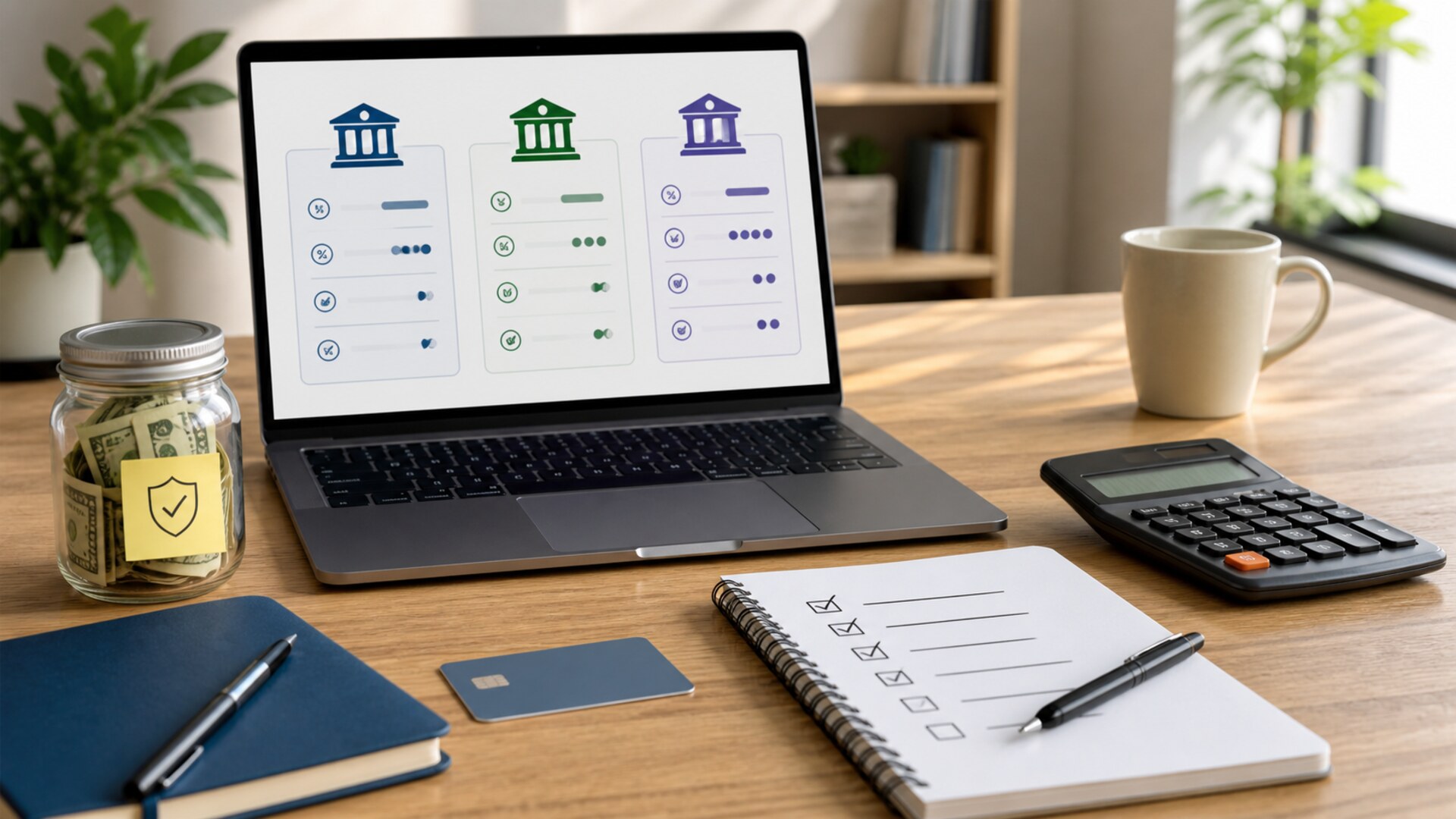
Use a Simple Comparison Checklist
Before opening or moving an emergency fund account, answer these questions:
Ask whether the institution is insured, whether the account is a deposit product rather than an investment, how quickly you can reach money, what fees or minimums apply, how transfers work, whether alerts are useful, and what happens if you change jobs, move, lose your phone, or need joint access.
If an account fails on safety, access, or fees, a slightly higher rate is not worth much.
Common Mistakes
The first mistake is chasing the highest rate without checking fees, transfer delays, or insurance. A rate can change. Bad account terms can remain painful.
The second mistake is keeping all emergency money in checking. That makes the money easy to spend accidentally and harder to mentally separate from bills.
The third mistake is locking the entire fund in a product with penalties or settlement delays. Some planned savings can be less liquid, but the emergency core should be reachable.
The fourth mistake is assuming every finance app account is protected like a bank account. Read the terms and verify the backing institution.
The fifth mistake is never rebuilding the fund after using it. A real emergency is exactly what the money is for. Afterward, restart automatic transfers as soon as the budget allows.
FAQ
Should I use a high-yield savings account for an emergency fund?
It can be a strong choice if the account is insured, fee-light, easy to access, and separate from daily spending. Do not choose it only for the rate.
Is a money market account better than savings?
Sometimes. A money market deposit account may offer easier access through checks or a debit card. Compare fees, minimums, insurance, and transfer options before choosing.
Should emergency savings be invested?
The core emergency fund should usually be cash or cash-like money in a safe account. Investments can be better for long-term goals, but they can fall in value just when cash is needed.
How much should I keep immediately available?
Start with what would prevent a small setback from becoming debt. Then build toward a larger goal based on your income stability, family responsibilities, health needs, housing, and job risk.
Summary
The best account for an emergency fund is safe first, accessible second, and competitive third. Look for deposit insurance, low fees, practical transfer speed, clear withdrawal options, and enough separation from everyday spending.
A well-chosen emergency fund account will not solve every financial problem. It does something more specific and more useful: it gives you cash when timing matters most.