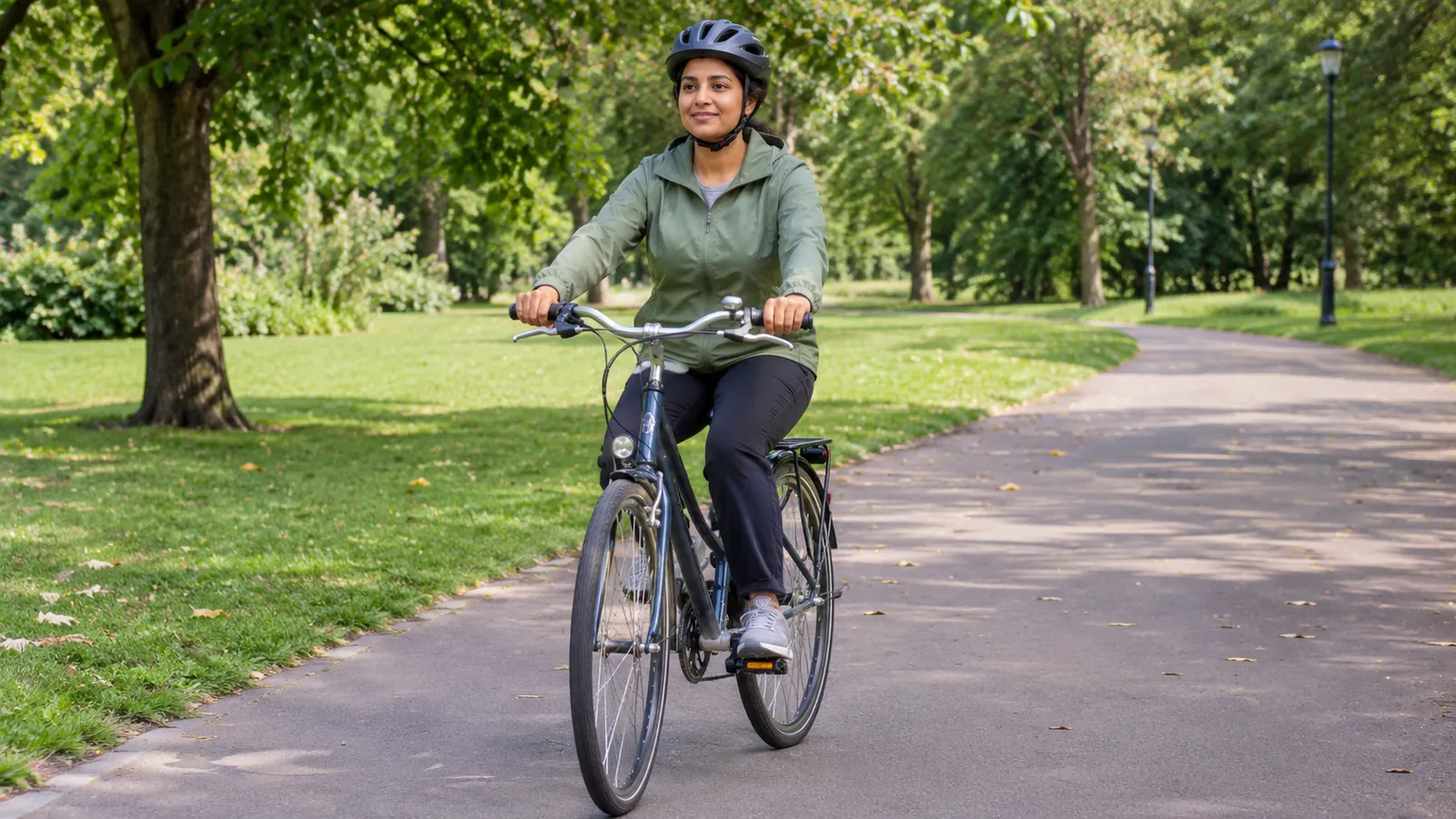
A beginner easy bike ride starts with a route and an effort you can comfortably manage. Choose a familiar, mostly level place, check the bicycle before setting off and leave yourself room to slow down, stop or return early. You do not need a minimum speed to make a short ride worthwhile.
The useful question is whether you can pedal, steer and respond to your surroundings without feeling rushed. A number on a cycling app cannot answer all of that. Wind, slopes, the bicycle and your experience can make the same speed feel very different from one outing to the next.
Make the route easy to leave
Choose somewhere cycling is permitted, with a surface and layout you can handle. A quiet, traffic-free cycle route can give you space to practise, although crossings, other riders and people walking still need attention. Avoid assuming every park path allows bicycles.
Look at the whole journey, including the return. A gentle downhill start can become a demanding uphill ride home. A route that looks short on a map may include a steep ramp, loose gravel or a difficult junction.
For an early outing, a short out-and-back or small familiar loop makes it easier to change your mind. Identify a safe place to turn around and somewhere clear of the route where you can stop. Choose daylight and manageable weather rather than making the ride depend on beating darkness or a storm.
Check local conditions before leaving. If smoke or pollution is a concern, our guide to checking air quality before outdoor activity explains that separate decision. An easier pace does not solve an unsuitable environment.
Check the bicycle before you ride
A comfortable pace depends partly on equipment that works and fits. Use the bike manufacturer’s instructions for its controls, tyre pressures and adjustments. A simple pre-ride check should cover:
- Tyres and wheels: look for visible damage, use the recommended pressure for your equipment and check that the wheels are secure and turn freely.
- Brakes: check their operation before setting off. Do not ride with unreliable stopping power.
- Chain and gears: look for obvious problems and make sure the controls operate normally.
- Contact points: the saddle and handlebars should be secure, with the brake controls within comfortable reach.
If something is loose, damaged or unfamiliar, get help from a competent cycle mechanic. A quick check cannot certify that a neglected bicycle is roadworthy.
Wear a properly fitted cycle helmet meeting an appropriate recognised safety standard. Secure loose clothing and laces away from moving parts. Check the local rules for helmets, lights, reflectors and where you may ride; requirements differ between countries. Carry a way to contact someone and enough water for the outing and conditions.
Settle in before choosing your pace
If balancing, braking or looking around while steering feels uncertain, practise those skills in a suitable traffic-free area first. A local cycle instructor can help you prepare for roads and junctions. Riding slowly does not replace handling skills.
Once ready, use this simple sequence:
- Begin gently. Allow the first part of the ride to be slower while you get used to the bicycle and surface.
- Choose a manageable gear. Look for smooth pedalling without forcing each stroke or feeling your feet spin out of control. Learn unfamiliar gear controls before heading into a difficult section.
- Notice breathing and control. Ease off if the effort is rising or you are gripping the handlebars tensely.
- Adjust early. Slow before a bend, crowded section or changing surface, and stop somewhere safe if you need a reset.
Your pace may vary throughout the ride. You can pedal easily on one section, coast where appropriate and walk the bicycle through a section you cannot comfortably ride, where walking it is permitted.
Use effort as a guide, without chasing a threshold
The talk test is a rough way to judge exercise intensity. At moderate intensity, a person can generally talk but cannot sing; at vigorous intensity, only a few words may be possible before taking a breath. Those descriptions help explain effort, but they are not a requirement to reach moderate intensity on every beginner outing.
For a deliberately easy ride, leave yourself comfortable breathing room. If ordinary speech feels difficult, reduce the effort or stop safely. Keep your attention on the route rather than performing a conversation test in traffic. Being able to talk also does not prove that a speed is safe for the surface or people nearby.
There is no single kilometres-per-hour target that suits every beginner. A headwind, a heavier bicycle or a slight incline can increase effort while your speed falls. Letting the number fall is often the sensible response. If you ride with someone, agree beforehand that you will choose a pace both people can manage and regroup in safe places.
Keep the first outing deliberately modest
Choose a short ride that fits your current ability and leaves a straightforward return. For someone already comfortable handling a bicycle, that might mean a brief loop near home; for someone relearning, it may mean a few minutes of practice followed by a break. These are options, not a minimum session or a training prescription.
Turn back before fatigue makes the return difficult. If you are returning to exercise after a break, keep the first outing familiar and avoid changing distance, terrain and effort together.
Stop for pain, dizziness, feeling faint or unusual breathlessness rather than trying to pedal through it. Seek urgent medical help for chest pain or severe symptoms. If a health condition affects activity, ask your health professional what amount and type are suitable for you.
Let the next ride follow what you learned
Afterwards, note what made the outing easy or awkward: a comfortable section, a difficult crossing, a gear you did not understand or a saddle position that needs attention. Resolve an equipment or handling problem before making the route longer.
Repeat the same short route if it helps. When it feels manageable, you can choose a small change, such as a little more time on the familiar level section. You can also keep the outing exactly as it is. A useful easy bike ride is one you can control, adapt and finish comfortably, with enough confidence to choose another day to ride.