A beginner bodyweight squat can start with a stable chair and a small, comfortable movement. You do not need weights or a deep squat to begin learning how to lower yourself and stand again with control. Choose a version you can manage without pain, and stop before tiredness changes your technique.
The chair option gives the movement a familiar destination. Instead of wondering how low to go, you practise moving towards a seat, then returning to standing. The aim of the first session is to understand the action, rather than complete an ambitious workout.
Prepare a Space You Can Move In
Use a firm chair without wheels, on a surface where it cannot slide. A soft sofa, folding seat that feels unstable or rolling office chair is unsuitable. Check the chair before starting, including whether it rocks when you put weight on it. If necessary, position a suitable chair against a wall for extra stability.
Clear nearby bags, cables and loose rugs. Leave enough room in front to stand comfortably and extend your arms without reaching furniture. Choose clothing that allows your hips and knees to bend freely. If wearing shoes, check that they feel secure and grip the floor; our guide to choosing walking shoes explains useful fit checks.
Spend a few minutes moving gently before practising, such as walking around your room. Keep the setup simple enough to repeat. You should be able to focus on the movement rather than rearranging equipment between every attempt.
Learn the Chair Version First
A chair squat involves lowering towards a seat and standing again. A sit-to-stand starts seated and reverses that sequence. Pick the starting position that feels more manageable; you do not have to learn both in one session.
- Check the seated position. Sit on the chair with both feet resting flat on the floor. Choose a seat height that lets you do this comfortably. A very low chair can make the task harder, so avoid making a low seat your first challenge.
- Place your feet. Start around hip-width apart, with your feet positioned so you can stand without having to shuffle them midway. Look ahead rather than dropping your head towards the floor.
- Rise smoothly. Lean forward a little from your hips, then stand using your legs. If you need your hands to assist, use stable support rather than pulling on something that might move. Do not force an unsupported repetition.
- Return with control. Bend at your hips and knees and move your bottom back towards the seat. Keep your knees following the direction of your feet. Lower steadily rather than dropping onto the chair.
- Reset before repeating. Once seated, check your foot position and how the movement felt. Pause if needed. A comfortable, controlled repetition gives you more useful feedback than hurrying into the next one.
Start with just a few repetitions. Five is one modest practice target used in beginner chair-exercise guidance, but fewer is reasonable if that is what you can control. A target is an option, not an instruction to continue through pain or fatigue.
Move to a Small Free Squat When Ready
Once the chair movement feels familiar, you may try a shallow squat without sitting down. Keep the chair available as a reference, but do not assume you must reach it on every repetition.
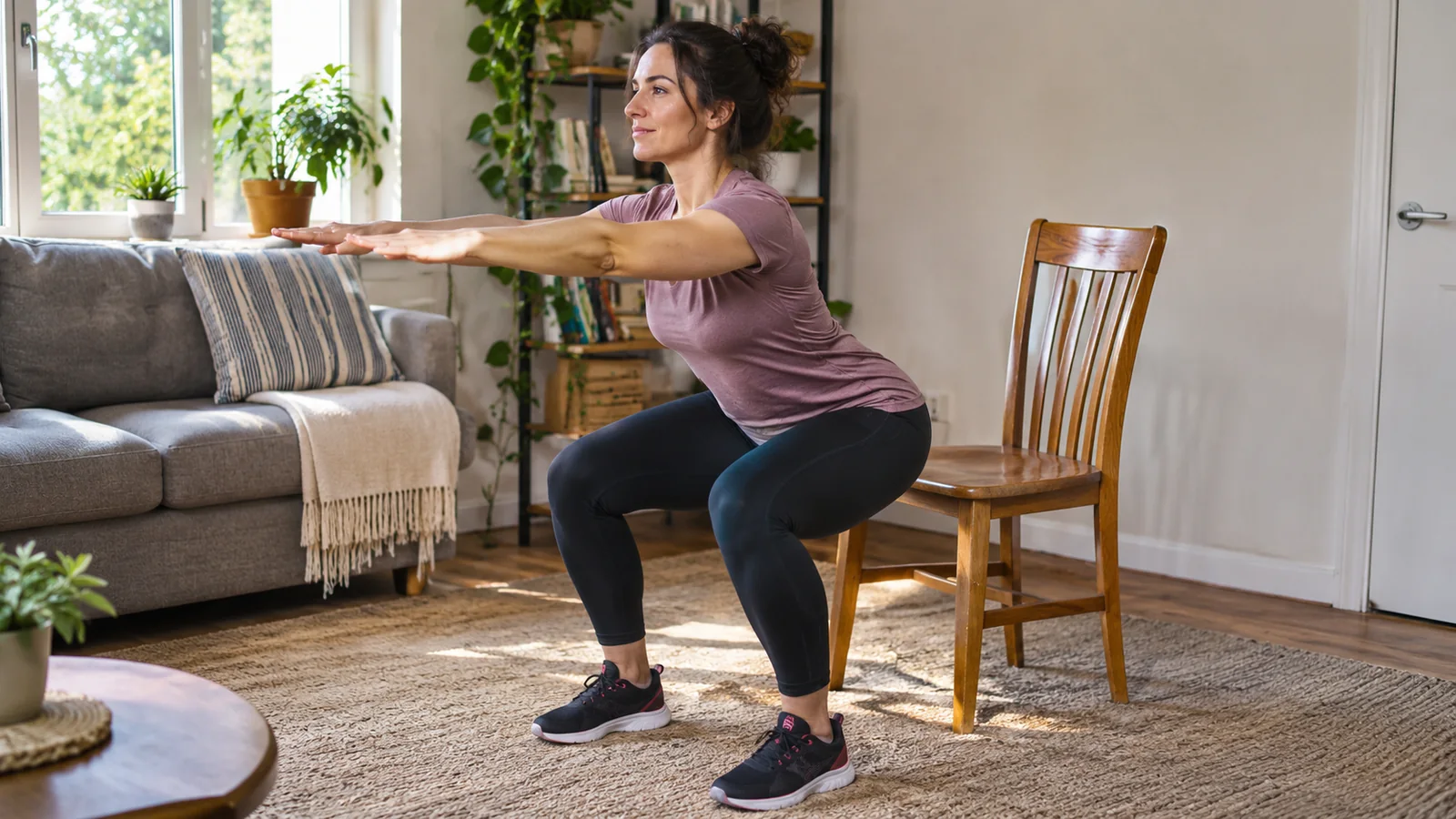
Stand with a comfortable stance, around shoulder width as a starting point. Bend through your hips, knees and ankles while keeping your back in its natural position. Let your arms help with balance. Lower only as far as you can comfortably control, then return smoothly to standing.
Your knees should stay aligned with your feet rather than collapsing inwards. Keep the motion steady in both directions. There is no need to reach a particular depth during your first practice, and you should not force your body to match someone else’s photograph.
A supported mini-squat is another option. Face a stable support, rest your hands on it for balance and make a small knee bend before returning to standing. Confirm that the support cannot tip or slide. If you remain uncertain about balance or technique, ask a qualified instructor or physiotherapist to help you choose a suitable version.
Notice What Makes the Movement Harder
Small setup changes can turn an ordinary practice into a frustrating one. Before adding repetitions, check these common problems:
- The seat is too low. Try a suitable higher, firm chair instead of forcing yourself down to a low sofa.
- You rush the return. Pause between repetitions and choose a range that allows a controlled descent.
- Your feet keep moving. Reset deliberately before the next attempt rather than correcting your stance while lowering.
- You chase depth. Make the movement smaller until you can control it comfortably.
- You continue after control fades. End the set when the movement becomes unsteady, even if your planned count is unfinished.
These checks are prompts for adjusting a practice session, not a way to diagnose pain. Repeated difficulty may be a reason to seek individual guidance rather than keep changing the exercise on your own.
Keep Progress Small and Observable
Use a simple note after practice: which chair or version you used, how many comfortable repetitions you completed, and whether you needed support. That is enough to make the next session easier to plan. You do not need to film every attempt or compare your depth with online demonstrations.
Repeat a manageable version before changing it. When it becomes consistently comfortable, consider a small increase in repetitions or a little less assistance. Change one thing at a time so you can tell what made the exercise harder. Adding weights is unnecessary while you are still learning the basic movement.
If you want to build a wider routine later, the guide to starting strength training explains how a squat pattern can sit alongside other movements. This single exercise is a starting skill, rather than a complete fitness programme.
Stop When the Movement Hurts
Muscular effort is different from pain. Stop if squatting hurts, makes you dizzy or leaves you feeling unwell. Do not use extra repetitions to test whether pain will disappear. If pain recurs, or you have an injury, recent surgery, a medical condition or uncertainty about suitable exercise, get advice from a healthcare professional before continuing.
For the next practice, keep one clear goal: a stable setup and a few smooth repetitions within your comfortable range. Finishing with control is a useful place to stop.