Beginner balance exercises should start with a suitable place to practise: a clear, level floor beside something that cannot slide or tip. Keep that support within reach and choose movements you can control. A short, comfortable attempt gives you a better starting point than trying to last as long as possible on one leg.
You do not need a balance board or a complicated routine. The movements below introduce supported standing and stepping at home. They are general exercise ideas, rather than a test of your health or a replacement for a programme chosen for you.
Decide Whether Home Practice Is Appropriate
If you have fallen, are worried about your balance or mobility, or feel dizzy when standing, speak with a healthcare professional before trying standing balance exercises alone. A physiotherapist or other qualified professional can help select movements and the amount of support you need.
Get individual guidance if a condition affects your ability to exercise safely, or if you are recovering from a stroke, heart event, injury or operation. Follow existing rehabilitation instructions rather than adding a harder exercise from a general guide. Someone being in the room does not make an unsuitable movement safe.
Balance matters for everyday actions such as walking and using stairs. Practising it can be part of a varied activity routine, alongside strength, endurance and flexibility work. Our beginner strength-training guide explains that separate part of an activity routine. That does not mean these few movements can diagnose a problem, guarantee that you will avoid falls or replace treatment for a cause of unsteadiness.
Set Up One Reliable Practice Space
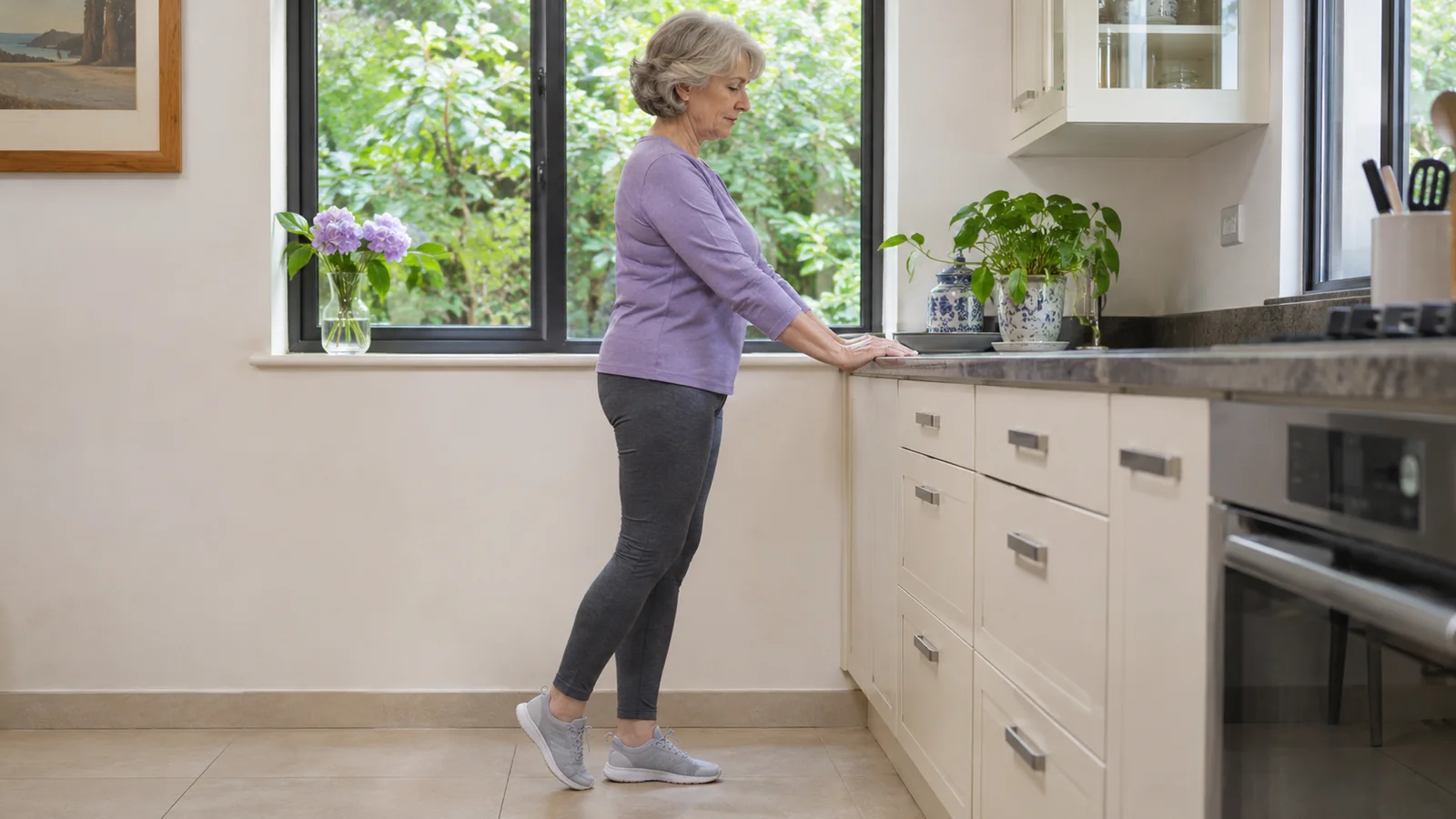
Choose a fixed kitchen worktop or another solid, immovable support at a comfortable height. Check the surface before starting. A lightweight chair, wheeled furniture, towel rail or folding table may move when you put weight through your hands.
Clear enough floor to place your feet and take small steps without reaching past the support. Move loose rugs, trailing cables and other trip hazards. Keep pets out of the practice area and leave yourself room to stop with both feet on the floor.
Wear comfortable clothing and well-fitting footwear with a secure grip. Avoid practising in loose slippers or slippery socks. Our guide to choosing walking shoes covers fit checks for everyday walking. Use good lighting, and keep anything you need nearby so you are not twisting or stretching for it while standing on one leg.
Choose a time when you can concentrate on the movement. Pause the television or put the phone aside. This is a separate practice session; there is no need to combine it with cooking, brushing your teeth or carrying something.
Try Controlled Movements With Support
Read each movement before starting, then try only what feels appropriate. You can stop after one exercise. Take a comfortable pause between attempts and keep your breathing relaxed.
Sideways Steps Along a Clear Counter
Use a stretch of support that remains within easy reach as you move.
- Stand upright beside the counter with your feet together and knees slightly soft, holding the support as needed.
- Move one foot a small distance sideways, placing it securely on the floor.
- Bring the other foot towards it without crossing your legs.
- Continue slowly for a few steps, then return in the other direction if you have room and feel steady.
Avoid rushing to cover the length of the room. The useful part is placing each foot deliberately while keeping control. Stop before the counter ends; do not continue stepping after your support is out of reach.
A Small Supported One-Leg Lift
Face the fixed support so you can hold it with both hands.
- Stand tall with both feet on the floor and take a secure hold.
- Lift one foot slightly, keeping your hips level and the standing knee a little bent.
- Hold briefly if comfortable, then lower the foot gently.
- Reset with both feet down before trying the other side.
The foot only needs to clear the floor. Raising the knee high adds no necessary benefit to this starting version. If you have to lurch sideways, grip suddenly or hop to recover, lower the foot and stop that attempt. Ask for advice if this is difficult even with firm support.
Heel-to-Toe Steps, Only If Suitable
This narrower walking pattern is more challenging. Skip it if the earlier movements feel uncertain.
- Stand beside a wall or fixed support that you can reach throughout the movement.
- Place one heel directly in front of the opposite toes.
- Look ahead and take the next deliberate heel-to-toe step.
- Stop after a few controlled steps, putting both feet into a comfortable standing position.
Do not turn this into a speed challenge. If placing the feet in line makes you wobble or step away from the support, return to an easier movement rather than forcing the pattern.
Make the Next Attempt Manageable
Start with fewer repetitions than you think you could manage and notice how the movement feels. There is no required first-day total. Keep a simple note such as “sideways steps felt comfortable; one-leg lift needed both hands.” That is more useful than comparing your performance with a video.
Repeat a manageable version before changing it. As you become steadier, a professional may suggest gradually reducing hand support or adding repetitions. Change one thing at a time and keep the stable surface within reach. You do not need to close your eyes, stand on a cushion or remove support to make the session worthwhile.
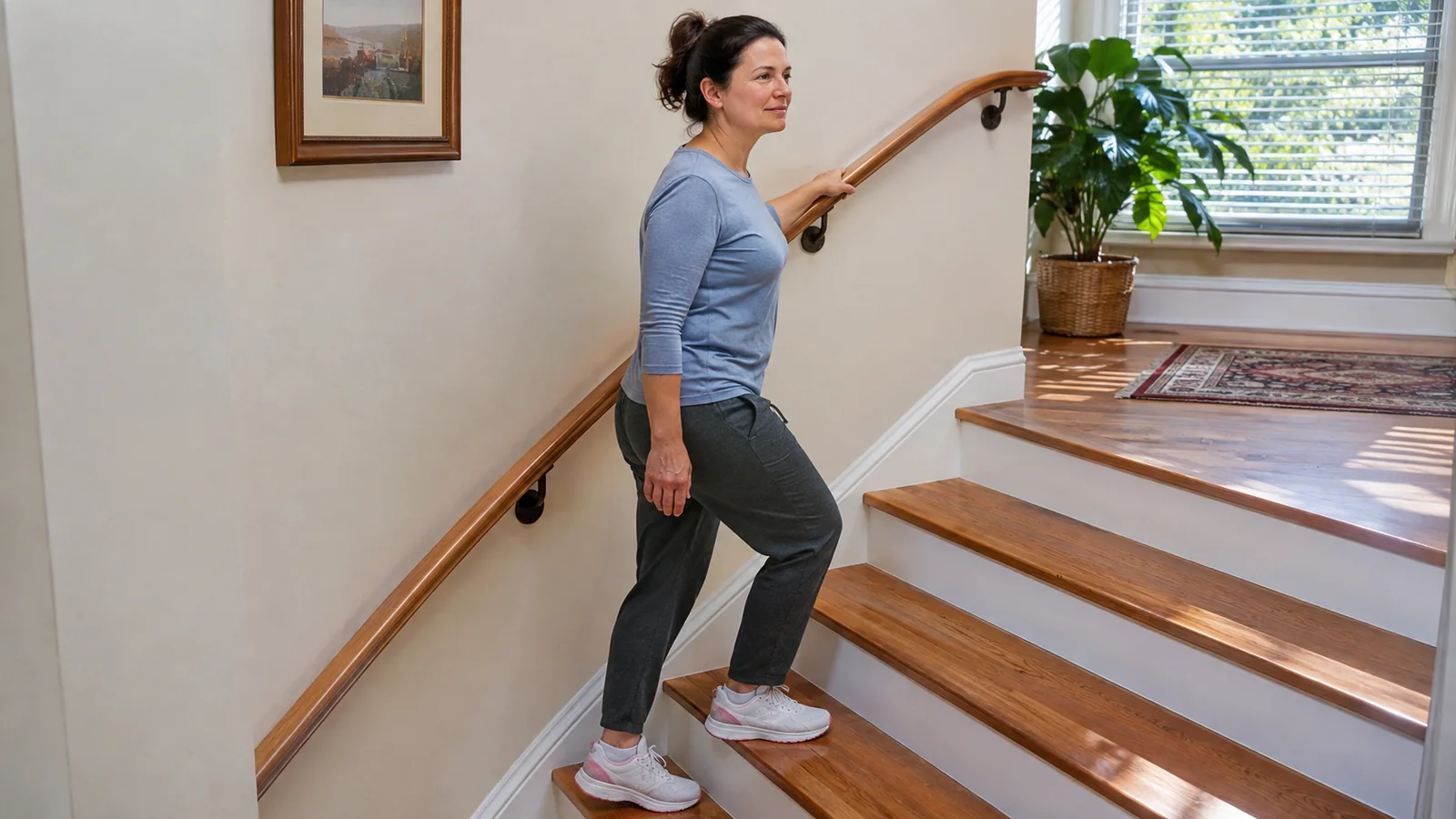
Balance practice is a different task from building walking time or climbing stairs. If stairs are also part of your activity, our beginner stair-walking guide covers pacing and route choices. Do each activity with the support and attention it needs.
Know When to Finish
Stop exercising if you develop dizziness, chest discomfort, unusual breathlessness or pain. Put both feet down and get safely settled; seek medical advice rather than trying to complete the set. Severe symptoms, including chest pain or serious difficulty breathing, need urgent medical help through your local emergency service.
Finish while you can still move with control. Check whether the space and support worked well, then keep the next session similarly simple. A reliable place, a suitable movement and permission to stop are the foundations of useful beginner practice.