
FCC Broadband Label Requirements Reference for Internet Plan Shoppers
A practical reference for reading the FCC's broadband consumer labels, comparing advertised internet plans, and understanding which label details matter before signing up.
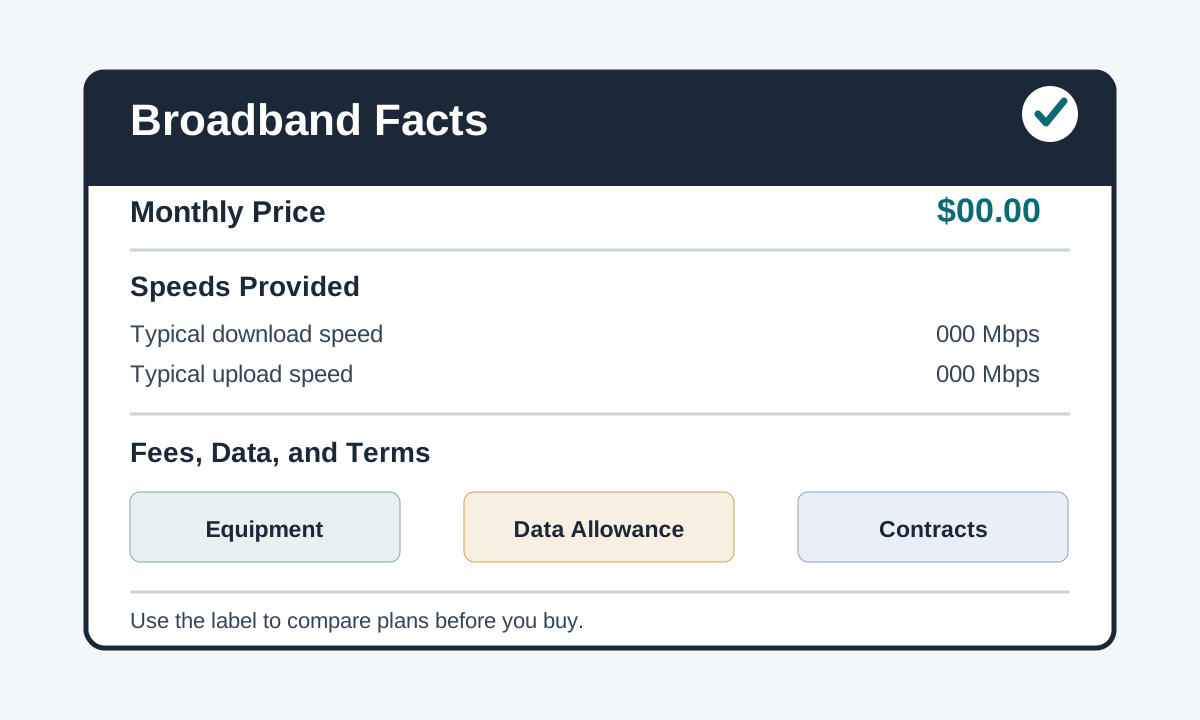
Broadband labels are the U.S. internet market’s version of a nutrition label: a standardized disclosure that lets shoppers compare price, speed, fees, data limits, and key terms before choosing a home or mobile internet plan. The Federal Communications Commission requires internet service providers to show these labels at the point of sale for covered broadband services.
This reference explains what to check on the label, what the numbers mean, and how to use the label without mistaking it for a full service contract. It is written for consumers, small businesses, community organizations, and anyone comparing internet offers across providers.
Rule Status
The FCC’s broadband label rules apply to providers offering mass-market retail broadband internet access service. The agency’s consumer label page explains that the labels are meant to provide clear, easy-to-understand, and accurate information about broadband prices and performance.
The major display requirement is already in force. Large providers were required to display labels beginning April 10, 2024, and providers with 100,000 or fewer subscriber lines were required to comply beginning October 10, 2024. The FCC has also continued reviewing ways to improve the labels. In a July 9, 2026 update, the agency said it is looking at how to make broadband labels work better for consumers, including reducing confusing or duplicative information.
Treat proposed improvements as proposals until the FCC finalizes them. For shopping today, the operational document is still the label displayed by the provider for the specific plan, location, and sales channel.
Where the Label Should Appear
For online shopping, the label should be close to the advertised plan, not buried after checkout. The FCC says providers must display the label at the point of sale and make it accessible to consumers before they purchase service.
For in-person or phone sales, the provider should still make the label available. If the salesperson describes a promotional price, bundled plan, or speed tier, ask for the broadband label for that exact offer before agreeing.
The label is also useful after purchase. Save a copy or screenshot of the label shown when you signed up. It gives you a baseline for later billing questions, speed complaints, or cancellation decisions.
Plan Identity
Start with the plan name and service type. Confirm whether the label is for fixed home internet, mobile broadband, prepaid service, business service, fiber, cable, fixed wireless, satellite, or another access type.
Small wording differences matter. A provider may sell several plans with similar names but different speeds, promotional prices, data policies, equipment fees, or contract terms. The label you compare should match the address, device, and service type you are actually buying.
If you are comparing household options, keep one note for each provider that includes the plan name, service address, label date if shown, advertised monthly price, and whether the price is promotional.
Monthly Price
The headline monthly price is the first number to check, but it is not always the amount you will pay over a full year. Look for whether the label identifies an introductory or promotional price and how long it lasts.
For a realistic comparison, calculate the cost over the period you expect to keep service. A plan that is cheaper for six months can become more expensive than a competitor once the regular price begins. If the label does not clearly explain the regular price after a promotion, ask the provider to identify it in writing before ordering.
Do not compare a standalone broadband price against a bundled price unless you are willing to keep the full bundle. Bundles can include phone, TV, streaming, mobile, security, or other add-ons that change the true monthly cost.
Fees and One-Time Charges
The label should help you spot recurring fees and one-time charges. Review modem rental, router rental, installation, activation, early termination, late payment, paper bill, and other provider-imposed fees.
Pay special attention to equipment. A plan with a low monthly price can become less attractive if the provider requires a rented gateway or charges for Wi-Fi equipment that another provider includes. If you can use your own compatible equipment, confirm whether that changes support, installation, or service terms.
Government taxes and pass-through charges may be listed separately from provider fees. They still affect your bill, but they should not be confused with optional add-ons or provider-imposed charges.
Speed Metrics
The label gives typical speeds, not a guarantee that every device will reach that number at every moment. Review both download and upload speeds. Download speed affects streaming, web browsing, large file downloads, and software updates. Upload speed affects video calls, cloud backups, livestreaming, sending large files, remote work, and security camera uploads.
The FCC’s glossary explains that latency is the time it takes for data to travel to its destination and back. Lower latency matters for video calls, gaming, remote desktops, and other real-time applications. A plan with high download speed but poor latency may still feel sluggish for interactive use.
For households, the right comparison is not just the advertised maximum. Consider the number of people, connected devices, work calls, cloud backups, video streams, and smart home devices using the connection at the same time.
Data Allowances
Check whether the plan has a data allowance, a cap, a threshold after which speeds may be reduced, or charges for additional data. Some plans advertise unlimited data but still include network management terms that can affect performance during congestion or after heavy use.
If the household streams video, downloads games, backs up photos, uses cloud storage, or works with large files, data terms can matter as much as speed. A slightly slower unlimited plan may be more predictable than a faster plan with expensive overage charges.
For mobile broadband, review hotspot and tethering terms separately from on-device data. Providers may apply different speed limits or allowances to each use.
Contracts and Cancellation
The label can point to whether a plan has a contract term, early termination fee, or other cancellation condition. Read this alongside the provider’s full customer agreement.
If you are moving soon, testing a new provider, or switching from a service with unreliable performance, avoid treating a promotional price as the only decision factor. A contract or installation fee can make a short trial expensive.
Before ordering, ask three direct questions: when does the price change, what does cancellation cost, and what equipment must be returned? Keep the answers with your label screenshot.
Consumer Links and Complaint Paths
Broadband labels include links to more information, including the FCC’s consumer resources and complaint process. The FCC’s Broadband Consumer Labels glossary is useful when a label term is unfamiliar.
If a bill does not match the label or a provider refuses to provide label information before purchase, start with the provider’s support channel and keep records. If the issue remains unresolved, the FCC accepts consumer complaints about internet service through its consumer complaint center.
Comparison Worksheet
Use the same categories for every plan you compare:
- Plan name and provider
- Service address or coverage area
- Monthly price now and after any promotion
- Installation, activation, equipment, cancellation, and late fees
- Typical download speed, upload speed, and latency
- Data allowance, overage charges, or speed-reduction terms
- Contract length and early termination fee
- Equipment return requirements
- Customer support and complaint links
Once the worksheet is complete, rank plans by the cost and reliability factors that matter most to you. For many households, the best plan is not the fastest advertised tier. It is the plan with enough speed, transparent pricing, workable upload performance, predictable data terms, and cancellation rules you can live with.