
M-Pesa Shows How Mobile Money Became Everyday Financial Infrastructure
A case study on how Kenya's M-Pesa grew from mobile transfers into a practical financial layer for payments, savings, credit, merchants, and public policy.
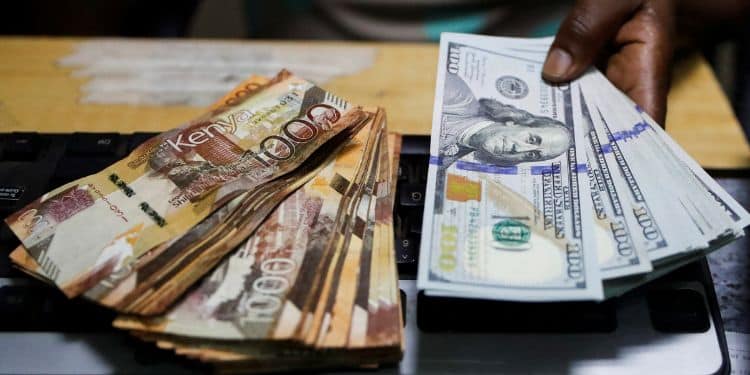
M-Pesa is one of the clearest examples of digital finance becoming ordinary infrastructure. It did not start by asking every user to own a smartphone, open a bank account, or understand a full financial app. It started with a simpler promise: send, receive, store, and withdraw value through a mobile phone and a nearby agent.
That practical design is why Kenya’s mobile money story is still studied. M-Pesa turned phone numbers, retail shops, airtime agents, and regulated electronic value into a financial network that millions of people could use without waiting for traditional branch banking to reach every town and village.
The system is now much broader than person-to-person transfers. Safaricom’s latest reporting describes M-Pesa as a major part of its Kenyan service revenue, while the Central Bank of Kenya reports tens of millions of registered mobile money accounts and hundreds of thousands of active agents across the market. The useful lesson is not that one product won. It is that a dense cash-in, cash-out, payment, and merchant network can become part of everyday commerce.
The Problem M-Pesa Solved
Before mobile money scaled, many households and small businesses had to rely heavily on cash, informal couriers, bus drivers, shopkeepers, or family networks to move money. That could work, but it was slow, risky, and expensive when relatives lived far apart or when workers needed to send money home quickly.
Bank branches and formal accounts did not cover everyone evenly. Even where banks were present, small transfers and low-balance accounts were not always convenient for people earning irregular income. A farmer, domestic worker, market trader, motorcycle rider, student, or rural household needed a service that matched the way money actually moved in daily life.
M-Pesa’s early strength was that it connected digital value to physical access points. Users could deposit cash with an agent, send electronic value by phone, and let the recipient withdraw cash near home. That agent network made the service understandable because it did not force people to abandon cash immediately. It gave cash a digital bridge.
Why the Agent Network Mattered
The agent was the product’s human interface. In many digital systems, the hardest step is not software design; it is trust. People want to know where their money went, who can help if a transaction fails, and how to get value back into cash when they need it.
M-Pesa solved part of that problem by using familiar retail points. The same kinds of places that sold airtime could become deposit and withdrawal points. This lowered the distance between a digital wallet and daily life. A user did not have to wait for a bank branch or a card terminal. A shop could become part of the network.
That design also helped small merchants. Once customers already had mobile wallets, businesses could accept payments without handling as much cash. The wider mobile money market then moved beyond remittances into bill payments, merchant payments, savings, credit, and business services.
The Central Bank of Kenya’s mobile payments data shows why this infrastructure matters. In May 2026, the market had more than 564,000 active agents and more than 94 million registered mobile money accounts, with agent cash-in and cash-out activity still moving hundreds of billions of Kenyan shillings each month. Those figures are market-wide, not only M-Pesa, but they show the scale of the rails that M-Pesa helped normalize.
The Regulatory Lesson
M-Pesa is also a regulatory case study. Digital finance could not scale only through marketing. It needed public authorities to decide how a non-bank mobile operator could issue and manage electronic value, how customer funds would be safeguarded, how agents would operate, and how risks would be monitored.
The African Economic Research Consortium’s M-Pesa case study focuses on the Central Bank of Kenya’s role in allowing the model to grow while watching operational and systemic risks. That balance matters. If regulators block useful experiments too early, inclusion can stall. If they ignore risk too long, consumer harm and financial instability can grow.
Kenya’s experience points to a middle path: permit innovation, require safeguards, learn from real usage, and adapt rules as the product becomes systemically important. Mobile money became too important to treat as a small telecom add-on. It became part of the national payments system.
What Changed for Users
For households, mobile money reduced the friction of sending support across distance. A worker in Nairobi could send money to a parent, school, landlord, or small supplier without physically carrying cash. That changed the speed and reliability of family finance.
For small businesses, mobile money made everyday payments easier to record and receive. A shop could accept customer payments, pay suppliers, separate some business income from cash on hand, and use transaction history as part of a wider financial profile. That did not make every business formal overnight, but it gave more activity a digital record.
For service providers, mobile money opened distribution channels. Utilities, schools, insurers, lenders, savings products, transport operators, and online sellers could plug into payment behavior that was already familiar to customers. The GSMA’s mobile money industry reporting shows that merchant payments have become one of the fastest-growing global mobile money use cases, which helps explain why the model is no longer only about sending money home.
The Risks Are Part of the Story
The same features that made M-Pesa useful also created responsibilities. A widely used wallet can expose people to mistaken transfers, fraud messages, social engineering, SIM-swap risk, agent misconduct, pricing concerns, outages, and privacy questions. When a payment network becomes essential, failures affect daily life.
Consumer protection has to keep pace with adoption. Users need clear fees, fast dispute handling, transaction confirmations, strong account recovery, fraud education, accessible support, and reliable ways to reverse or investigate errors where rules allow. Merchants need predictable settlement and transparent charges. Regulators need good data without allowing surveillance or misuse of personal information.
Competition is another issue. A successful mobile money platform can become so central that other providers struggle to reach users. Interoperability, fair access, and proportionate oversight become more important as the network grows from a product into infrastructure.
What Other Markets Can Learn
The first lesson is that inclusion depends on distribution, not only apps. A wallet is not useful if people cannot load money, withdraw money, or get help nearby. Agent economics, liquidity management, training, and customer support are core infrastructure.
The second lesson is to start with a common, painful use case. Domestic remittances gave M-Pesa a reason to exist before the product expanded into more complex financial services. A digital finance system that begins with a clear daily need is easier for users to trust.
The third lesson is that regulation should be active but practical. Kenya’s model worked because supervisors did not treat mobile money as identical to banking, but they also did not leave it outside oversight. As the service grew, the policy question changed from whether mobile money should exist to how it should remain safe, competitive, and useful.
The fourth lesson is that digital payments do not eliminate cash immediately. In many markets, the strongest bridge to digital finance is a hybrid system where people can move between cash and electronic value. That bridge gives users confidence while new habits form.
M-Pesa’s larger significance is that it made financial infrastructure feel local. It turned everyday shops into access points, basic phones into transaction tools, and small transfers into a scalable payments network. The case study remains useful because it shows that financial inclusion is not only about technology. It is about matching technology to real behavior, then building the rules and trust needed for that behavior to scale.